By Bennett's Concrete and Excavation, Norwich, NY. Updated October 2026.
Who decides the pipe
The road owner does. The pipe sits in their right of way and carries their ditch water, so they set the rules.
- County roads. In Chenango County, the owner stakes the driveway location, the county inspects it and advises the pipe's diameter, length and gauge. The owner buys the pipe and end sections and has them delivered, and the county installs the pipe and covers it with gravel at no charge.
- Town roads. In the Town of Cortlandville, for example, the owner buys the culvert and sloped end sections, the highway superintendent sets the size, type and length with a 30 foot minimum, and the town installs and maintains the culvert.
- State highways. A NYSDOT permit is needed. See driveway permits in NY.
Rules differ from town to town, so call the highway department before you buy anything. Ask what pipe material they accept, how long it needs to be, whether end sections are required, and who installs it. Getting that in writing before the pipe is ordered avoids buying the wrong size and paying twice.
Rules of thumb from Cornell
Cornell's Local Roads Program drainage manual gives these guidelines:
- No pipe smaller than 12 inches for a driveway.
- At least 12 inches of cover over the top of the pipe. Some pipes, like plastic, may need more.
- Match the size of the pipes upstream or downstream. If there's enough cover, go bigger.
- For short culverts, slope doesn't change capacity much, but going steeper than 2 percent speeds up the water at the outlet and can cause scour.
Why two small pipes don't equal one big one
A pipe's opening grows with the square of its diameter. Cornell's manual makes the point that two 12 inch pipes don't replace one 24 inch pipe. It takes four.
| Pipe diameter | Opening area compared to a 12 inch pipe |
|---|---|
| 12 inch | 1 times |
| 15 inch | About 1.6 times |
| 18 inch | 2.25 times |
| 24 inch | 4 times |
Ditches along the driveway
Long rural driveways often need their own ditch on the uphill side. Cornell's manual says there's no one best ditch shape. V ditches are easy to cut but their bottoms erode. U shapes carry water well. Trapezoid shapes suit big flows. Side slopes of 1:3 are considered good, and steeper than about 1:2 may be unstable. Less than about 1 percent fall lets sediment build up, while above about 5 percent erosion becomes the concern, which is where stone lining or check dams come in.
Keep driveway water off the road
Road owners care about water coming off your driveway, too. Chenango County's permit asks that the driveway be built so no water flows onto the highway or its shoulder. That usually means shaping the driveway so its runoff drops into the ditch before it reaches the pavement.
Culvert care and warning signs
- Clear leaves, branches and ice from both ends in fall and spring.
- A sinkhole or dip over the pipe can mean water is running along the outside of it. Cornell calls this piping and warns it can remove material until the crossing fails.
- A scoured hole at the outlet needs stone armor. Cornell lists rip rap, gabion check dams and aprons for this.
- Crushed or rusted-through pipe ends need replacing.
- Water overtopping the driveway in storms means the pipe is too small or blocked.
Putting one in
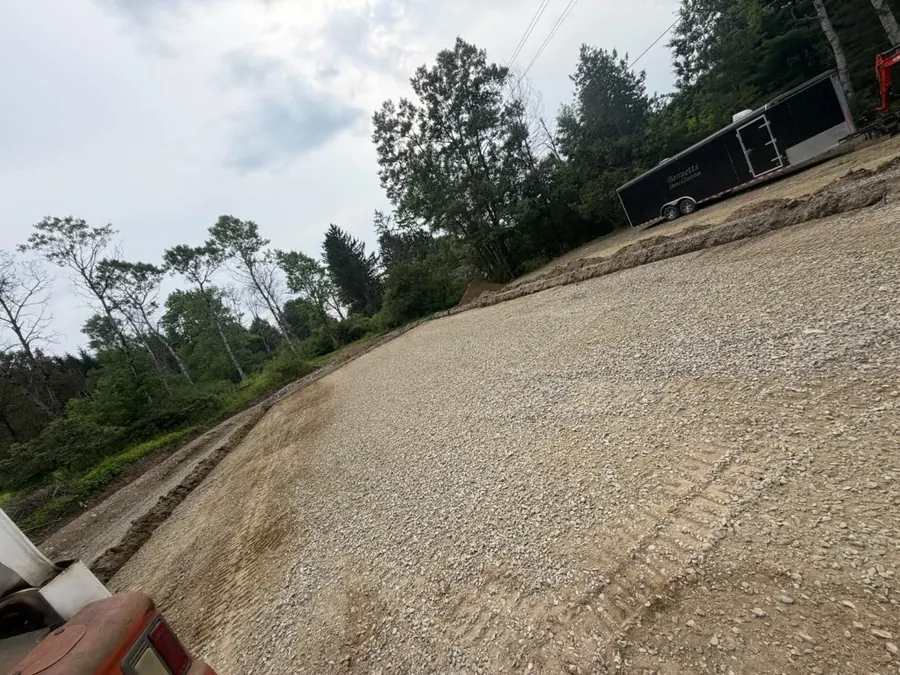
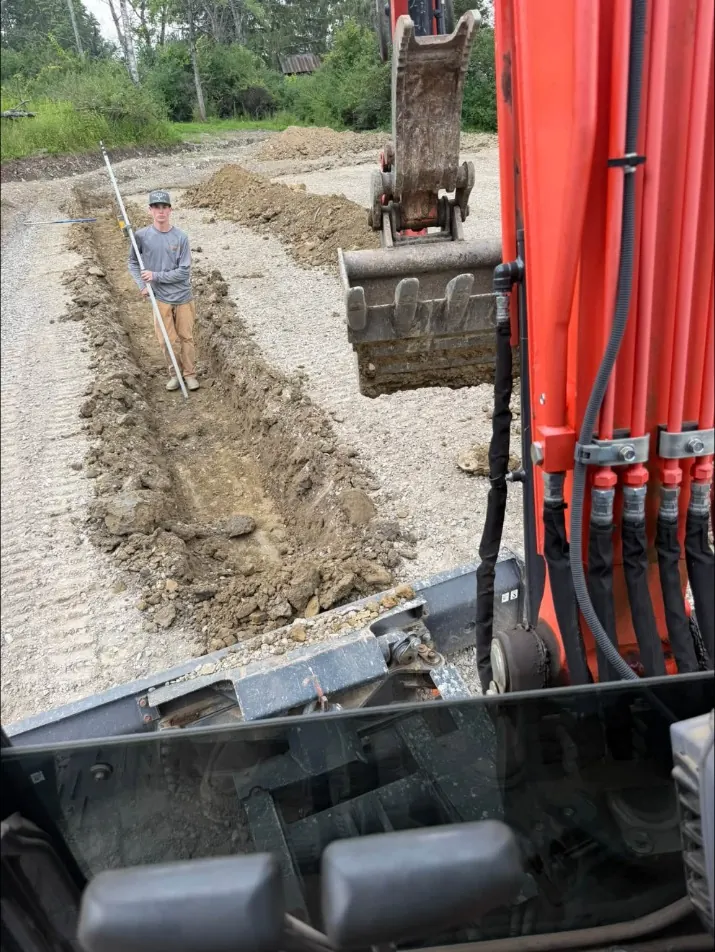
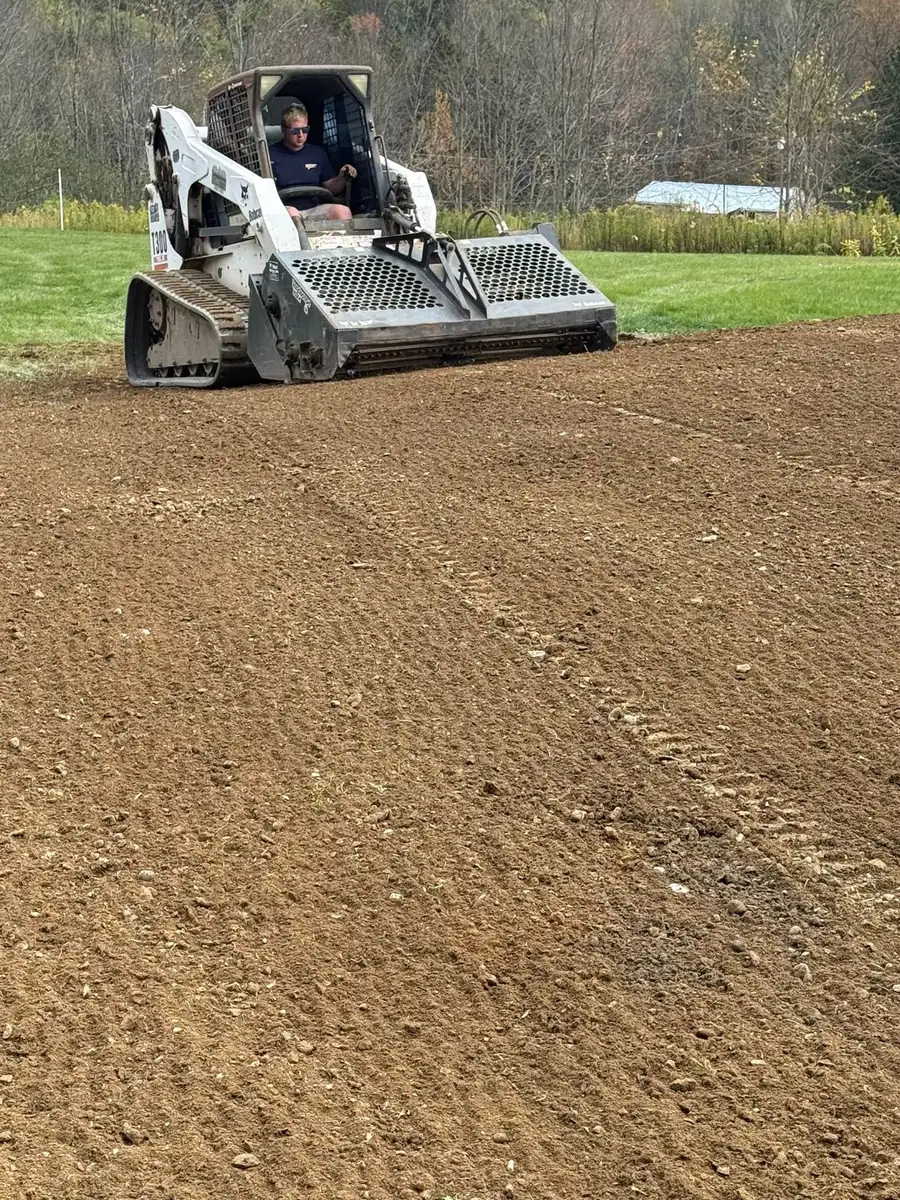
Any digging starts with an 811 notice. The pipe gets a firm, even bed, backfill is placed and compacted in layers along both sides, and cover goes on before trucks cross it. We build gravel driveways with our own excavator, loader and dump truck. See gravel driveways and excavation, and our maintenance guide for upkeep.