By Bennett's Concrete and Excavation, Norwich, NY. Updated October 2026.
Why gravel driveways break down
Cornell's Local Roads Program drainage manual says excess water is the most significant cause of potholes. Water softens the base, tires push the soft spot down, and the next rain fills the dip deeper. Add traffic pushing stone out of the wheel paths, rain washing out the fines that bind the surface, and a plow pulling stone off the edges, and a driveway slowly loses its shape.
That's why the fixes below mostly come back to one goal: get water off and away from the driveway fast.
Keep the crown
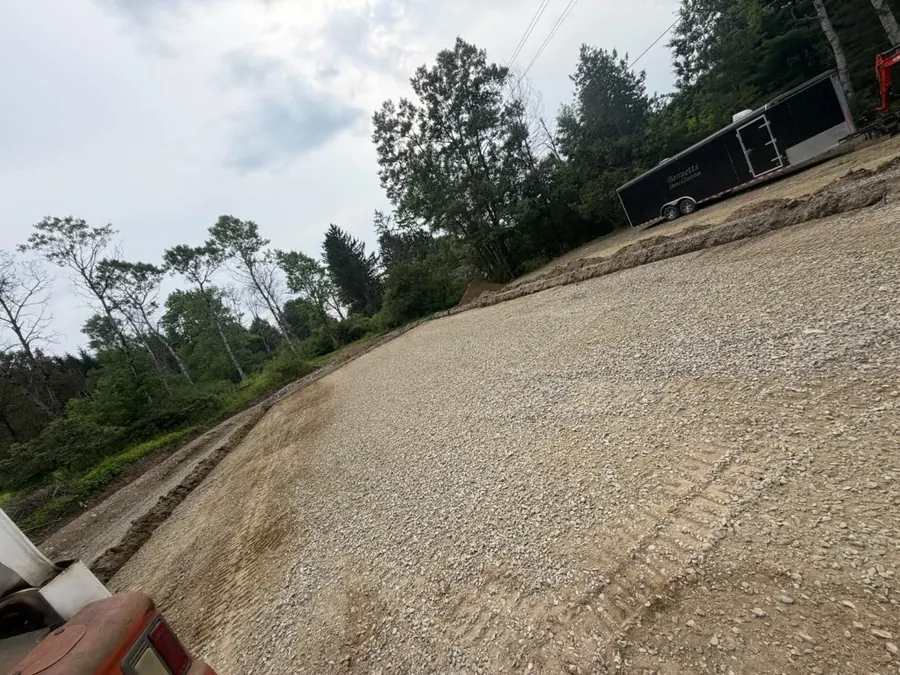
A gravel surface needs a crown or cross slope so rain runs off the sides instead of down the middle. Cornell's drainage manual shows a cross slope of 4 to 6 percent for gravel surfaces, which is 1/2 to 3/4 inch per foot. It warns that too steep a slope can erode the shoulders, and that an extra grading pass can leave a flat spot on the centerline.
| Driveway width | Drop from center to each edge at 1/2 in. per ft. | At 3/4 in. per ft. |
|---|---|---|
| 10 feet | 2 1/2 inches | 3 3/4 inches |
| 12 feet | 3 inches | 4 1/2 inches |
| 14 feet | 3 1/2 inches | 5 1/4 inches |
Fix potholes the right way
- Work when the surface is damp, not soaked and not bone dry. Damp stone compacts best.
- Don't just drop stone in the hole. Loosen the area around it so new and old material blend instead of popping back out.
- Fill with crushed stone that has fines, not clean round stone.
- Compact in thin layers with a plate compactor or tire traffic, and leave it slightly high.
- Find why water sat there. A missing crown, a blocked ditch or a low edge will make a new pothole in the same spot.
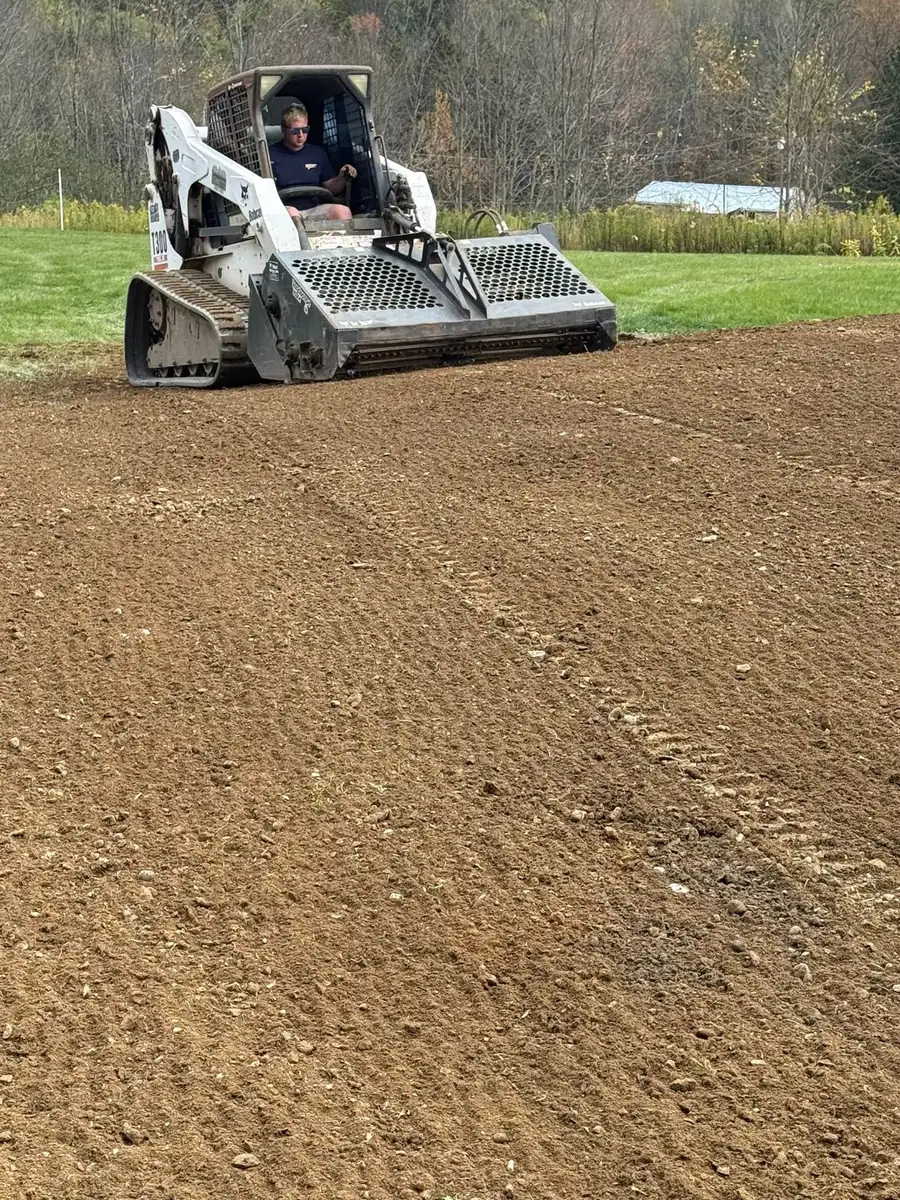
When there are dozens of potholes, regrading the whole surface and re-crowning beats patching.
Top it up with the right stone
The surface layer needs more fine material than the base. Cornell's manual lists 8 to 15 percent fines for surface gravel and 0 to 8 percent for base. Clean stone or round pea stone won't bind into a hard surface, so it ruts and rolls. One New York supplier, NESL, lists 1 1/2 inch crusher run for unpaved driveways. Our stone sizes guide explains the names.
Mud season
In March and April, a gravel driveway can turn soft as the ground thaws from the top down and water can't drain through the frozen layer below. Ruts made in mud set up hard when it dries. If you can, park closer to the road or keep heavy deliveries off until it firms up. Then regrade the ruts out once it's dry enough to work.
Plowing without losing your stone
Set the plow blade to ride above the stone, not dig into it. Plow makers sell shoes for this: Western's shoe kit is designed to glide over gravel and dirt at the right height. Early in the season, before the ground freezes, go easy. In spring, rake or grade the stone the plow pushed onto the lawn back onto the driveway.
A simple maintenance calendar
| Season | What to do |
|---|---|
| Spring | Check ditches and the culvert, pull plowed stone back, regrade ruts once dry |
| Summer | Add top stone where thin, restore the crown |
| Fall | Clear leaves from culvert ends and ditches, set driveway markers before the ground freezes |
| Winter | Keep plow shoes set, keep the culvert inlet open during thaws |
When to rebuild instead
If the same spots rut every spring, or mud pumps up through the stone, the base underneath has failed and topping it won't last. That calls for digging out and rebuilding, as described in our gravel driveway guide. Ditches and culverts are covered in this guide. We regrade driveways and deliver stone with our own dump truck. See gravel driveways.