By Bennett's Concrete and Excavation, Norwich, NY. Updated October 2026.
How plows damage concrete
- Gouges and chips. A steel cutting edge dragged across concrete scrapes the surface and chips edges.
- Joints and edges. A blade catches on raised joints, slab edges and the lip where a driveway meets the garage floor.
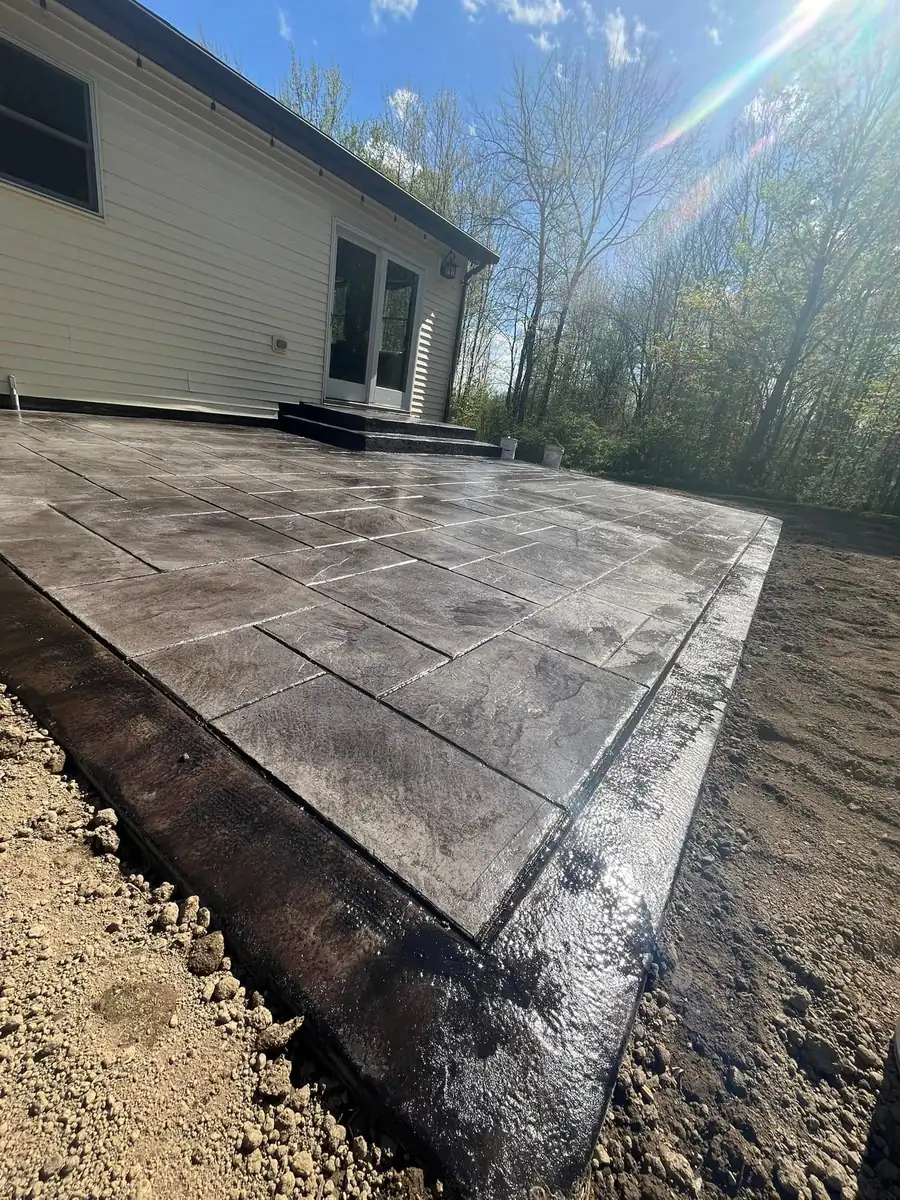
- Sealer and texture. On stamped concrete, the blade wears down sealer and the high points of the pattern.
- Edge loads. Heavy plow trucks driving on the unsupported edge of a slab can crack it.
Change the cutting edge
The single biggest fix is a softer cutting edge. Plow makers sell poly or rubber edges for this. Western, for example, sells poly cutting edges for its DEFENDER plows and says they protect decorative concrete, driveways and other delicate surfaces, and adjust to road surface irregularities without gouging. If you plow your own driveway, it's worth a look. If you hire someone, ask what edge they run.
Shoes set the blade height, and Western describes its shoe kit as made to glide over gravel and dirt. On concrete you want the blade close to the surface, with an edge that won't scratch it.
Fix the catch points
Plows find every raised edge. A slab that has heaved up at a joint, a sunken section next to the garage, or a walk that sits higher than the driveway gives the blade something to hit, and each hit breaks off a little more. Frost heave is common here, and our guide to frost heave explains why it happens.
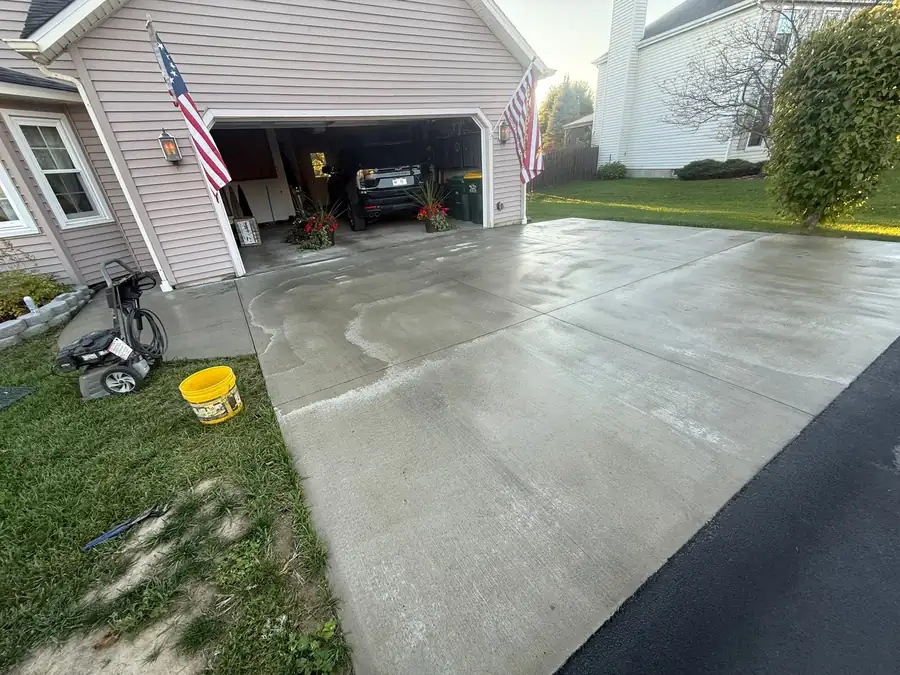
The lip where a driveway meets the garage floor is a classic spot. Plow drivers can lift the blade there, but it's easy to forget in the dark. If a section has moved enough to catch a blade, fixing or replacing it before winter saves the concrete around it.
Before the first storm
- Walk the concrete and note chips, raised joints and edges.
- Seal or reseal if water no longer beads.
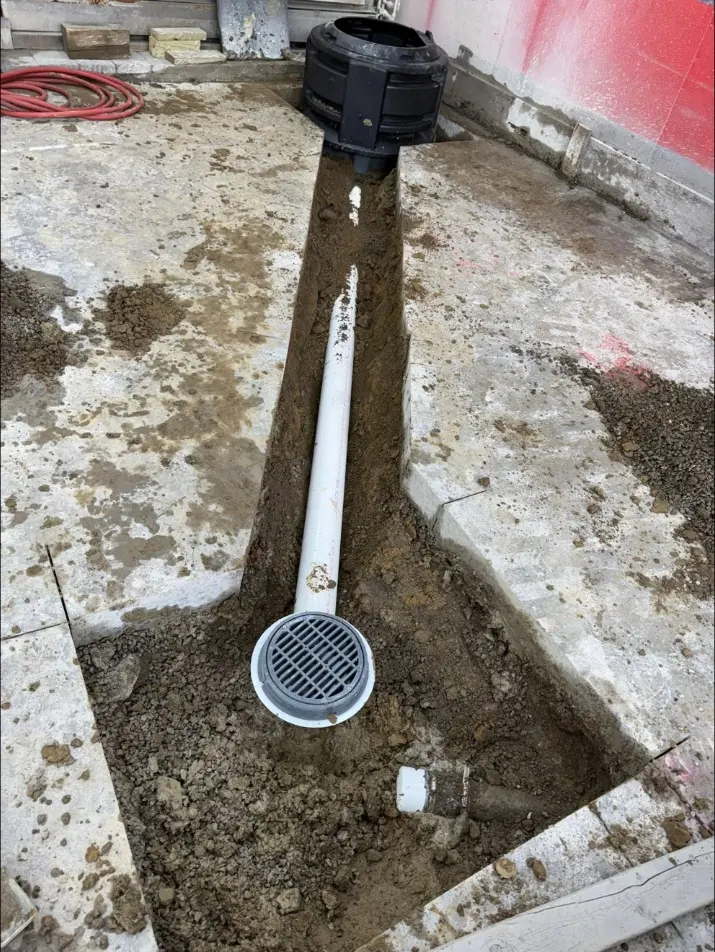
- Put markers in along both driveway edges, walk and patio corners, trench drains and curbs.
- Swap to a poly or rubber edge if you plow yourself.
- Buy sand for traction, and check the label on any ice melt you keep.
- Decide where the snow piles will go, off the concrete.
Markers matter more than people think. Once the snow is deep, nobody can see where the concrete ends, and a plow riding off an edge breaks it. Get them in before the ground freezes.
Shovels and snowblowers
Plastic shovels, or shovels with a poly wear strip, are kinder to concrete than bare steel. Set snowblower skid shoes so the auger housing rides just above the surface. Don't chop ice with a steel bar or the edge of a shovel, especially on new or stamped concrete. Sand gives traction without the chipping.
Where the snow goes matters
Piles left on a slab melt every sunny afternoon and refreeze every night, keeping that concrete wet through the cycle. FHWA research on deicers notes that concrete that's critically saturated can be damaged in a single freeze-thaw cycle no matter how much entrained air it has. The Cemstone maintenance guide also says not to let water or deicer stand on the surface for long periods. Push snow onto the lawn, not onto patios, walks or the apron, and keep meltwater draining off.
Sealed and stamped concrete
Sealer is the wear layer that takes the scraping. Cemstone recommends sealing before October 1 and resealing when water no longer beads on the surface. A fall coat means your concrete goes into plow season protected. Stamped concrete, with its high and low spots, benefits most. See our sealing guide.
If you hire a plow service
- Tell them which surfaces are concrete, and which are stamped.
- Ask about blade edges and whether they can keep the truck off slab edges.
- If the concrete is new, ask them not to use deicers the first winter. NRMCA recommends clean sand for traction instead.
- Never let anyone use ammonium nitrate or ammonium sulfate products on concrete.
Our salt alternatives guide covers ice melt choices.