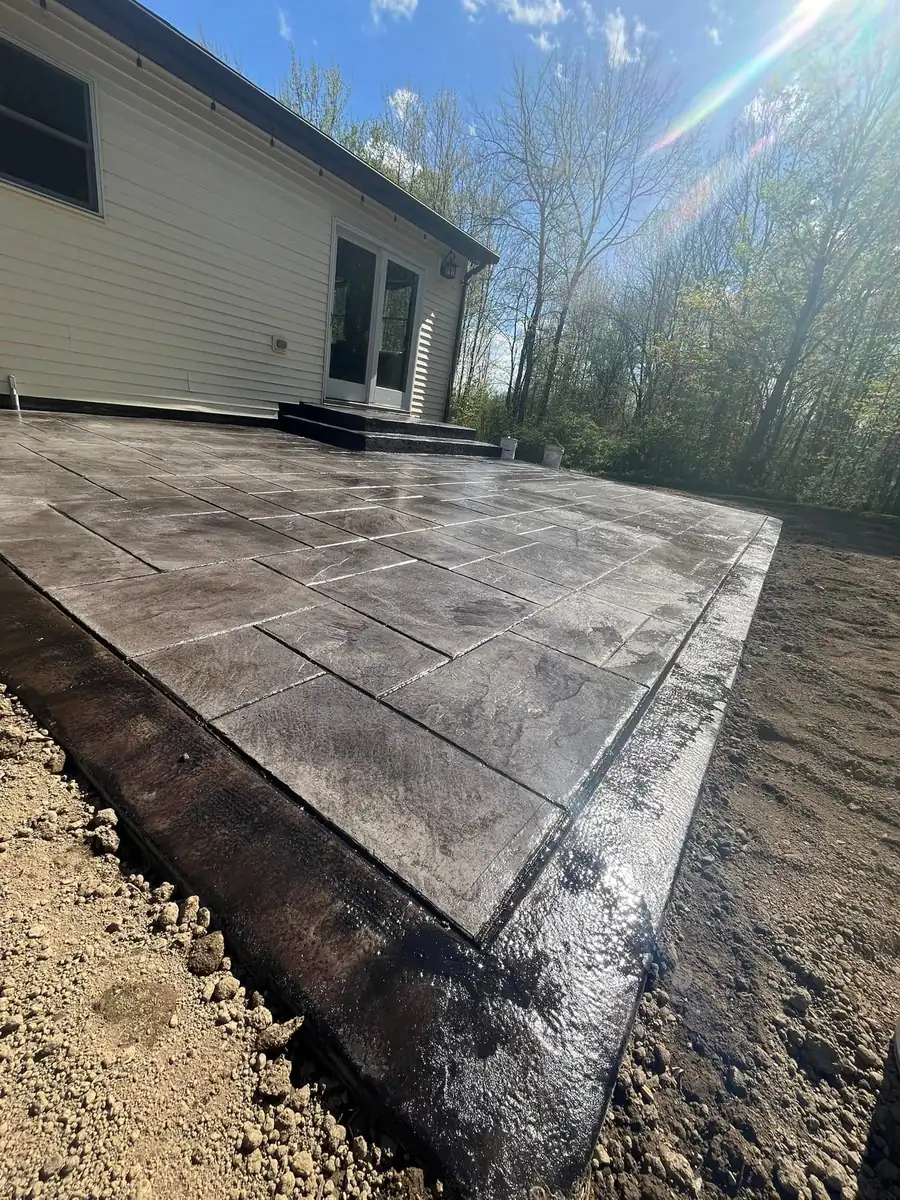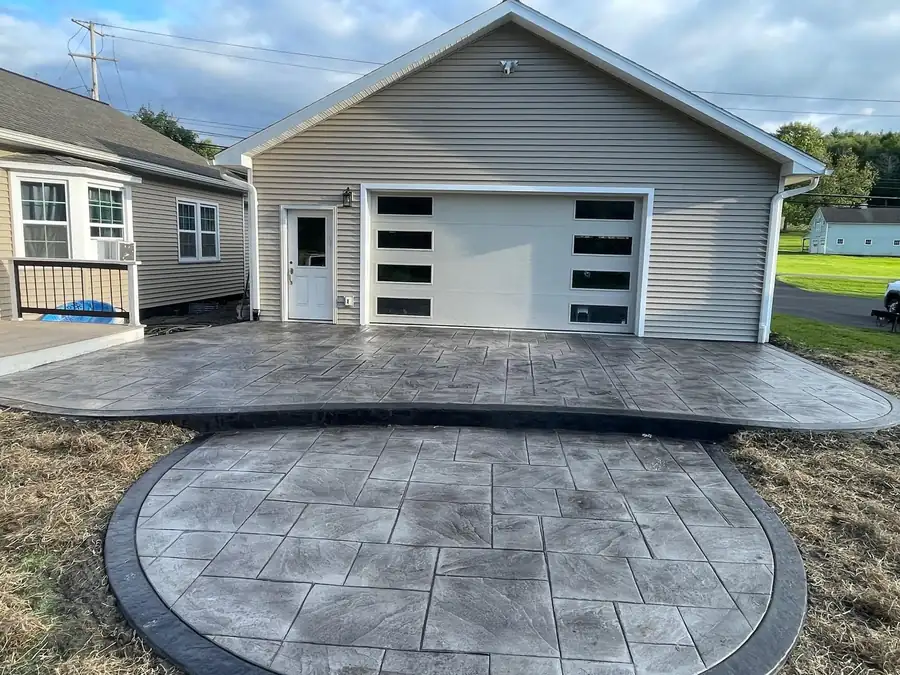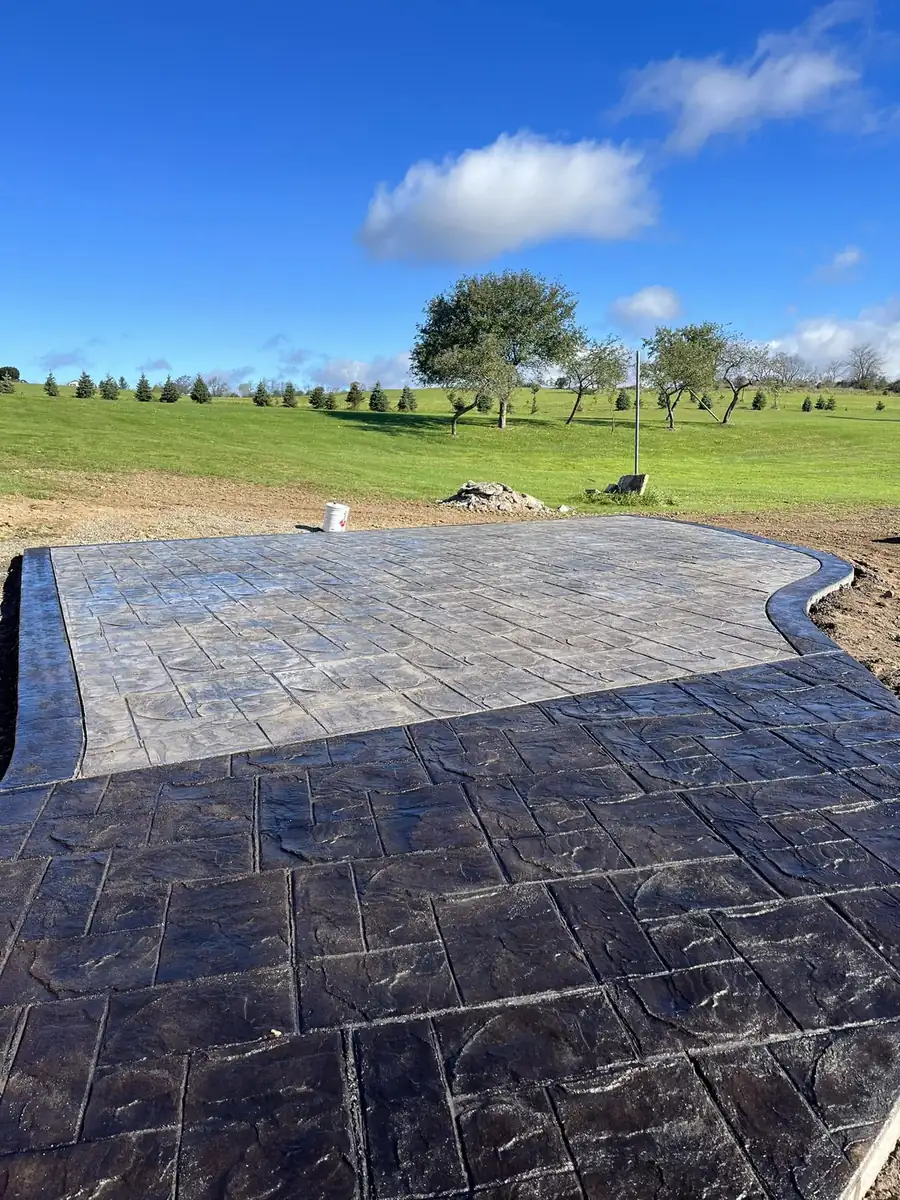
By Bennett's Concrete and Excavation, Norwich, NY. Updated October 2026.
The short version
- Clean it a few times a year with mild soap and water, and rinse well.
- Reseal when water stops beading or the color looks flat, not on a fixed date.
- Keep deicers off it the first winter, and never use ammonium-based products.
- Use a plow with a rubber edge or shoes set high enough to clear the texture.
Routine cleaning
The American Society of Concrete Contractors' Decorative Concrete Council (ASCC) recommends occasional cleaning with a mild detergent such as dish soap, then rinsing carefully so no soap residue is left behind. A leaf blower handles most of the rest. Treat stains when they happen. Oil and grease come out easier fresh; see removing oil stains from concrete.
When to reseal
Most stamped concrete is protected with a film-forming sealer, which ASCC says is the most common choice because it deepens the color. That film wears with sun and traffic.
ASCC's sealer guide says high-traffic and sun-exposed areas usually need new sealer every two to three years, and lighter-traffic areas can go four to five. Its best-practice sheet adds that you should reseal as needed rather than by the calendar: when water stops beading or the color loses depth. Resealing too often builds up a thick film that is costly to remove.
How a reseal is done
- Clean the surface. ASCC recommends a power wash at a minimum of 3,500 psi, followed by drying time.
- Let it dry. ASCC suggests 12 to 24 hours of dry time before sealing, longer if moisture is suspected.
- Apply thin coats at the maker's rate. ASCC notes coverage can vary from 200 to 350 square feet per gallon depending on the product.
- Seal when the slab temperature is falling, not rising, and keep the fresh coat out of direct sun as long as you can.
- For walking surfaces, add an anti-skid additive made for the sealer. ASCC says not to add sand or silica.
On brand-new concrete, wait for the cure. ASCC cites the 28-day standard but says the sealer maker's instructions should rule.
Why sealer turns white or cloudy
ASCC warns that applying sealer too thick, or applying too many coats, hurts how the sealer breathes and bonds, and can cause whitening, bubbling and cracking. Sealing too soon, or in hot sun, can cause the same problems. That's why thin coats on a clean, dry slab work better than one heavy coat. A sealer that has built up for years may need to be removed before it will look right again.
Winter: salt and plows
NRMCA advises avoiding deicers in the first winter, using them sparingly after that, and never using ammonium sulfate, ammonium nitrate or magnesium-based salts. Use sand for traction while the concrete is new. Plowing is fine if the blade can't gouge the texture. For more, read salt alternatives for concrete and protecting concrete from snowplows.
A simple year for stamped concrete
- Spring: rinse off winter sand and salt residue, and look over joints and edges for anything that moved over the winter.
- Summer: clean as needed, and do a water test. Sprinkle some water on a sunny spot. If it beads, the sealer is working. If it darkens the concrete and soaks in, plan a reseal.
- Late summer: the best window to seal. NRMCA calls late summer, after a few dry days, the ideal time to seal exterior concrete, since the slab is dry and the weather is still warm.
- Fall: clear off leaves and debris so wet piles don't sit on the surface into winter.
- Winter: sand for traction on new concrete, careful plowing, and no ammonium-based deicers ever.
Furniture with metal feet and grills can scratch or stain a sealed surface, so pads under furniture and a mat under the grill help too.
When to call for help
Bennett's offers concrete sealing: washing, degreasing and resealing walks and aprons, with a salt-repellent sealer on aprons. If your stamped patio is dull, white or slick, that's a good time to have it looked at. Our sealing guide covers sealer types in more detail.