By Bennett's Concrete and Excavation, Norwich, NY. Updated October 2026.
The short answer
A gravel pad is the usual choice for a prefab shed with its own wood floor. It drains, it's quick to build and it's easy to level. A concrete pad makes sense when the shed has no floor, when it will hold heavy equipment like a tractor, mower or ATV, or when it's really a small workshop.
Gravel pads
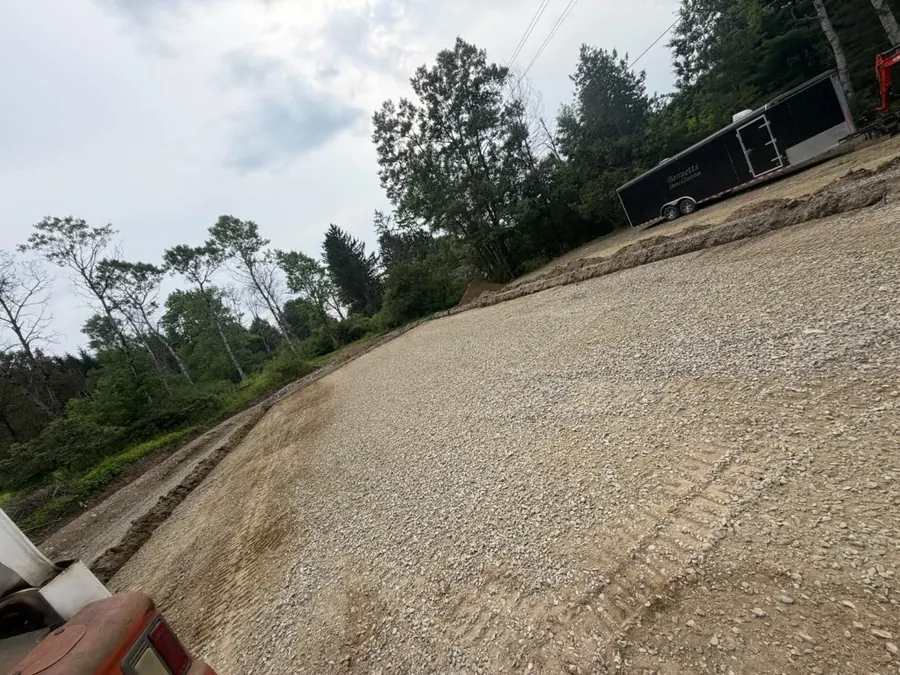
A gravel pad is a level bed of crushed stone, usually inside a timber or block frame, sized a bit bigger than the shed. Water drains through it instead of sitting under the floor, which keeps the floor framing drier.
Stone also handles frost better than native soil. Pavement Interactive explains that frost heave needs three things together: frost-susceptible soil with fine particles, freezing temperatures and a water supply. Clean sands and gravels are not frost susceptible; silty soils are. Replacing wet native soil with clean stone takes away one of the three. Our crushed stone sizes guide explains which stone to use where.
Concrete pads
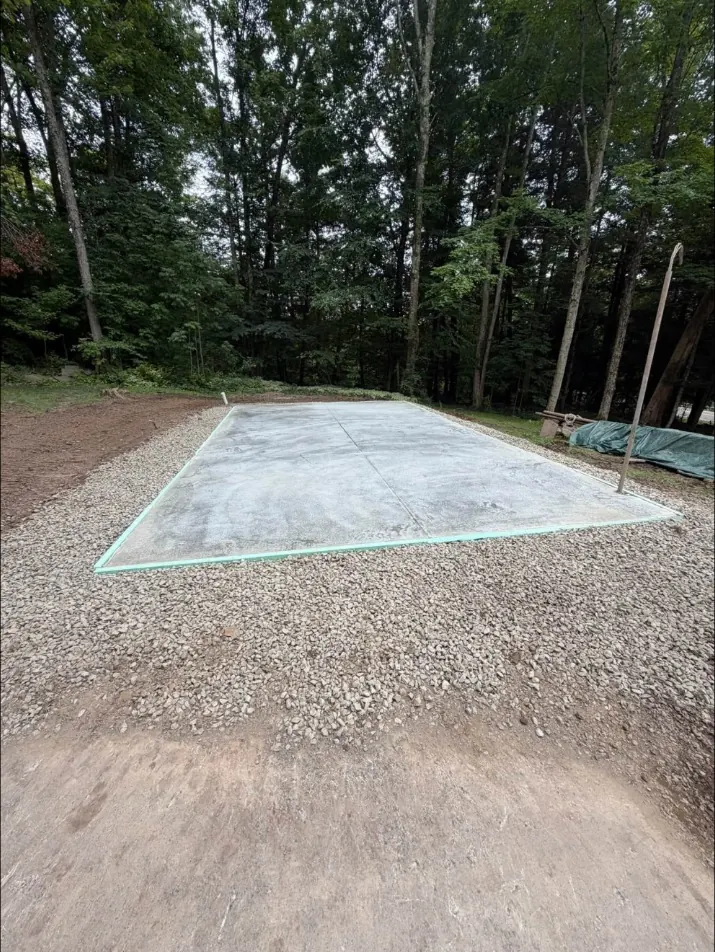
A concrete slab is both the floor and the foundation. It's flat, easy to sweep, keeps rodents from burrowing in, and handles heavy wheels. You can anchor the shed to it, and you can add a short apron at the door so equipment rolls in without a bump.
A shed slab in our climate still needs a good stone base under it. Without one, the slab can tip or crack as the ground freezes and thaws. For larger buildings, see monolithic slabs.
Side by side
| Gravel pad | Concrete pad | |
|---|---|---|
| Best for | Prefab sheds with wood floors | Floorless sheds, garages, shops, heavy equipment |
| Drainage | Water drains through | Water runs off; slope matters |
| Floor | Shed supplies the floor | Slab is the floor |
| Changes later | Easy to move or expand | Permanent |
| Cost drivers | Stone, framing, site leveling | Concrete volume, forms, reinforcement, finish |
Permits and frost rules in New York
New York's Uniform Code administration rules (19 NYCRR 1203.3) exempt from a building permit one-story detached structures associated with one- or two-family homes used as tool and storage sheds, playhouses or similar uses, as long as the gross floor area doesn't exceed 144 square feet. Bigger sheds need a permit, and zoning setbacks can apply either way.
On frost, the model residential code that New York's code is built on (R403.1.4.1) does not require frost protection for free-standing accessory structures of light-frame construction up to 600 square feet with an eave height of 10 feet or less, or up to 400 square feet for other construction. Your local code enforcement officer has the final word, so call before you build.
Sizing and placing the pad
- Make a gravel pad a little larger than the shed on every side so the walls don't sit on the edge and rain off the roof lands on stone, not mud.
- Put the door side where you can drive or roll equipment in, and leave room for a ramp or apron.
- Keep it off low spots where water collects after a storm.
- Check setbacks from property lines, septic systems and wells with your town before you pick a spot.
- Think about the path from the house. A shed you have to slog to through spring mud gets used less.
Building a gravel pad, step by step
- Mark the footprint and call 811.
- Strip sod and topsoil down to firm ground.
- Set a level frame of treated timbers or block.
- Lay landscape fabric if the soil is soft or wet.
- Place crushed stone in layers and compact each one.
- Check level corner to corner before the shed arrives.
Site prep and next steps
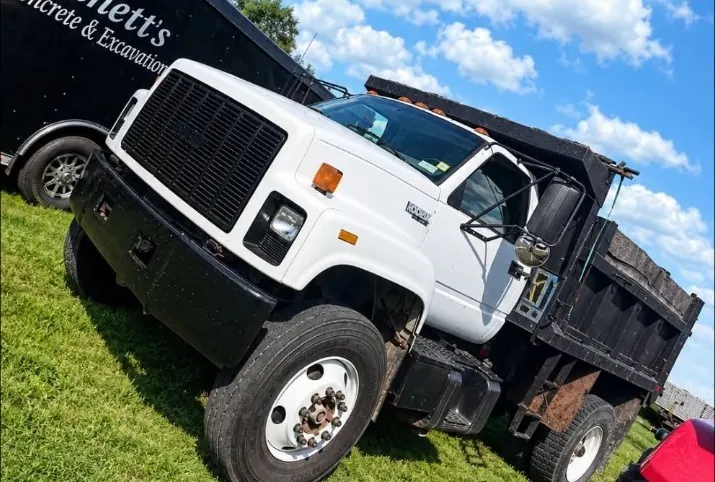
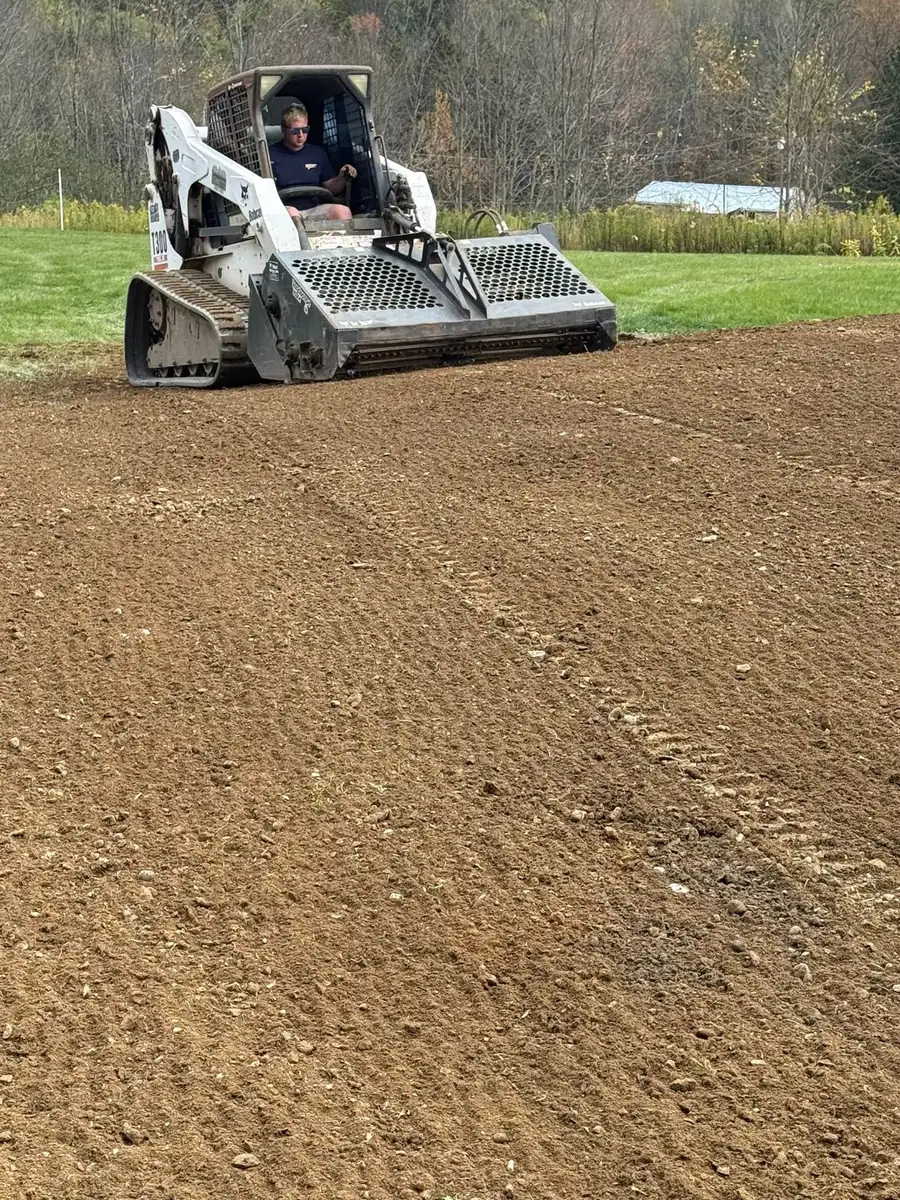
Whichever pad you pick, the work starts the same way. Strip the topsoil and roots, level the area, and make sure surface water runs away from the pad rather than toward it. On a sloped yard, the uphill side may need to be cut in and the downhill side built up. Call 811 before digging. We do that prep with a skid steer and mini excavator, and we deliver stone with our own dump truck.
Next, measure your shed's footprint, decide what will live in it, and check the size against the permit threshold. Bennett's builds concrete slabs and pads, does site prep and grading, and offers gravel delivery if you'd rather build the gravel pad yourself.