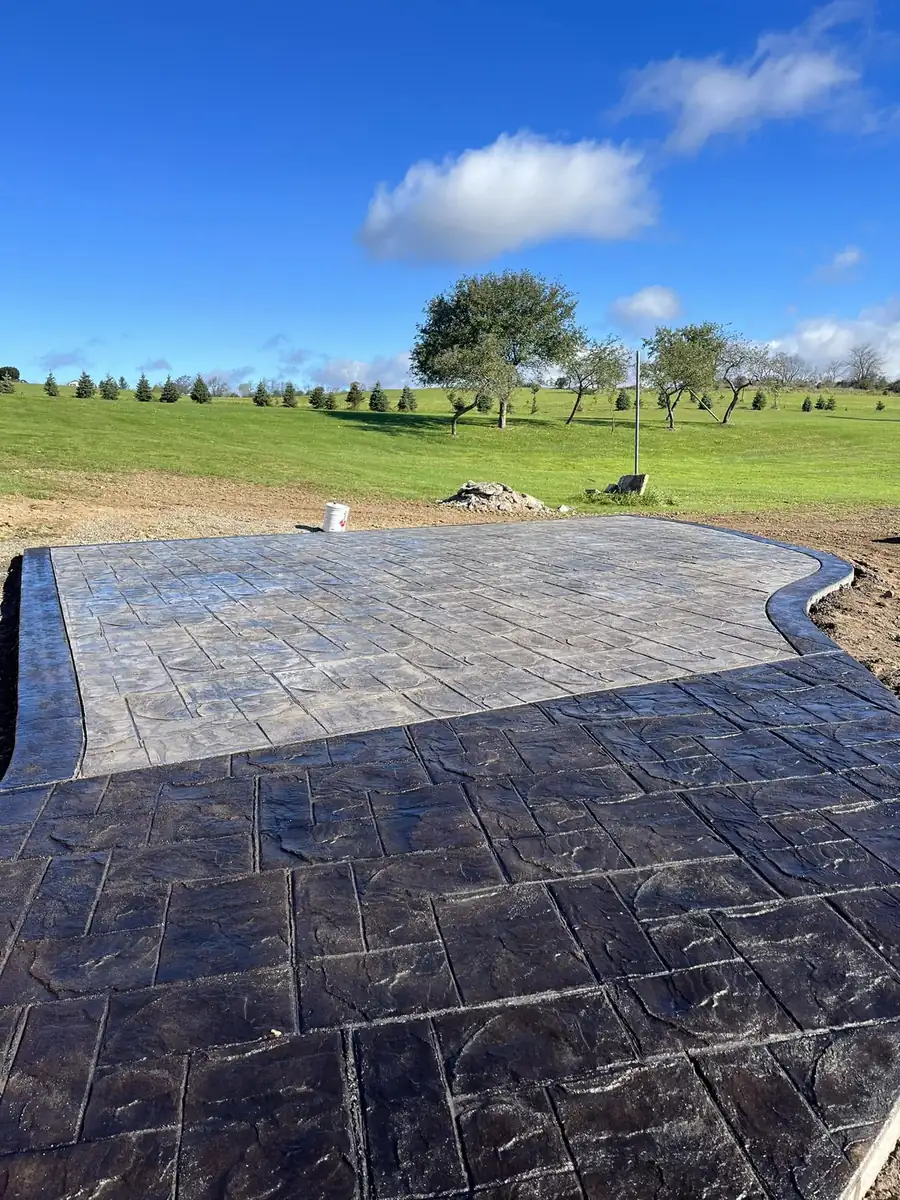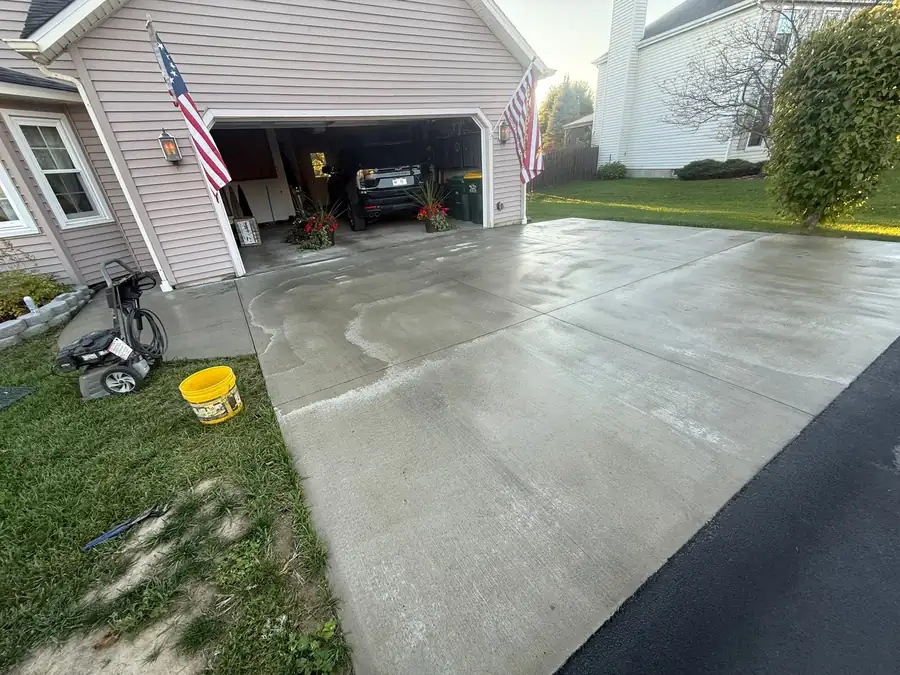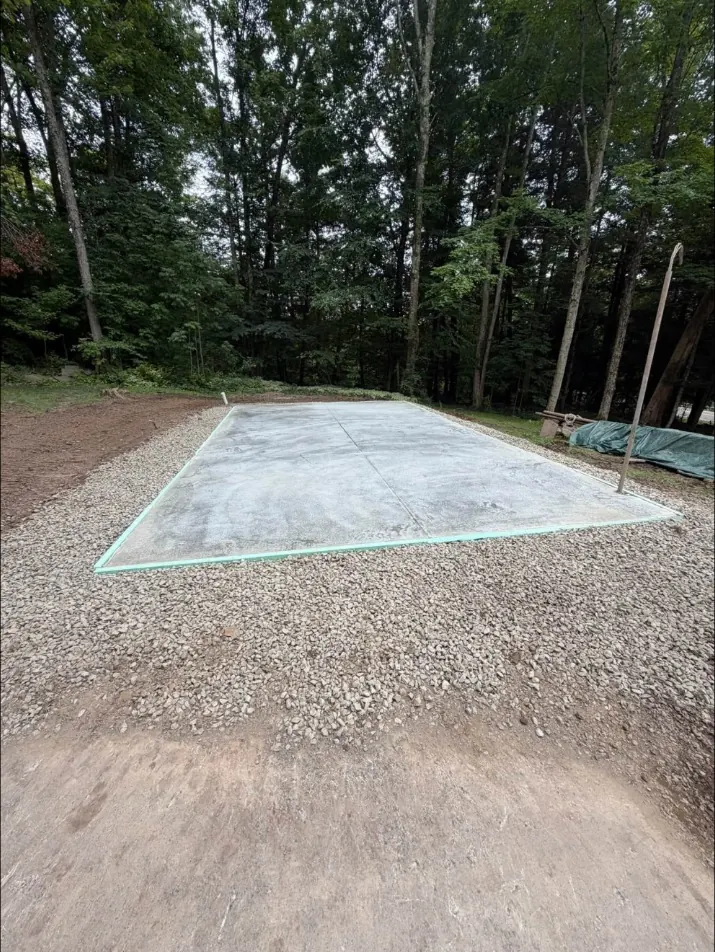
By Bennett's Concrete and Excavation, Norwich, NY. Updated October 2026.
The stages at a glance
| Stage | What sets the timing |
|---|---|
| Site visit and estimate | The contractor's schedule, and how quickly you decide |
| Contract signed | New York gives you until midnight of the third business day to cancel |
| Permits, if needed | Your town, village or road owner |
| 811 notice | At least 2 and no more than 10 working days before digging |
| Tear-out, excavation and base | Size, soil and weather |
| Forms, reinforcement, inspection | Size of the job, and whether an inspection is required |
| Pour and finish | Usually one day for a residential slab |
| Curing and first use | Temperature and mix |
| Sealing | About 28 days after the pour, weather allowing |
Before any digging
Most of the waiting happens before the work. Booking season in Central NY is short, and spring and summer fill fast. Once you sign, New York's home improvement law gives you a three-business-day window to cancel. If the job needs a building permit or a driveway permit, that adds time on the town's schedule.
Then the one-call notice. Under New York's Code 753, notice goes to the one-call center at least two working days and no more than 10 working days before excavation, so utilities can mark their lines. See our 811 guide.
Site prep and forms
Tearing out an old slab, digging, and building and compacting the stone base can take a day on a small walk or patio, or several days on a driveway or big floor. Forms, reinforcement, and anything that goes in the slab, like drains, conduit or radiant tubing, come next. Some slabs need an inspection before the pour, which means scheduling around the inspector.
Weather delays
Rain stops excavation and pours. Mud from a wet base gets into everything. Cold is the bigger concern late in the season: NRMCA's cold weather guidance says new concrete has to be protected from freezing until it reaches about 500 psi, and concrete is never placed on frozen ground. Late fall jobs may need blankets or heat. Our cold weather guide and best time to pour cover the season.
Pour day
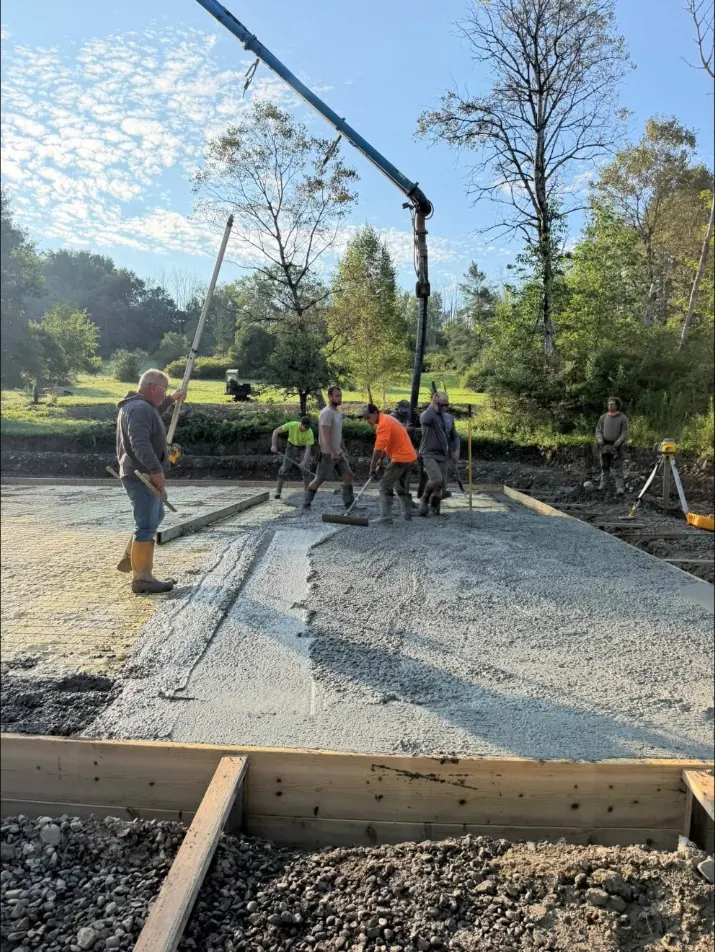
Ready-mix trucks arrive on a schedule, and big slabs often need a pump truck. The crew places, screeds and finishes the concrete, then cuts or tools control joints. Most residential pours happen in a single day. Stay off the slab and keep kids, pets and vehicles away.
Pour day depends on the weather more than any other day of the job. If heavy rain or a hard freeze shows up in the forecast, expect a call to move it. That's a good sign, not a bad one: a contractor who reschedules is protecting the finish you're paying for.
After the pour
The concrete keeps gaining strength for weeks. When you can walk or drive on it depends on temperature and mix. See when you can drive on new concrete.
Sealing waits. Cemstone's maintenance guide says new concrete needs about 28 days to dry before sealing, and recommends sealing before October 1. Do the math on a fall pour: concrete placed in September may not have its 28 days in before October, so sealing may wait for spring or need special precautions. Through the first winter, NRMCA advises no deicers, using clean sand for traction instead.
How you can keep it moving
- Decide on finish, pattern and color before the job is scheduled.
- Clear the work area and move vehicles off the driveway the day before.
- Point out anything buried that you installed yourself, like sprinkler lines, invisible fence wire or a line to a shed.
- Make sure trucks can get in: low branches, gates and soft lawn all slow things down.
- Keep your phone on during pour week. Weather calls happen fast.
Ready to get on the schedule? See patios or contact us.