By Bennett's Concrete and Excavation, Norwich, NY. Updated October 2026.
Estimate vs. contract
An estimate is a contractor's description of the job and a price for it. Once you agree, it becomes a contract, and in New York that brings rules. General Business Law Section 770 defines home improvement broadly, naming driveways, patios, terraces, garages, porches, flooring and basements, among others. Its contract rules apply above a small dollar threshold that nearly any concrete job passes. So the details you'd want in an estimate end up in the contract anyway.
The scope checklist
| Item | What to look for |
|---|---|
| Tear-out | Removing and hauling away old concrete, pavers or asphalt |
| Excavation | How deep, and where the dirt goes |
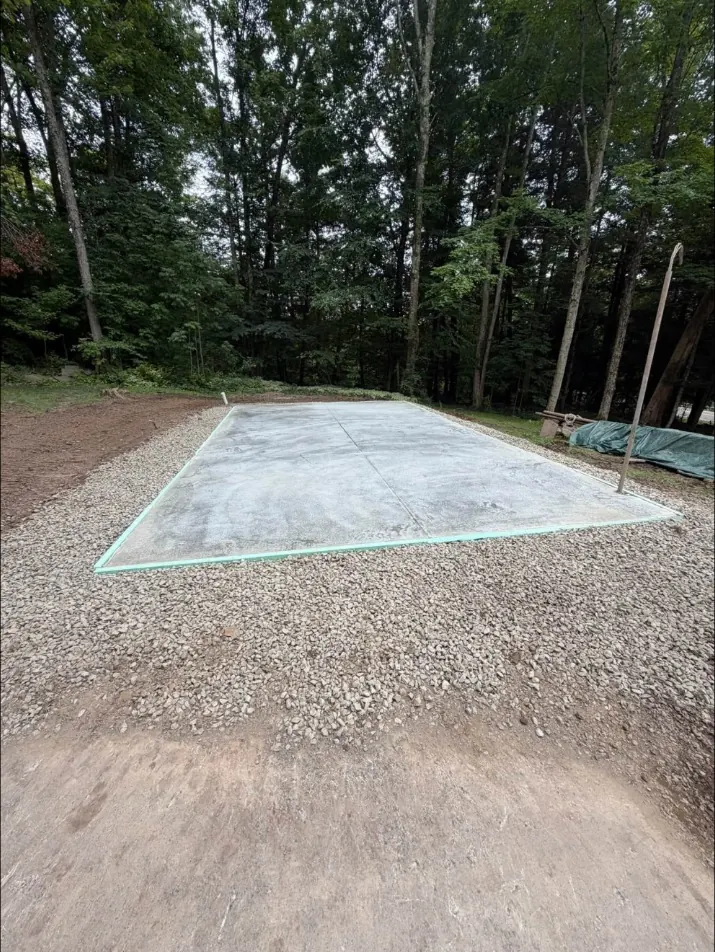
| Base | Stone type and compacted depth |
| Size | Dimensions and square footage |
| Thickness | Inches, including any thickened edges |
| Reinforcement | Wire mesh, rebar, fiber or none |
| Concrete | Mix and strength, and air entrainment for outdoor work |
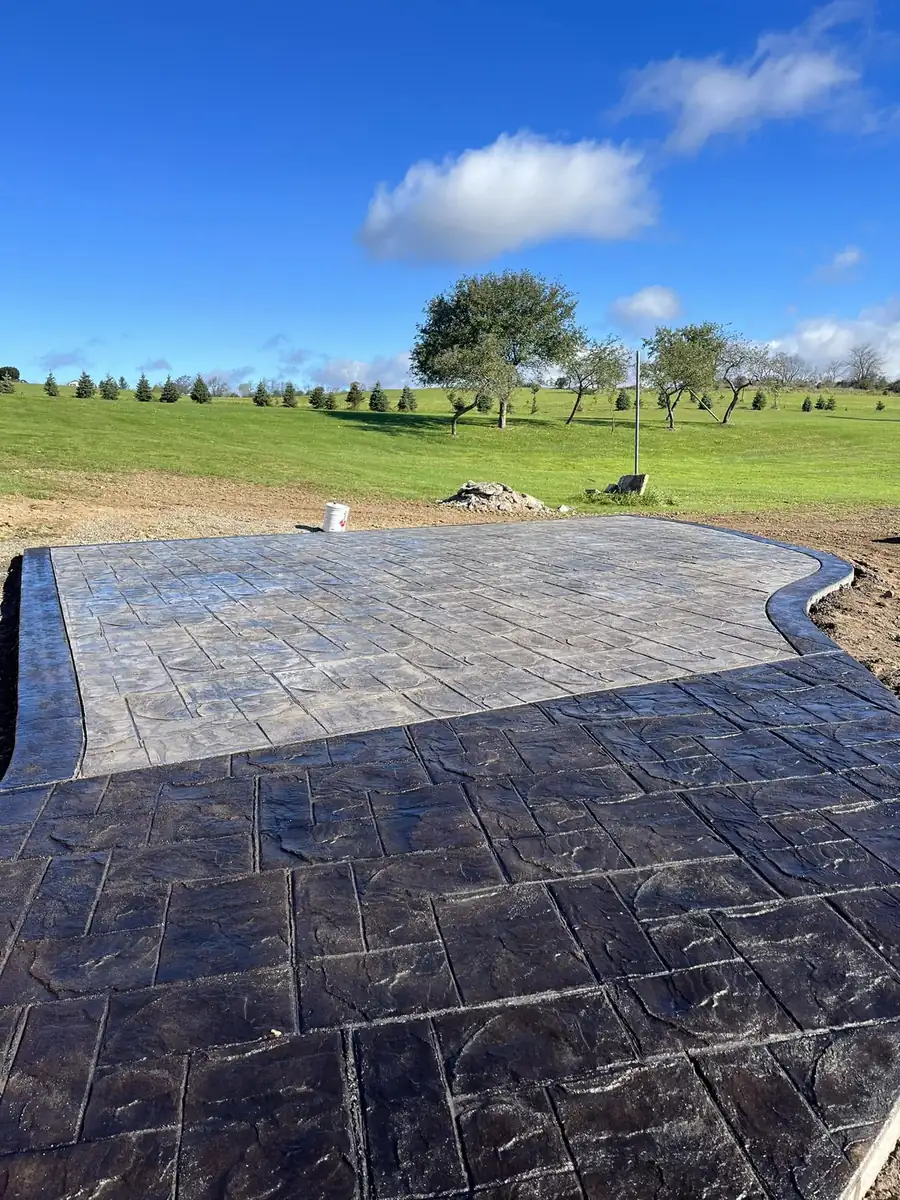
| Finish | Broom, smooth trowel or stamped, with pattern and colors |
| Joints | Saw cut or tooled, and roughly where |
| Curing and sealing | Included or not, and when sealing happens |
| Drainage | Which way it slopes, and any drains |
| Cleanup and restoration | Backfill along edges, topsoil and seed |
| Extras | Pump truck, permits, cold weather protection |
For background on a few of these, see rebar, mesh or fiber, air-entrained concrete and control joints.
What NY law requires in the contract
Under General Business Law Section 771, a home improvement contract must be in writing, signed, and include:
- The contractor's name, address and phone number, and license number if one applies
- Approximate start and substantial completion dates, and anything that could change them
- A description of the work and materials, and the agreed price
- A notice about mechanic's liens
- A notice about how advance payments are handled under the Lien Law, or a bond in their place
- A schedule of any progress payments, tied to stages of the work
- Your right to cancel until midnight of the third business day after signing
- Disclosure of insurance covering the work, before work begins
It also has to be legible, in plain English, and you get a signed copy before work starts.
Payment schedules
Section 771 ties progress payments to specific stages of the work, and says each amount should reasonably relate to the work done or materials bought at that point. The Department of State adds: don't pay the full price up front, and hold final payment until the job is finished and any required inspections are done.
Changes and surprises
Excavation can turn up rock, soft soil, buried debris or old concrete. A good estimate says how those are handled. The Department of State advises getting any contract changes in writing. Look for exclusions too, like permit fees, extra base stone if the ground is soft, or lawn restoration.
It also helps when an estimate says what happens with weather. A late fall pour may need blankets or heat, and a wet spring can push the start date. Neither is anyone's fault, but both are easier to handle when they're written down ahead of time.
Comparing estimates fairly
Line them up item by item using the checklist. Where one leaves something out, ask. A lower number that skips base stone or joints is a different job, not a better deal. Our cost factors guide explains what moves the price, and the concrete calculator helps you check the yardage.
Getting ours
We look at the site before we price a job, because the ground decides a lot of the cost. Access for trucks, slope, soil and what has to come out first all show up on a walk-through, not in a square footage number. Have your questions ready when we visit, and we'll put the answers in writing. Reach us through the contact page.