By Bennett's Concrete and Excavation, Norwich, NY. Updated October 2026.
What a pump does
A ready-mix truck can only pour as far as its chute reaches. A concrete pump takes the concrete from the truck's hopper and pushes it through a pipeline to where it's needed. There are two common kinds:
- Boom pumps are truck-mounted with a folding arm that reaches over houses, fences and yards. They're used on bigger slabs and foundations.
- Line pumps push concrete through hose laid on the ground. They suit smaller jobs and tight spots.
When you need one
- The pour is behind the house, in a fenced yard or down a slope where a mixer truck can't go
- The truck would have to cross a lawn, a septic system or leach field, an old driveway or a curb
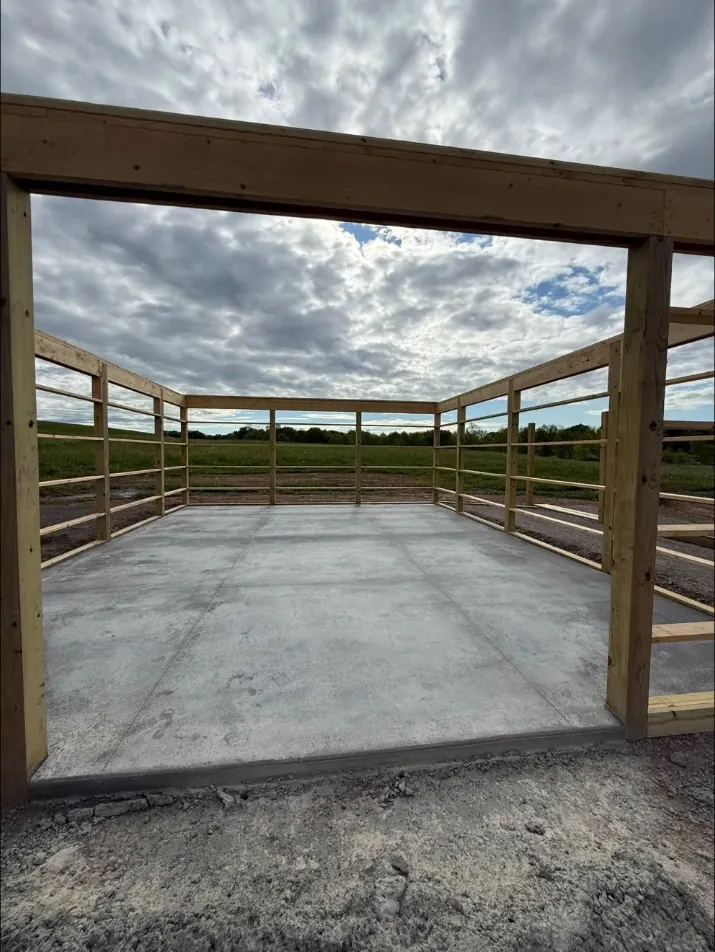
- The pour is large and has to go in fast, like a shop floor or barndo slab
- The forms are tall or hard to reach, like foundation walls
- Wheelbarrows or a buggy would take too long for the concrete to stay workable
NRMCA notes a loaded mixer truck weighs about 80,000 pounds and that loose dirt and residential curbs or walkways may not support it. Keeping that weight off a yard or an existing driveway is often reason enough.
What setup takes
Pump setup has real safety rules. The American Concrete Pumping Association (ACPA) guidance includes:
- Level and fully extended outriggers. The pump has to be within 3 degrees of level, and partly extended outriggers are a leading cause of tip-overs.
- Firm ground and pads. ACPA gives about 14 psi as the bearing of undisturbed ground and about 72 psi for firm compacted gravel. Cribbing or pads spread the load.
- Distance from holes. For every foot of depth in an excavation or trench, the outrigger pad stays at least a foot back from the edge.
- Power lines. If lines are within 20 feet of the pour area, ACPA says a dedicated spotter must watch the boom. That rises to 50 feet for lines over 350,000 volts.
Pumping and the concrete itself
Concrete for pumping is ordered for it. NRMCA's ordering guide says to tell the supplier the pump line size, and that pumped concrete may need a higher slump than the usual 3 to 5 inches. Suppliers get that with admixtures rather than extra water. Stone size has to fit the line.
Pumping can also cost some entrained air. NRMCA reports that concrete sampled at the end of a steep vertical boom can show less than half the air measured at the truck. Flatter boom setups and a steady flow help. That matters for outdoor concrete in Central NY, which relies on air for freeze-thaw protection. See air-entrained concrete.
How to prep your property
- Clear the driveway and the street side of the house so the pump and mixer trucks can park side by side.
- Tell us where the septic tank, leach field, well, buried propane line and sprinkler lines are.
- Point out overhead power, phone and cable lines.
- Give neighbors a heads-up if trucks will be on a shared road or driveway.
- Move cars, trailers and anything under the boom's path.
- Keep kids and pets inside during the pour.
Underground utilities should already be marked before any digging. See calling 811 before you dig.
What pour day looks like
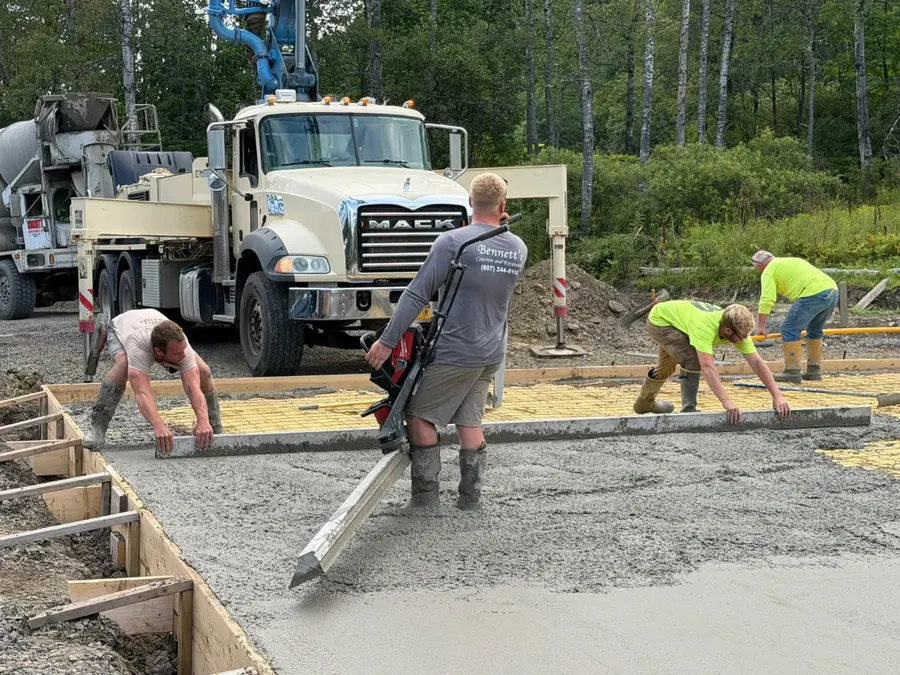
The pump arrives first and sets up. Mixer trucks back up to the hopper one after another. One person runs the hose end while the crew spreads, screeds and finishes behind it. On a big floor the pace is steady from the first truck to the last, which is why the pump, trucks and crew are scheduled together. When the pour is done, the pump is washed out and leaves.
What it adds to the cost
A pump is an added line item, and its cost depends on the size of pump, how long it's on site and how far it has to reach. It can also save money by cutting labor, protecting a lawn or driveway from truck damage and letting a large slab go in as one smooth pour. Our guide to concrete cost factors covers access and pumping with the other cost drivers.
Our approach
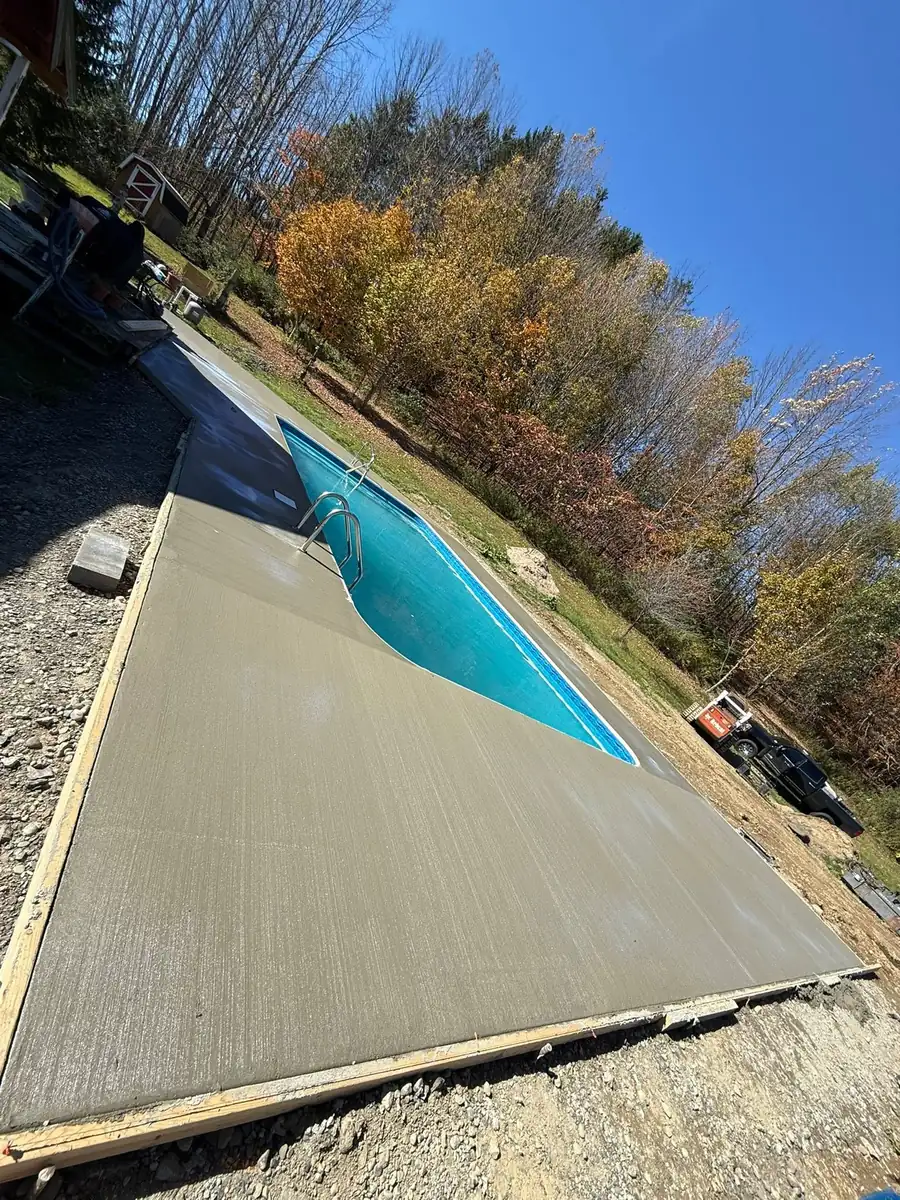
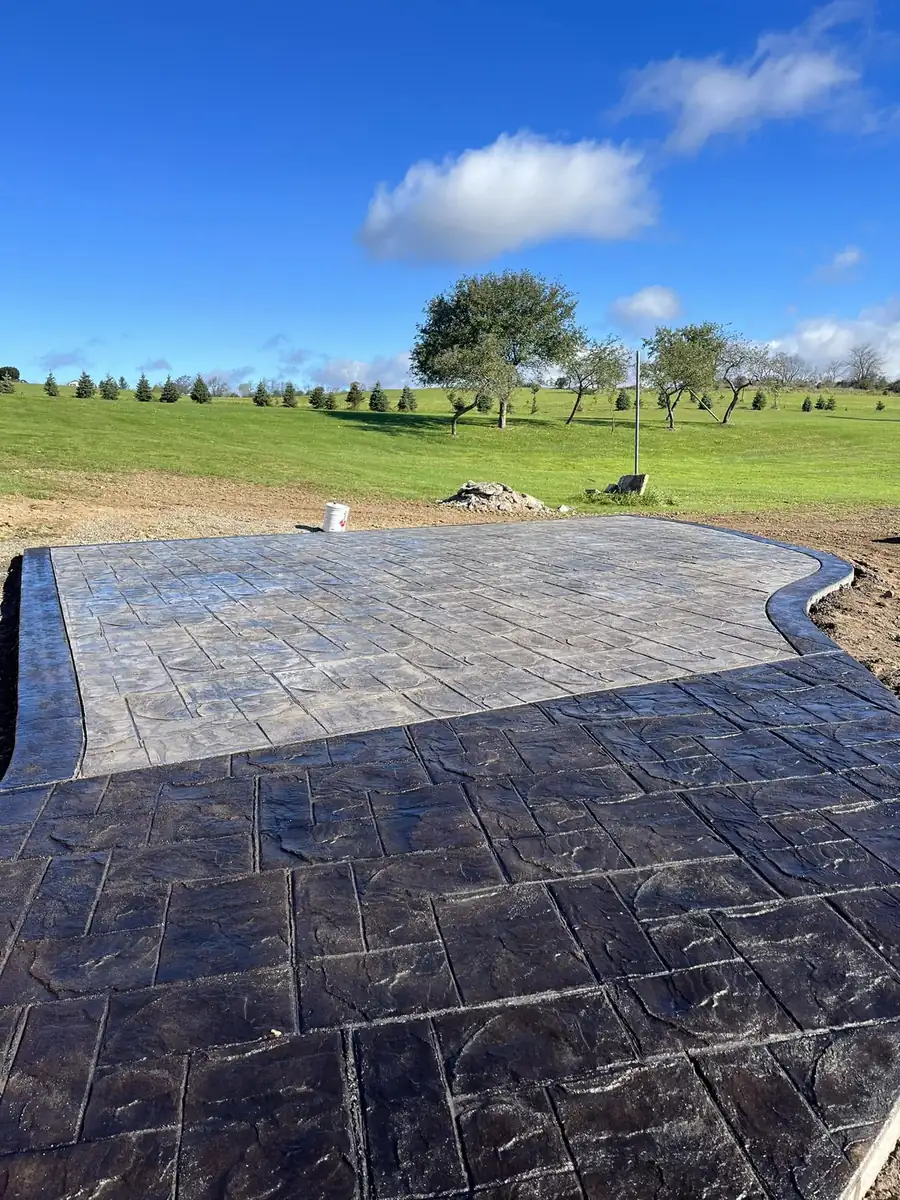
We use a pump truck on big pours like pole barn floors and on jobs where a mixer can't reach, such as backyard pool decks and patios. On the site visit, we'll look at access, overhead lines and soft ground and tell you whether your job needs one.