By Bennett's Concrete and Excavation, Norwich, NY. Updated October 2026.
Before the machines arrive
The first sign of an excavation job is usually paint. After the one-call notice goes in, utilities mark their lines with colored paint, flags or stakes. Leave those marks alone until the work is done.
Near a marked line, New York's Code 753 sets a tolerance zone: half the line's diameter plus 2 feet on each side of the mark, or 2 feet on each side if the size isn't known. Inside it, digging is done by hand until the line is found. Our 811 guide covers the details.
Tell the crew about anything buried that you put in yourself: sprinkler lines, invisible fence wire, a power line to a shed, a septic line. Those may not be marked.
Getting the equipment in
Equipment usually arrives on a trailer behind a pickup or with a dump truck. Think about the path from the road to the work area:
- Is there room for a trailer to park and unload?
- Are there gates, fences or tight spots between buildings?
- Are there low branches or overhead wires?
- Is the lawn soft? Spring ground can rut under any machine.
Tracked machines like a mini excavator and a compact track loader spread their weight better than wheels, which helps on lawns.
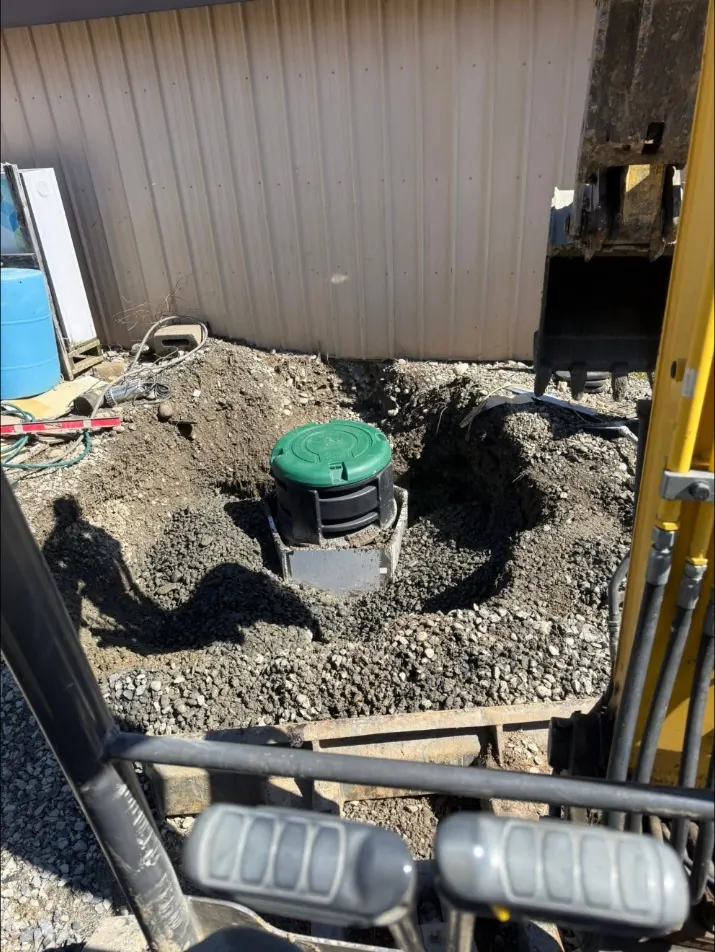
The day before, move cars out of the driveway, unlock gates, and put away anything along the path, like hoses, lawn furniture and kids' toys. If a septic tank or leach field sits near the route, show the crew where it is so heavy equipment stays off it.
How the day usually goes
- The crew walks the site with you and checks the layout stakes or paint.
- Sod and topsoil are stripped and piled to the side for later.
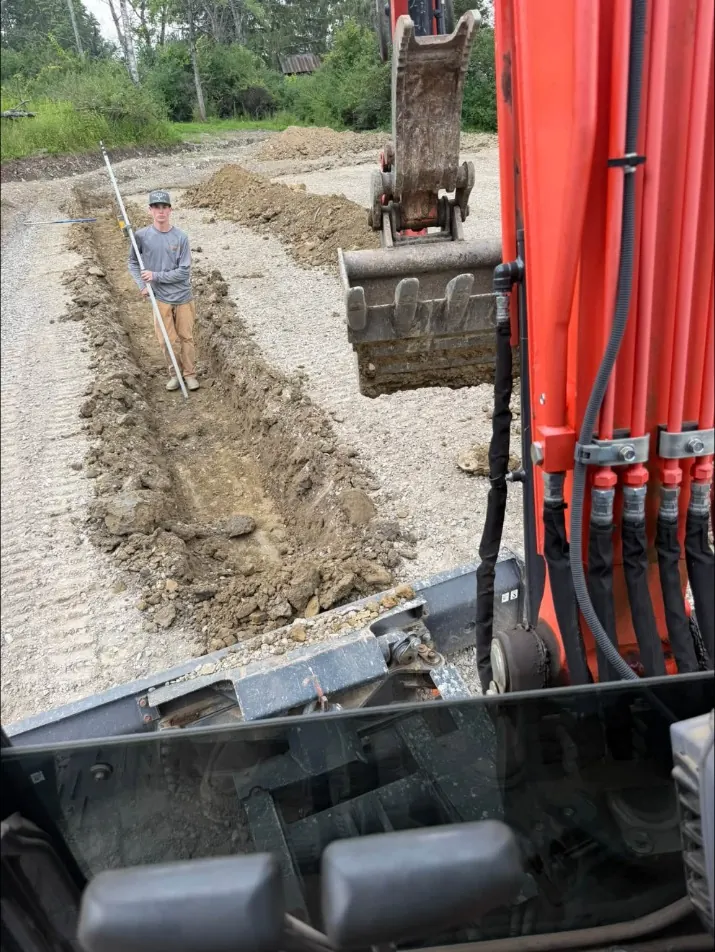
- The excavator digs to the depth for the job, checked with a laser level.
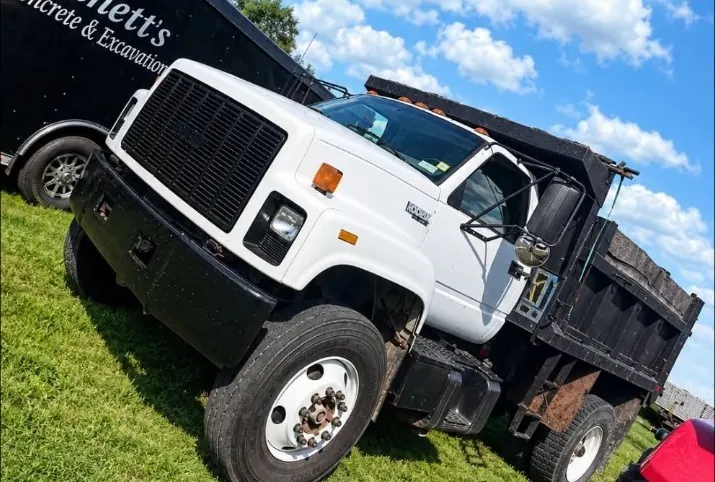
- Extra soil is piled or loaded into the dump truck and hauled away.
- Base stone comes in, gets spread and compacted.
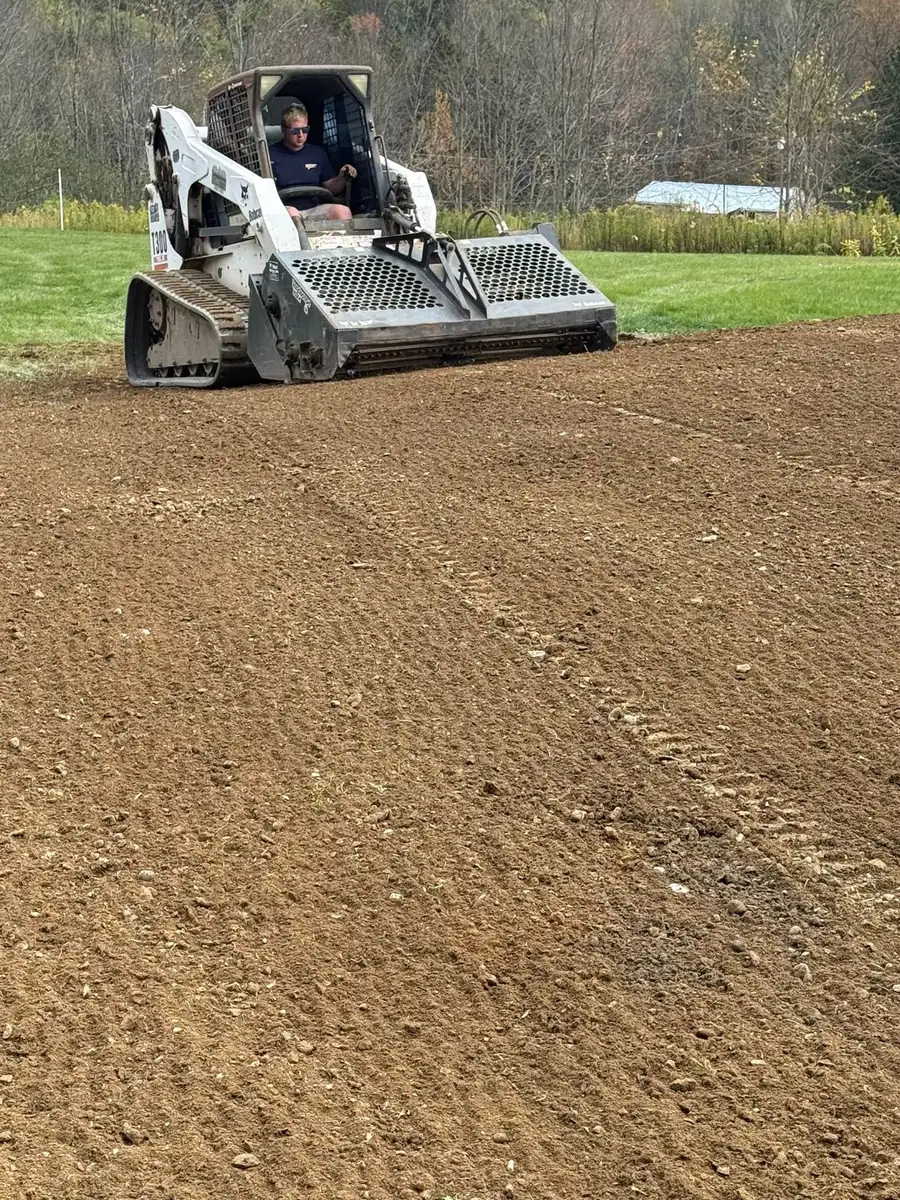
- The area is rough graded at the end of the day.
Noise, mud and the lawn
Expect engine noise and back-up alarms during working hours. Expect tracks in the lawn along the travel path, and mud if it's been wet. It's normal for the work area to look rough until the end. Final grading, topsoil and seed come last, sometimes days or weeks later if concrete or a building comes in between. Our guide to topsoil and fill explains what goes back on top.
Surprises underground
Digging can turn up rock, old foundations, buried trash, an old tank or water seeping in. Many Central NY soils also have a dense layer that holds water above it. When something unexpected turns up, the crew will stop and talk with you. If it changes the scope or the price, get the change in writing. The NYS Department of State advises putting any contract changes in writing.
Keeping your family safe
- Keep kids and pets inside or well away while machines run.
- Stay out of the excavator's swing area. Operators can't always see behind them.
- Don't walk near the edge of a trench or hole. Edges can cave.
- Ask how open holes will be secured overnight, and keep children away from them regardless.
After the dig
Backfill gets placed and compacted in layers. Even so, disturbed soil settles over the next year or so, so a low spot next to new work is normal and gets touched up. Make sure the final grade sends water away from the house. See grading away from a foundation. We run our own Kubota mini excavator, Bobcat track loader and dump truck. See excavation.