By Bennett's Concrete and Excavation, Norwich, NY. Updated October 2026.
Find where the water comes from
- Your roof. Downspouts dump a lot of water in a few spots.
- Uphill ground. A hill or a neighbor's yard sends runoff across yours.
- Hard surfaces. Driveways and patios shed water fast, often onto the lawn next to them.
- Groundwater. If a spot stays wet days after rain, the water may be coming up, not running in.
Watch it rain
The best drainage survey is a heavy rain or a spring thaw. In Central NY, the March and April melt often shows problems that summer storms never do, because frozen ground under the snow can't soak anything up. Walk the yard while it's happening. Take photos, push flags in where water pools, and follow where it leaves the property. That tells you more than any map, and it shows the contractor what you're seeing.
Regrading basics
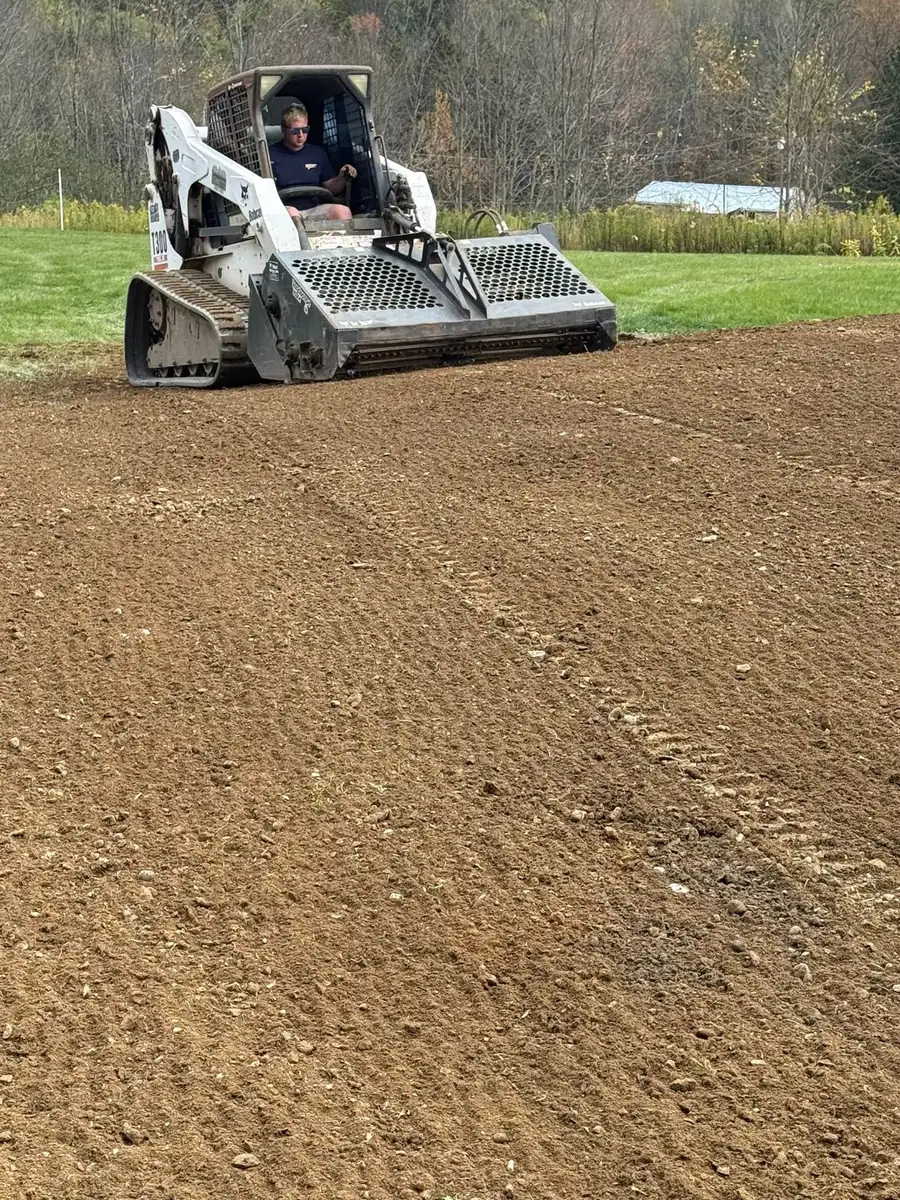
Regrading reshapes the surface so water keeps moving. High spots get cut, low spots get filled with soil that's compacted in layers so it doesn't settle back into a dip, and the ground near the house falls away from it. Our guide to grading away from a foundation covers the code rule for that part.
The most important piece is the outlet. Water has to go somewhere: a lower part of the property, a road ditch, or a natural drainage path. A swale that leads nowhere just makes a longer puddle.
Swales and how much fall they need
A swale is a shallow, wide, grassed ditch. Cornell's Local Roads Program drainage manual gives useful numbers for ditches that work for yard swales too.
| Fall along the ditch | What Cornell says happens |
|---|---|
| Under about 1% | Sediment can build up and water lingers |
| About 1% to 5% | The working range |
| Over about 5% | Erosion becomes the concern, so check dams or stone lining help |
The same manual calls side slopes of 1:3 good and says slopes steeper than about 1:2 may be unstable. It also notes mowed grass resists erosion better than unmowed weeds.
When the ground stays wet anyway
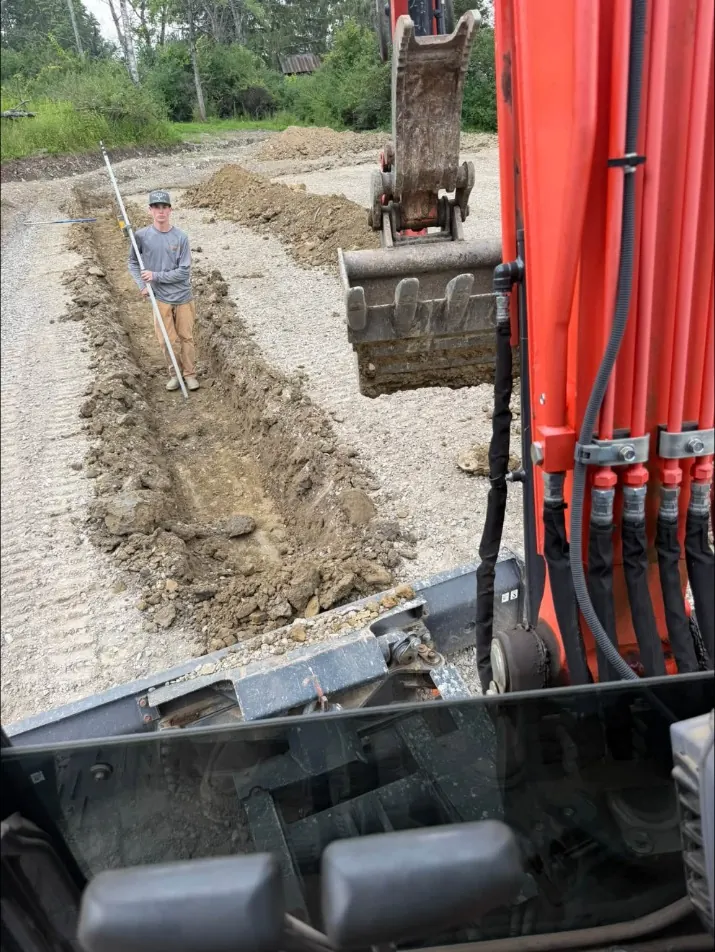
Regrading moves surface water. It can't drain a high water table. Many soils here have a dense layer underneath that water moves through slowly. The NRCS describes the Bath series, for example, with a fragipan whose water flow is low to moderately low compared with the soil above it. In those spots, a stone-filled trench with perforated pipe can collect water and carry it to the outlet. Cornell's manual describes filled ditches with a perforated pipe at the bottom and fabric on at least one side. See also our clay soil guide.
Common fixes by problem
| Problem | Usual fix |
|---|---|
| Puddle by the foundation | Rebuild slope away from the house, extend downspouts |
| Runoff from a hill or neighbor | Swale across the slope to catch and redirect it |
| Water off the driveway onto the lawn | Shape the shoulder and add a swale or ditch along the edge |
| Low spot in the middle of the lawn | Fill and regrade to a continuous fall, or a swale to an outlet |
| Wet days after every rain | Stone and perforated pipe drain, plus regrading |
Most yards need a mix of these, which is why it pays to watch the water before anyone starts digging.
Don't move the problem next door
Water needs to go to an outlet that can take it, not onto a neighbor's lot or across a road. Road ditches belong to the town, county or state. Ask the highway department before you tie anything into one. If drainage is crossing property lines, talk with your neighbor and your town early.
What we do
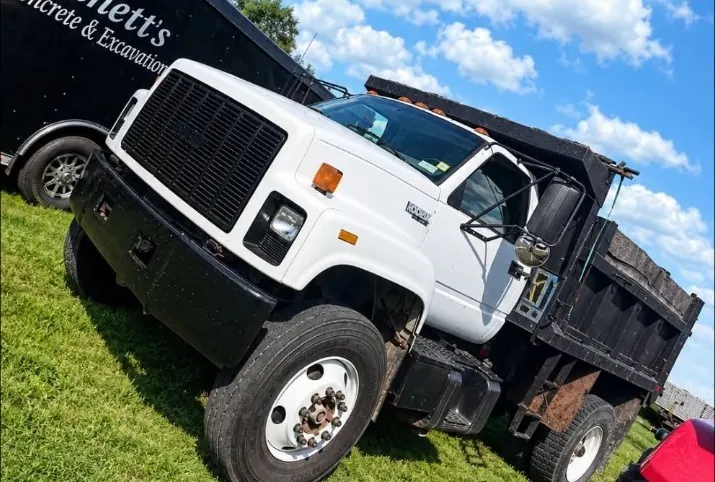
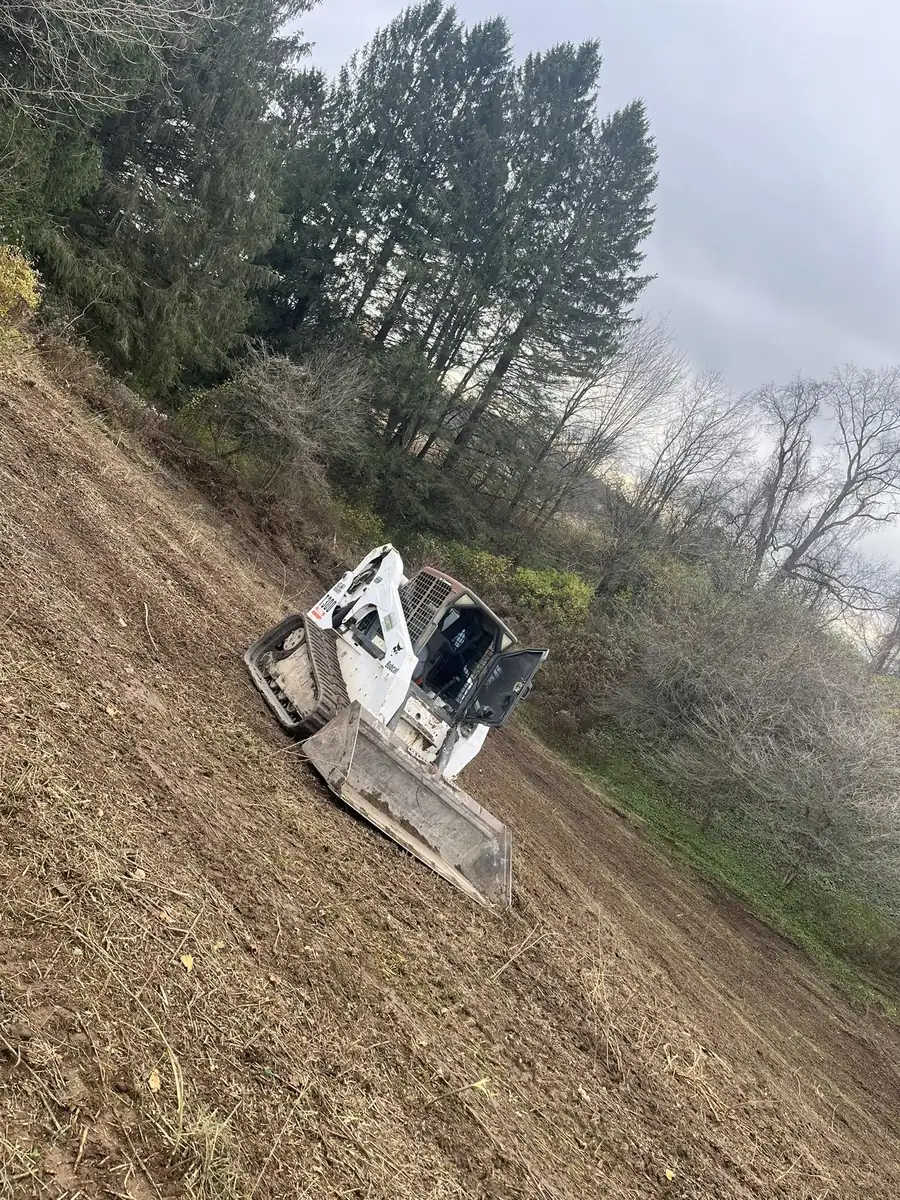
We shoot grades with a laser level, reshape with a mini excavator and track loader, and bring stone and fill in our own dump truck. See site prep and grading or gravel delivery.