By Bennett's Concrete and Excavation, Norwich, NY. Updated October 2026.
The quick difference
| Topsoil | Fill | |
|---|---|---|
| What it is | The dark top layer, with organic matter and life in it | Subsoil and other mineral soil from lower down |
| Organic matter | Some, which plants need | Little to none |
| Best for | Lawns, gardens, the final few inches of a graded area | Raising grade, filling holes, backfill, building slopes |
| Under slabs and driveways | Never | Clean, compacted fill can be used below the stone base when the plans allow |
| When compacted | Keeps settling as organic matter breaks down | Holds its shape when placed in layers and compacted |
What topsoil is, and isn't
Here's the catch: there's no legal standard for what can be sold as topsoil. The University of Connecticut's soil lab points out that there are no legal marketing standards for it, and that "topsoil" and "loam" get used as if they mean the same thing when they don't.
The same lab gives a good checklist for decent topsoil:
- At least 2 percent organic matter, but no more than about 10 percent
- No trash or debris
- If screened, no rock fragments over 3 inches, and gravel under 3 inches making up no more than 5 percent of the volume
- Sandy loam or fine sandy loam texture is close to ideal. Straight sand holds little water or nutrients.
- Avoid dark, grayish soil that may have been dredged from a wetland. It's often very acidic and poorly structured.
What fill is
Fill is soil used to change the shape of the ground. It's dug from below the topsoil layer, so it has little organic matter and packs down hard when it's compacted. "Clean fill" usually means it's free of trash, stumps, roots, asphalt and concrete chunks.
Not all fill is the same. Sandy, gravelly fill drains and compacts well. Heavy clay fill holds water and is hard to compact when wet. For anything structural, like under a foundation, the plans or engineer say what's allowed. Under slabs and driveways, the layer right under the concrete or top stone is usually crushed stone, not dirt. See our crushed stone sizes guide.
How much topsoil for a lawn
The math is the same as any material: square feet times depth in feet, divided by 27, gives cubic yards. UConn's guide gives a handy check: 12 cubic yards covers about 1,000 square feet at 4 inches deep.
The University of New Hampshire Extension suggests mixing new soil and amendments into the top few inches of the existing soil rather than just spreading it on top. A sharp line between two different soils can hold water and keep roots shallow. UNH also lists an acceptable pH range of 5.5 to 7.5 for topsoil.
Check a load before you buy
- Look at it in person if you can, and squeeze a handful. It should crumble, not smear like putty or run like beach sand.
- Ask where it came from.
- Ask if it's screened. UNH notes unscreened topsoil can be full of rocks and roots.
- Ask if it's been tested. UConn says few companies test topsoil before selling it, so a soil test of your own is cheap insurance for a garden.
- Watch for weeds sprouting in the pile. Seeds come along for the ride.
Using both on one job
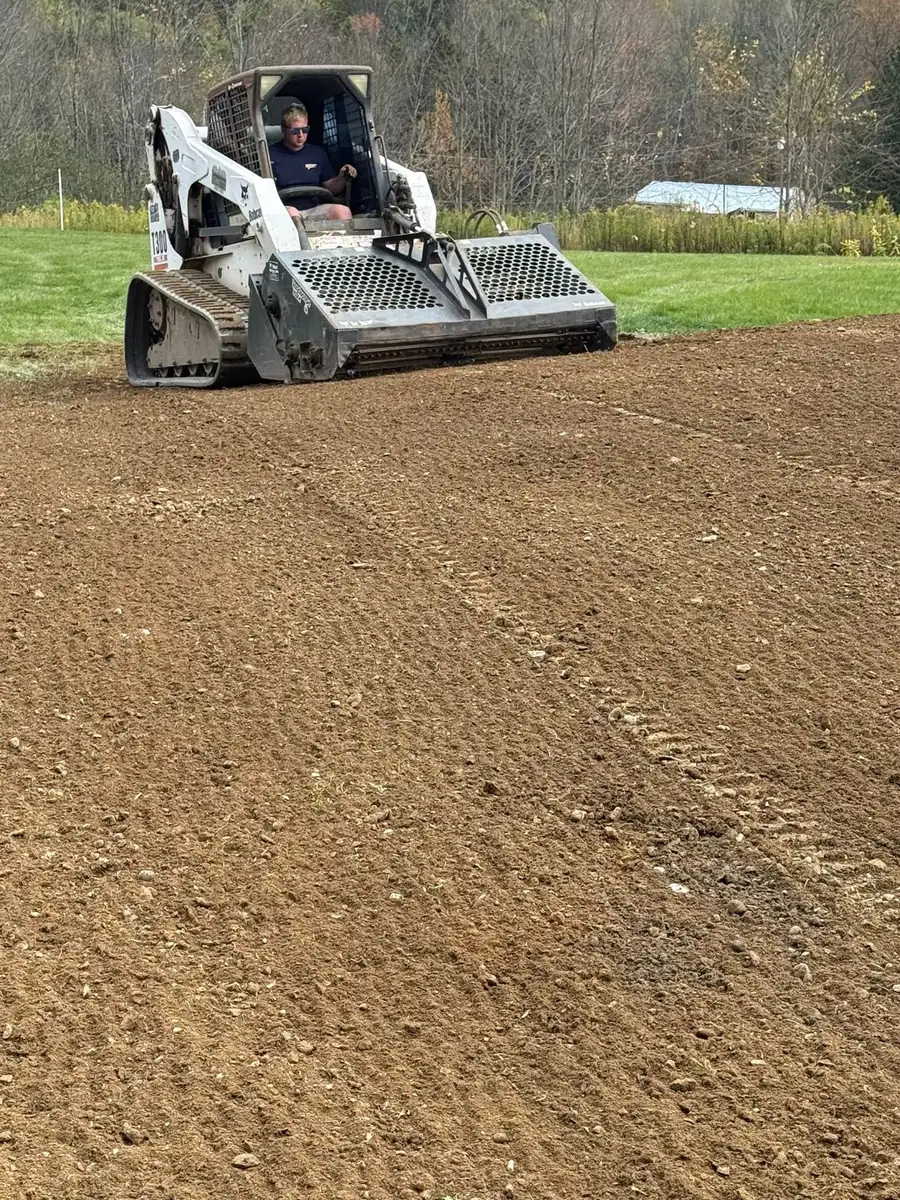
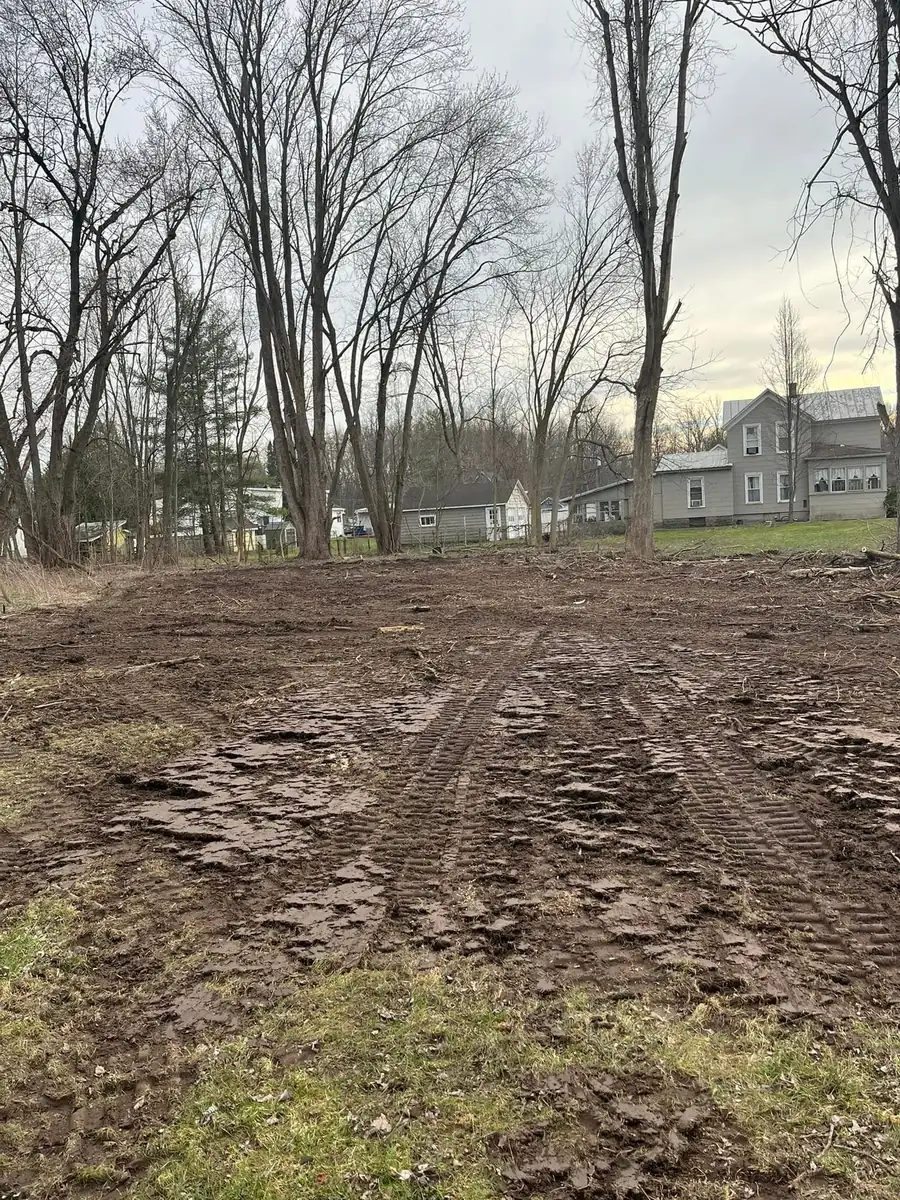
A typical regrade uses both. Fill builds the shape of the slope, placed in layers and compacted so it doesn't settle into dips. Topsoil goes on last, a few inches deep, then seed and mulch. The topsoil you stripped at the start of a project is often the best source, because it's already from your ground.
What never works: building a slope out of loose topsoil, or burying topsoil under a patio or driveway. Both settle. Our site prep guide explains why topsoil comes off first.
Getting it done
We haul stone and gravel in our own dump truck and handle the grading, from building up a low corner to reshaping a whole yard. See site prep and grading and delivery and hauling.