By Bennett's Concrete and Excavation, Norwich, NY. Updated October 2026.
The rule in one paragraph
New York's 2025 Residential Code took effect December 31, 2025, and the International Code Council describes it as based on the 2024 International Residential Code. In the IRC, section R401.3 calls for the ground to fall at least 6 inches within the first 10 feet away from the foundation. Hard surfaces such as walks and patios within 10 feet of the building must slope at least 2 percent away from it. Where a lot is too tight for that, drains or swales can carry water away instead.
Your local code enforcement officer has the final word on how it applies to your house.
What those numbers look like
Six inches in 10 feet works out to a 5 percent slope. Two percent is about a quarter inch per foot.
| Surface | Minimum slope away | Drop over 10 feet |
|---|---|---|
| Soil or lawn next to the foundation | About 5% (6 in. in 10 ft.) | 6 inches |
| Walks, patios, driveways | 2% | About 2 1/2 inches |
To check it, run a string from the foundation out 10 feet, level it, and measure down to the ground at the far end.
Why it matters more here
Snowmelt and spring rain soak our dense, silty soils for weeks at a time. When the ground next to a basement wall stays wet, that water presses on the wall, finds cracks and freezes in the soil next to the foundation. The fix that costs the least is the one that keeps the water from getting there in the first place: ground that falls away, and downspouts that dump far enough out to stay on that slope.
Downspouts and grade work together
A roof sheds a surprising amount of water, and all of it comes down through a few downspouts. If they empty right at the wall, even good grading gets overwhelmed in a heavy rain. Extensions or splash blocks should carry water out onto the slope, where it can keep moving. Buried downspout lines need an outlet that daylights downhill and stays clear of leaves and ice.
Watch the corners too. Inside corners where two walls meet collect water from both roof planes, and they're where grading most often goes flat.
Common grading problems
- Settled backfill. Soil against a newer foundation keeps settling for years and leaves a low trough right at the wall.
- Garden beds. Edging and mulch built up against the house can trap water instead of shedding it.
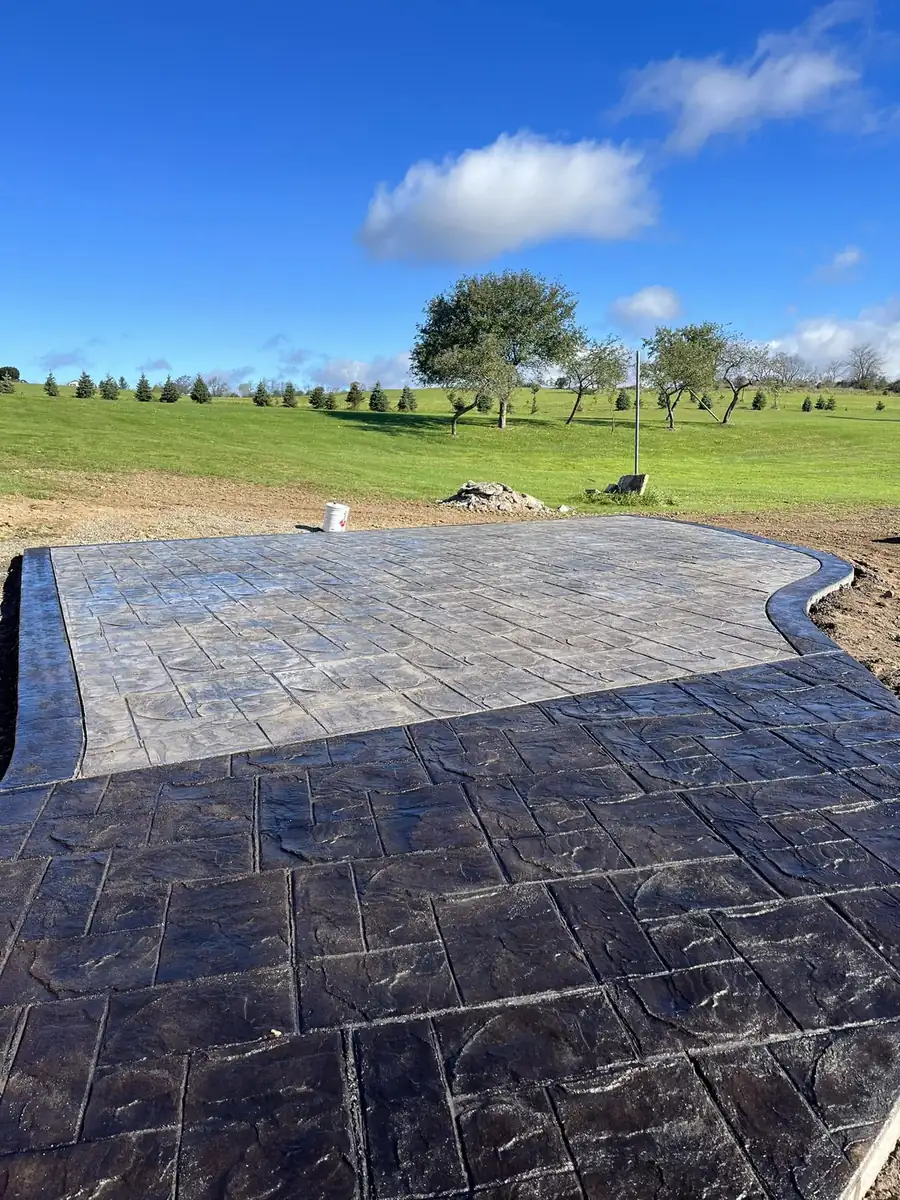
- Patios and walks. A slab poured flat, or one that has sunk toward the house, sends water straight at the foundation.
- Short downspouts. The roof collects a lot of water and drops it in one spot.
- Siding buried. Raising the grade can bury siding or sill plates. Keep soil below them.
How it gets fixed
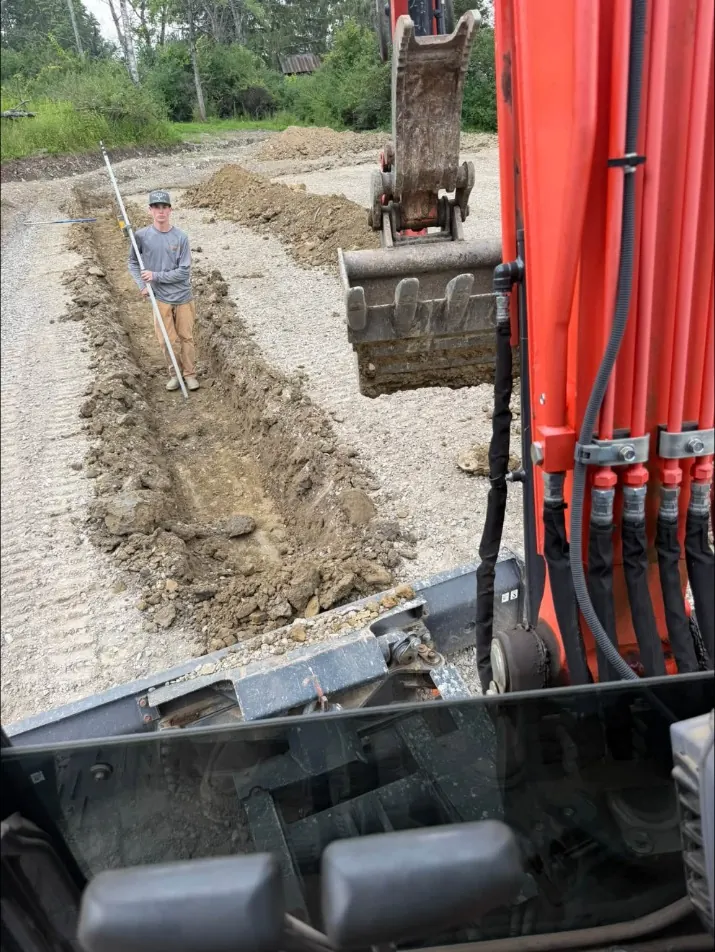
- Shoot existing grades with a laser level and find the low spots and the outlet.
- Pull back mulch, stone or sod where the grade needs to change.
- Bring in fill to build the slope, placed in layers and compacted, rather than piling loose topsoil against the wall.
- Shape a swale where the yard or a hill sends water toward the house.
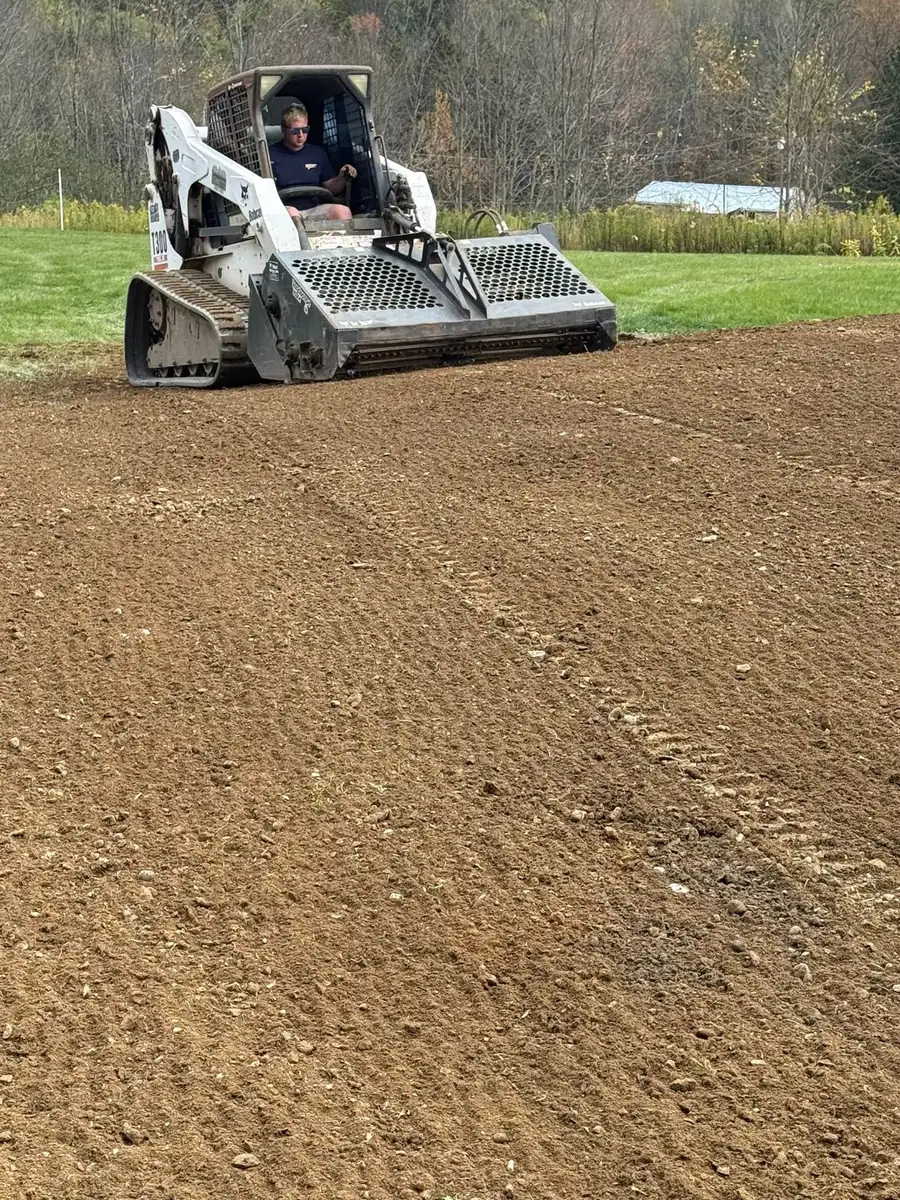
- Finish with topsoil and seed so the slope doesn't wash.
If a patio or walk slopes the wrong way, the fix is usually removing and replacing it at the right pitch.
When grading isn't enough
On hillside lots, or where groundwater sits high, surface grading may not solve everything. A swale or drain may be needed to catch water before it reaches the house. Water coming through the wall itself is a question for a waterproofing contractor or engineer. Our guide to fixing yard drainage covers swales and outlets.
Getting help
We regrade with our own equipment and laser level, and we pour patios and walks with the right slope built in. See site prep and grading.