By Bennett's Concrete and Excavation, Norwich, NY. Updated October 2026.
Start with what's under the ground
Before you plan anything, look up your soils. The USDA's free Web Soil Survey lets you outline your lot on a map and see the soil types underneath, along with ratings for different uses. You set an area of interest, open the soil map, and then use the Soil Data Explorer to see suitabilities and limitations.
Many Central NY lots sit on glacial till with a dense layer called a fragipan. The NRCS describes the Norwich soil series, for example, as poorly or very poorly drained, with the top of the fragipan 10 to 24 inches down. A soil like that tells you to expect wet spots and to plan drainage from day one. Our clay soil guide goes deeper.
Permits to line up early
- Building permit: from your town or village code office. Ask about setbacks and what they need on a plot plan.
- Driveway entrance: from whoever owns the road: the state, the county or the town. See driveway permits in NY.
- Septic and well: your septic designer will know what the health department needs.
- Stormwater: NYS DEC permit coverage applies when a project disturbs one acre or more of soil.
Access comes first
The driveway is usually the first thing built, because everything else arrives by truck: concrete trucks, the well rig, lumber, the septic tank. A soft, muddy lane stops all of them.
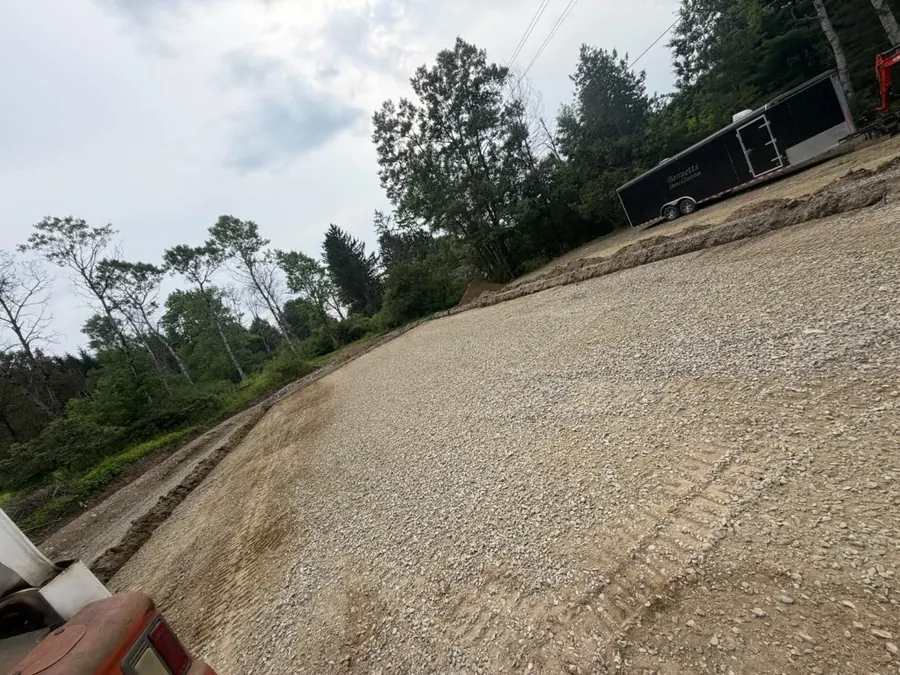
A common plan is to build the driveway base early and hold off on the final top stone until the heavy trucks are done. If the road has a ditch, the culvert goes in with the driveway. Our culvert and ditch guide covers who sizes the pipe.
Clearing and setting the pad
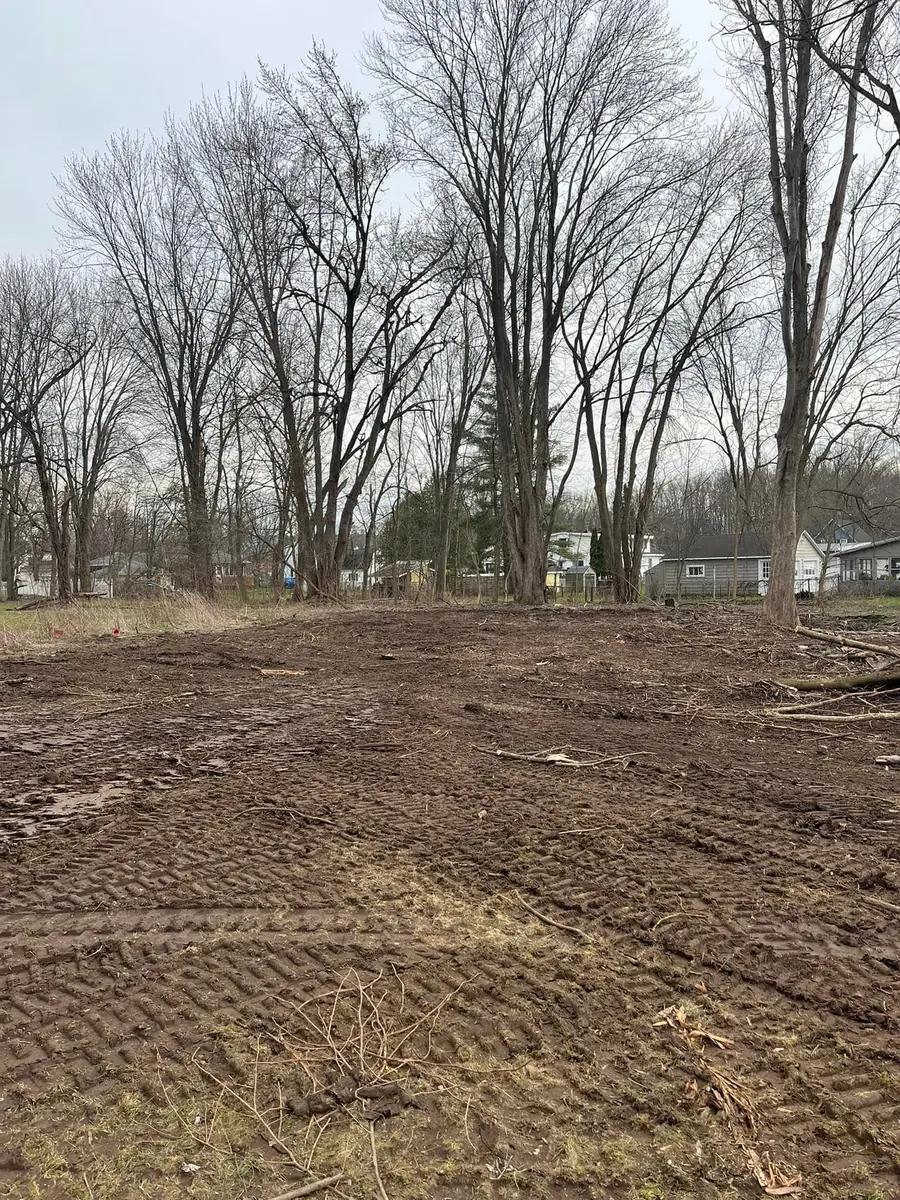
Clear the footprint plus working room around it. Strip the topsoil and stockpile it on the lot so you can spread it back at the end. Then set the pad height. This matters more than people think: the house needs to sit high enough that the finished ground can fall away from it on every side. Our guide to grading away from a foundation explains the code rule.
Plan where the dirt goes
A basement or foundation dig makes a big pile of soil, and stripping a building site makes another. Decide early where it will go. Some of it comes back as backfill, some can build up a low area or a berm, and topsoil gets saved for the lawn. Moving the same pile twice costs time, so stockpiles should sit where they won't block the driveway, the foundation crew or the septic area.
If the lot needs fill to raise the pad, the type of fill matters. Soil full of roots, stumps or topsoil keeps settling. Clean fill placed in layers and compacted, or crushed stone under slabs, stays put.
On sloped lots, cut and fill can often be balanced so material dug from the high side builds up the low side, which keeps trucking down.
Utilities and trenches
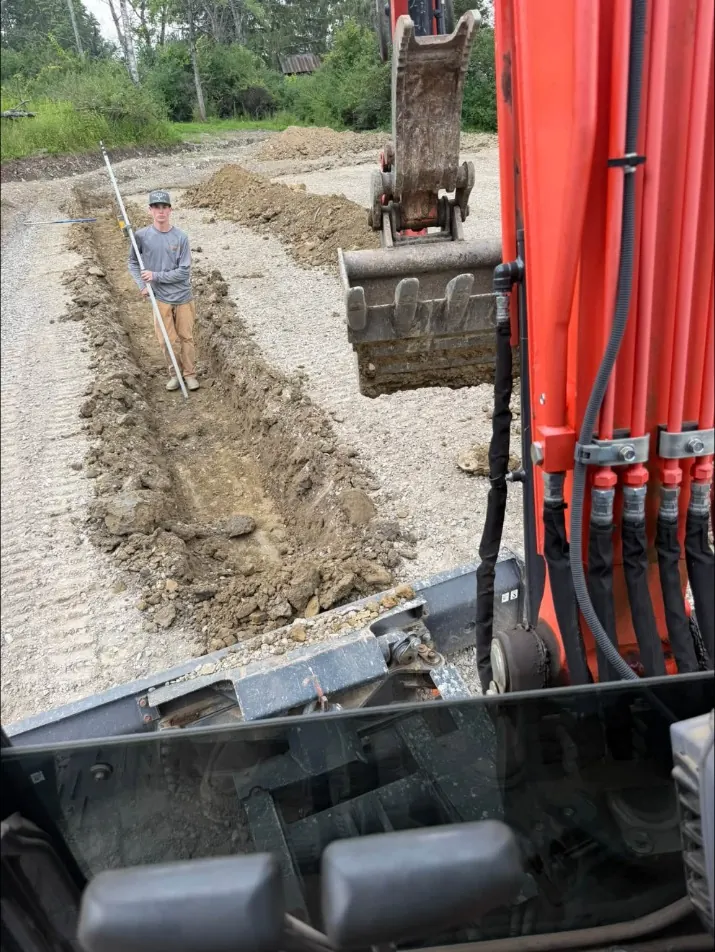
Power, water, septic lines and sometimes gas or a line to a garage all need trenches. Plan the routes so they don't cross where the driveway or a future patio will go if you can avoid it. Before any trench, the one-call notice goes in so existing lines get marked. The utility company sets its own rules for the service trench, so ask them early.
Foundation dig and backfill
The foundation is dug to the depth on your plans, footings are formed and poured, then walls go up. Backfill comes after the walls are ready for it, and heavy machines stay back from fresh walls. Backfilled soil settles over time, so the final grade is checked again after a season.
Spring is the hardest time to work a lot here. Thawing ground is soft, trucks rut it, and a wet site can stall for days. Fall work goes well until the ground freezes, but leaves little time for seed to take.
A typical order of work
- Survey, soils and plans
- Permits
- Driveway base and culvert
- Clearing and topsoil stripping
- Foundation excavation and footings
- Utility trenches
- Backfill and rough grade
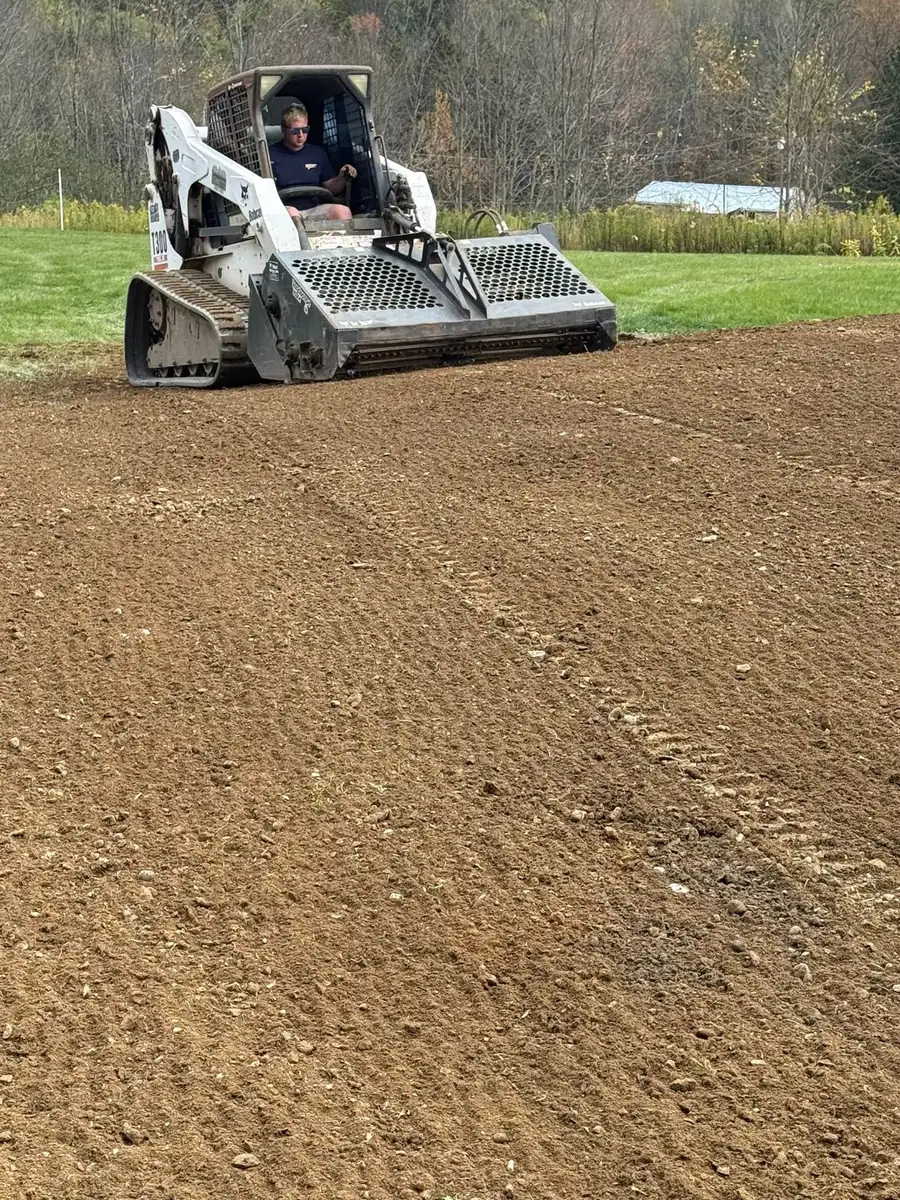
- Final driveway stone, topsoil and seed
Every lot is different, and your builder may change the order.
We do excavation, driveways, building pads and grading with our own equipment, and we pour slabs and ICF foundations. See excavation to talk about a lot.