By Bennett's Concrete and Excavation, Norwich, NY. Updated October 2026.
How heavy a hot tub really is
Bullfrog Spas says the maximum filled weight of a portable spa can be as much as 6,000 pounds, and a swim spa can be close to 20,000 pounds, plus the people in it. Hot Spring's spec sheet lists filled weights for its models from about 2,650 pounds to 5,920 pounds, with occupants included.
That weight bears down on the spa's footprint every day of the year, through freeze and thaw. A thin, uneven or poorly based pad will show it as a tilted tub, a cracked corner or a cabinet that won't sit flat.
What spa makers ask for
- Thickness: Bullfrog and Hot Spring both call for a concrete pad at least 4 inches thick.
- Reinforcement: both call for rebar or mesh in the pad, and both say the reinforcement should be attached to a bond wire.
- Level: Bullfrog allows a maximum of 1/2 inch of slope in an 8-foot run and says not to level the spa with shims.
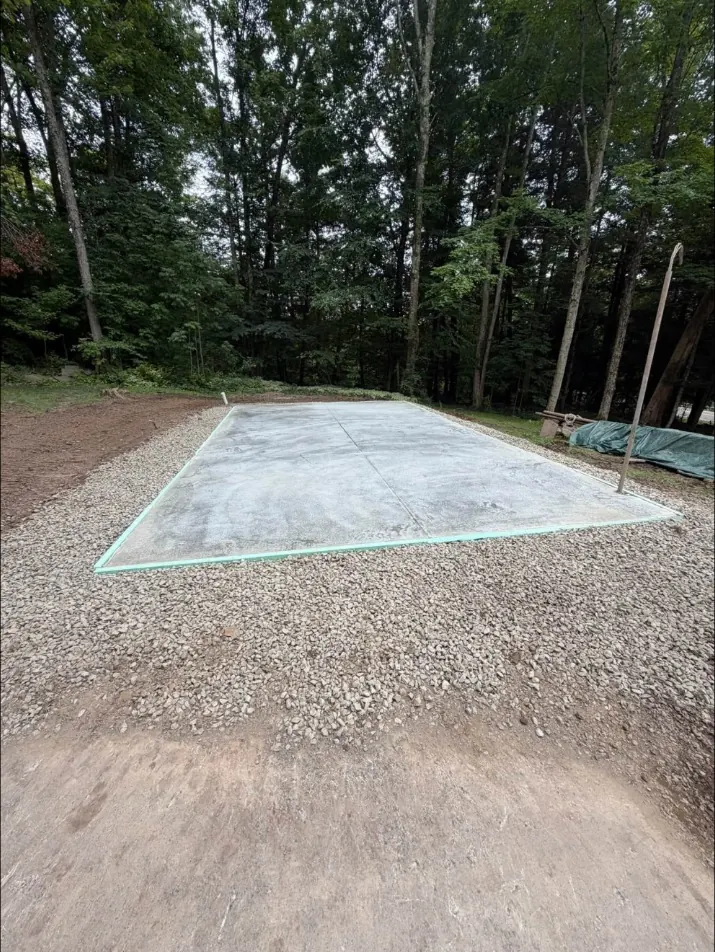
- No voids: the pad has to bear evenly under the whole spa.
Requirements vary by brand and model. Get the installation sheet for your exact spa before the pour, not after.
Bonding and electrical: plan before the pour
Because both makers want the pad's steel tied to a bond wire, your electrician needs to see the pad before concrete covers the steel. Plan the conduit route at the same time so it runs under the slab instead of across it.
Hot Spring's sheet calls for a GFCI-protected circuit for its 230-volt models and says the subpanel should not be closer than 5 feet from the spa's water edge. Use a licensed electrician and follow the electrical code and your spa's manual.
Drainage and frost
Bullfrog's 1/2 inch in 8 feet allowance is useful: it means a pad can still shed water while staying close enough to level for the spa. Splash-out, rain and the occasional draining of the spa all need somewhere to go, away from the house and the spa's equipment bay.
Underneath, the same rules as any slab apply. Topsoil out, compacted stone base in, and water kept from pooling under it so frost doesn't lift one corner. See frost heave explained for why that matters here.
Leave room around the tub
The spa's footprint is only part of the pad. Think about steps, a cover lifter that swings behind the tub, walking room on the access side, and space to open the equipment panel. Hot Spring lists extra clearance for its cover lift systems. Measure the delivery path too, including gates, corners and overhead clearance, because the spa often arrives on its side on a cart.
A pad alone, or part of a patio
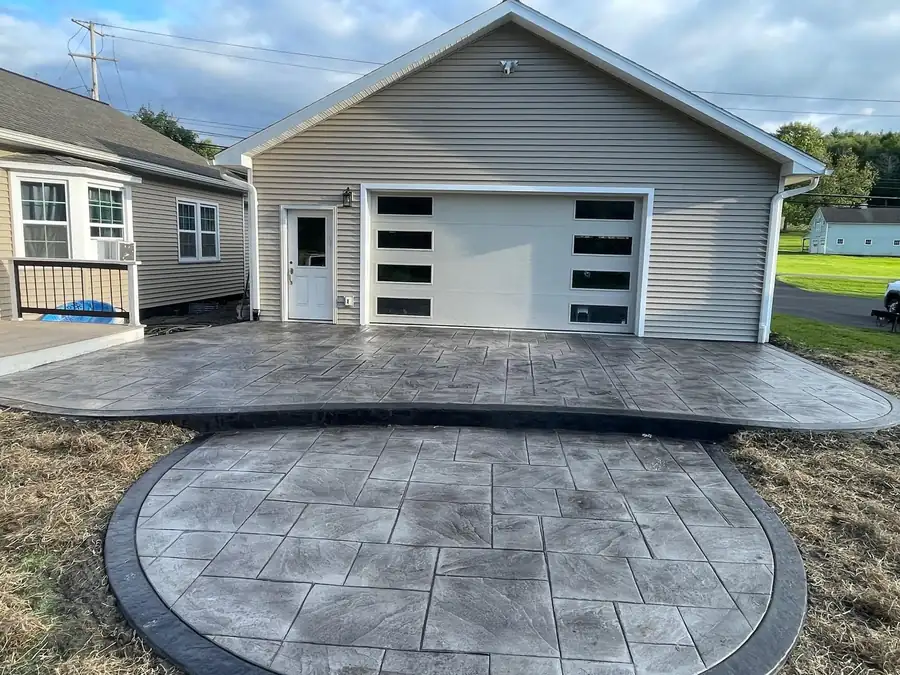
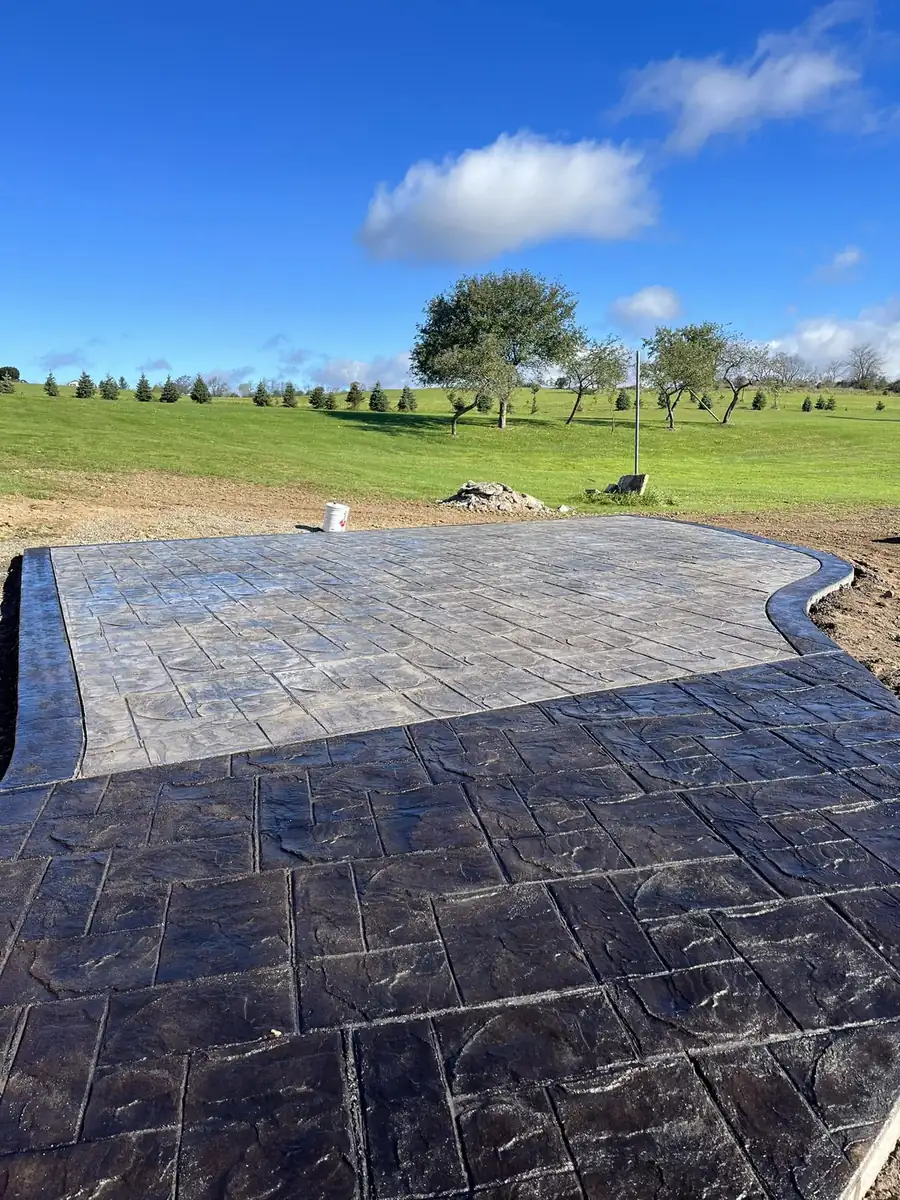
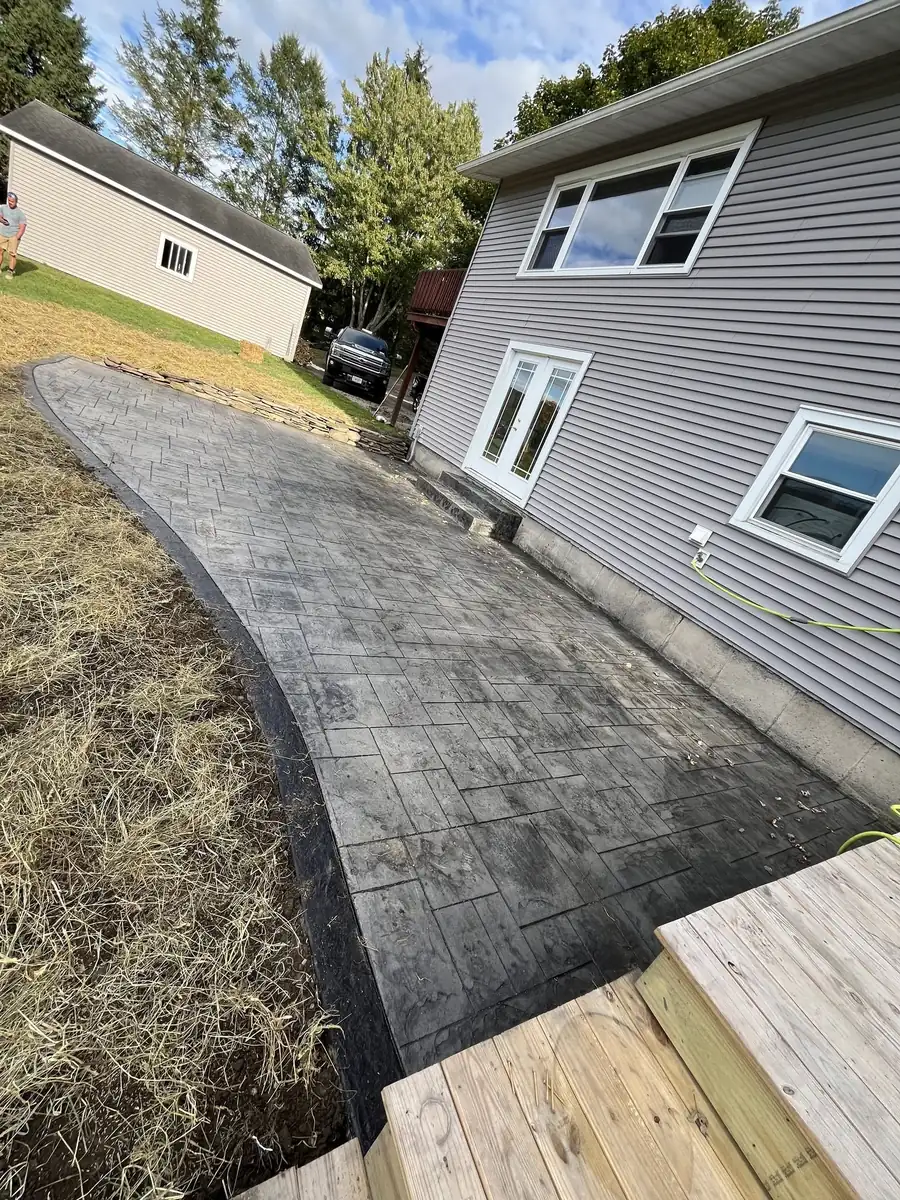
Many people pour the hot tub area as part of a larger patio. That gives you a place for chairs, towels and a path back to the house. We poured a stamped hot tub patio in North Norwich. When the spa sits within a bigger slab, control joints are laid out so the tub sits on one panel instead of straddling a joint. Our patio planning guide covers layout and joints.
Questions for your spa dealer
- What does this model weigh full, with people in it?
- What are its exact footprint and height?
- What thickness, reinforcement and level tolerance does the maker require?
- Which side is the equipment panel on, and where does the power come in?
- Where is the drain, and where will the water go when you empty it?
- How will it be delivered, and how much clearance does the cart need?
Bring those answers to your concrete estimate. They decide the pad's size, where the conduit runs and which way the slab should pitch.
Then ask about timing. Concrete keeps gaining strength for weeks after the pour, so don't let a delivery crew roll a heavy cart across fresh edges. Ask your spa dealer and your contractor together when the tub can go on; our curing guide explains why waiting pays off.
Decks and other bases
Bullfrog lists other acceptable bases for portable spas, including pavers, pea gravel, crushed rock and a properly built deck. For an elevated deck, it says the deck's capacity must be greater than the spa's filled weight plus occupants, and swim spas on decks need plans certified by a structural engineer. Concrete is the most common choice because it's flat, solid and lasts.
Bennett's builds concrete pads and stamped patios sized for the spa you're buying.