By Bennett's Concrete and Excavation, Norwich, NY. Updated October 2026.
Your walk, or the public sidewalk?
Start by figuring out which kind of sidewalk you have:
- Private walks run from the driveway or street to your door, or around the house. You decide the size, finish and timing.
- Public sidewalks run along the street in the right-of-way. Cities and villages set the standards, may require a permit, and have their own rules on who pays for repairs.
Rules on public sidewalks vary from place to place, so call your city public works department or village office before replacing one.
What a city spec looks like
The City of Syracuse's 2020 sidewalk standards give a sense of what municipalities expect:
- Walks 5 inches thick in total, and 7 inches through driveways.
- Base concrete reaching 3,500 psi at 28 days, with 6 percent air, plus or minus 1 percent.
- Tooled contraction joints no more than 6 feet apart, and expansion joints no more than 20 feet apart.
- A cross slope of 1/4 inch per foot toward the roadway.
- At least three days of curing before forms come off, and compliance with the Americans with Disabilities Act.
Your town's spec may differ. If you're replacing a public walk, build to that spec.
Why sidewalks fail
- Frost heave: wet, fine soil freezes and lifts sections; see frost heave explained.
- Tree roots: roots grow under the slab and lift it.
- Washouts: water running along or under the walk carries out the base.
- Salt: deicers scale the surface, especially on concrete without enough air.
- No base: older walks were sometimes poured right on soil.
Replacing pavers with concrete
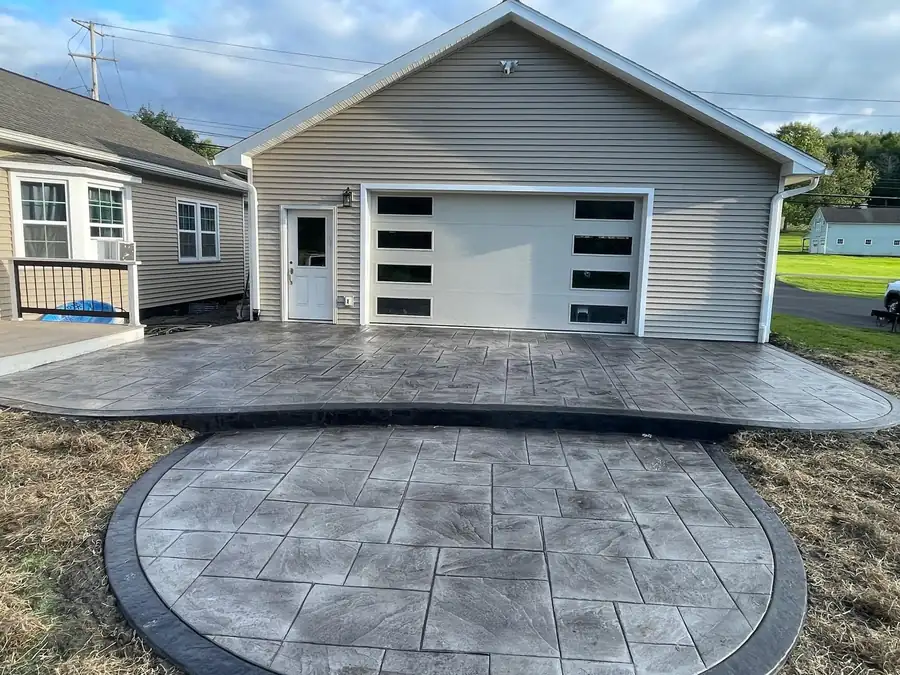
Paver walks have their own problem: the joints. Paver maker Mutual Materials explains that weeds in paver joints sprout from windblown seeds that lodge there. In Norwich we replaced a paver sidewalk with concrete so the owner would have no more weeds to pull. See stamped concrete vs. pavers if you want the look of pavers without the joints.
The base is the job
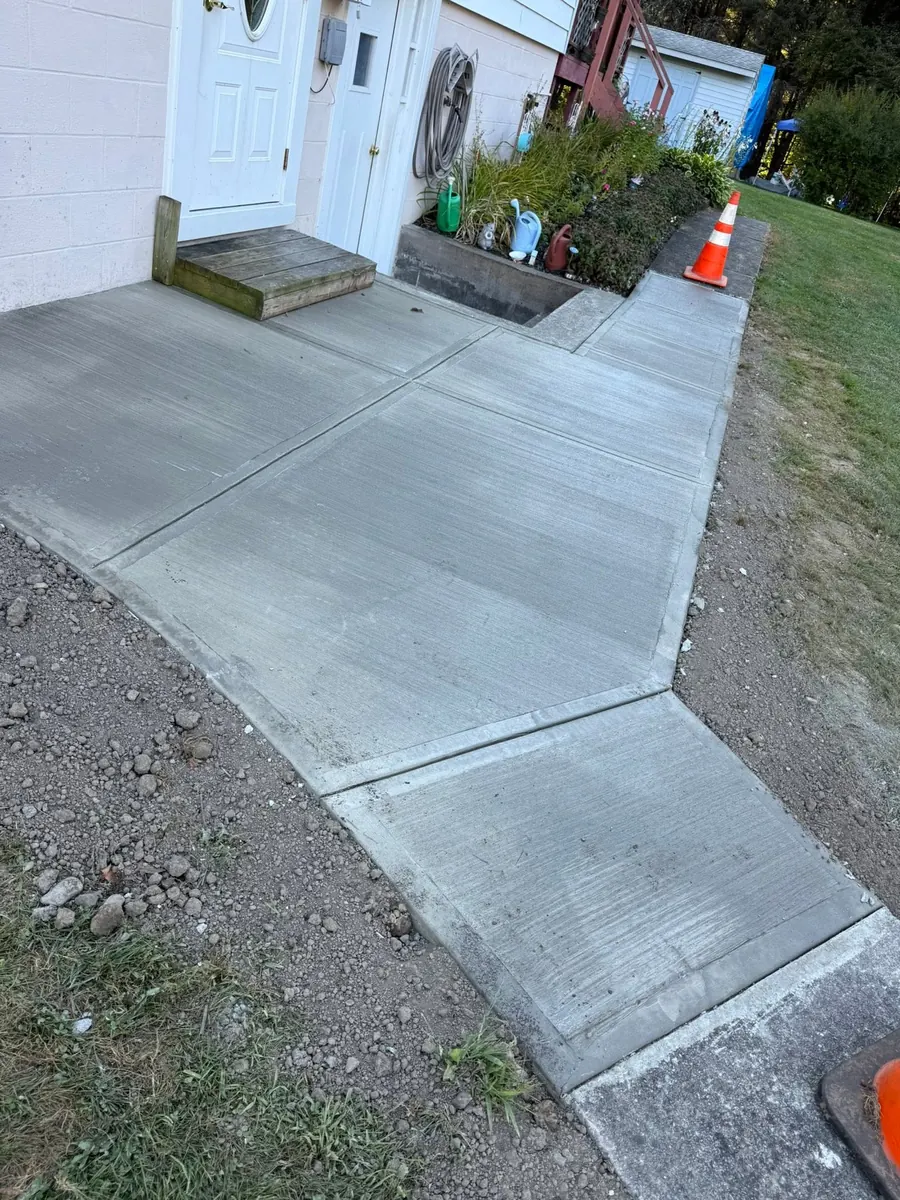
A new walk on the same wet soil will lift the same way. Replacement means breaking out the old sections, digging out soft or root-filled soil, placing compacted crushed stone and setting forms to a slope that sheds water. In Hamilton we removed broken concrete and replaced it with reinforced concrete on a proper base. On the same job we jacked up a deck, replaced the deteriorating concrete under it and set the deck back down, which shows how much can be fixed without tearing out everything around it.
Joints, finish and first winter
NRMCA's joint guide recommends panels close to square, no longer than 1.5 times their width, and isolation joints where walks meet driveways, curbs and buildings. A broom finish gives grip in rain and snow; stamped finishes or a color border dress up a front walk. Then protect it: NRMCA advises no deicers on new concrete the first winter, and never ammonium-based products.
Planning a front walk
- Route: follow the path people already walk. A walk that makes visitors cut a corner gets a worn track in the lawn beside it.
- Steps and landings: where the ground drops, plan steps and a landing at the door rather than a walk that's too steep.
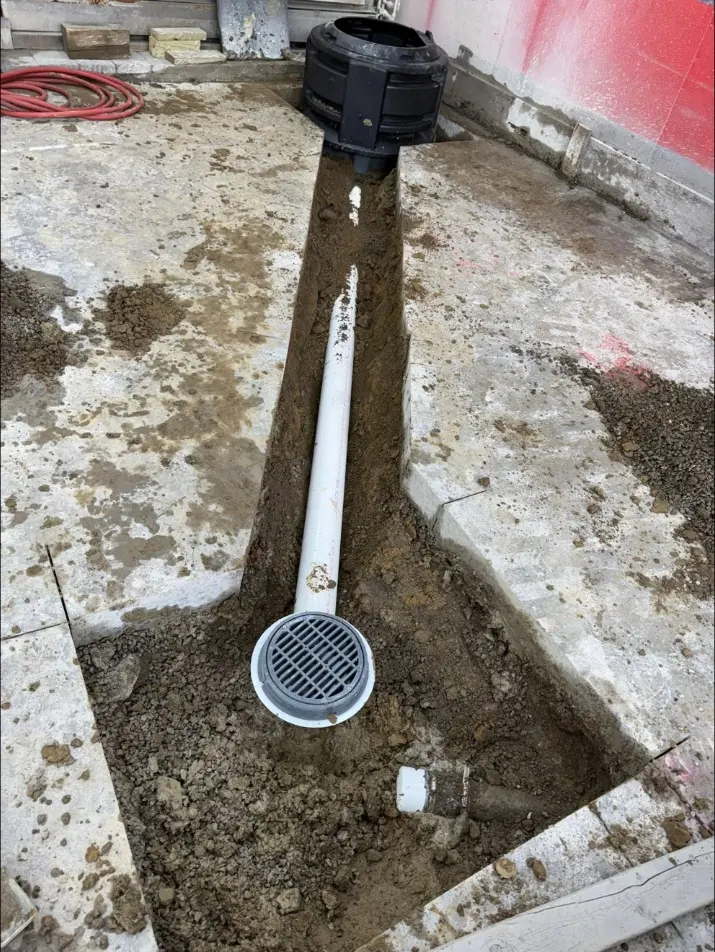
- Water: pitch the walk so it sheds water off one side, and keep downspouts from emptying across it, where they make ice.
- Sleeves: run conduit under the walk for path lights or a future lamp post before the pour.
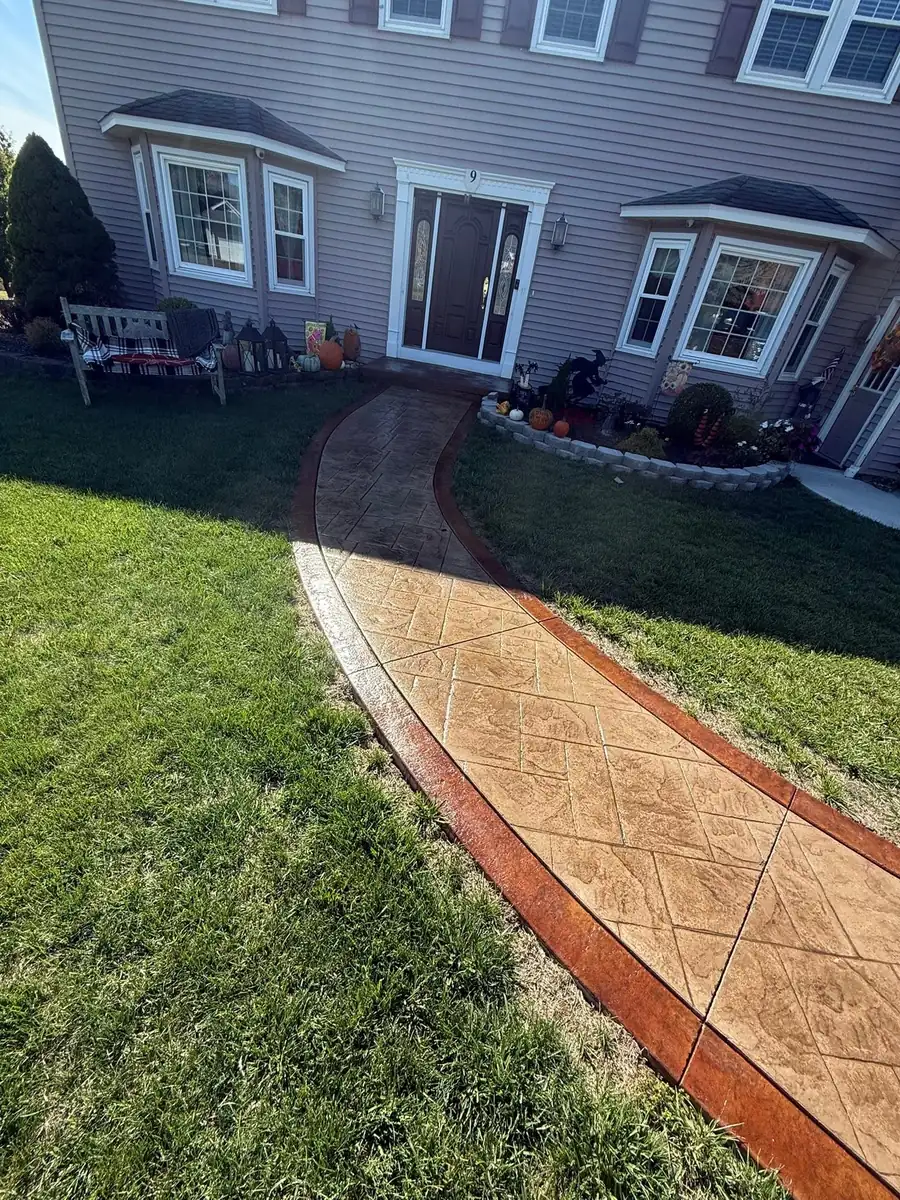
- Finish: a broom finish is simple and grippy; an ashlar slate stamp, like our Norwich front entry, or a color border makes the walk part of the house's look.
Local work and next steps
We've also poured a sidewalk in Sherburne. Bennett's builds sidewalks, walkways and steps and handles removal and replacement. Before you call, measure the length and width, note where water collects, and find out whether the walk is yours or the municipality's.