By Bennett's Concrete and Excavation, Norwich, NY. Updated October 2026.
The short answer
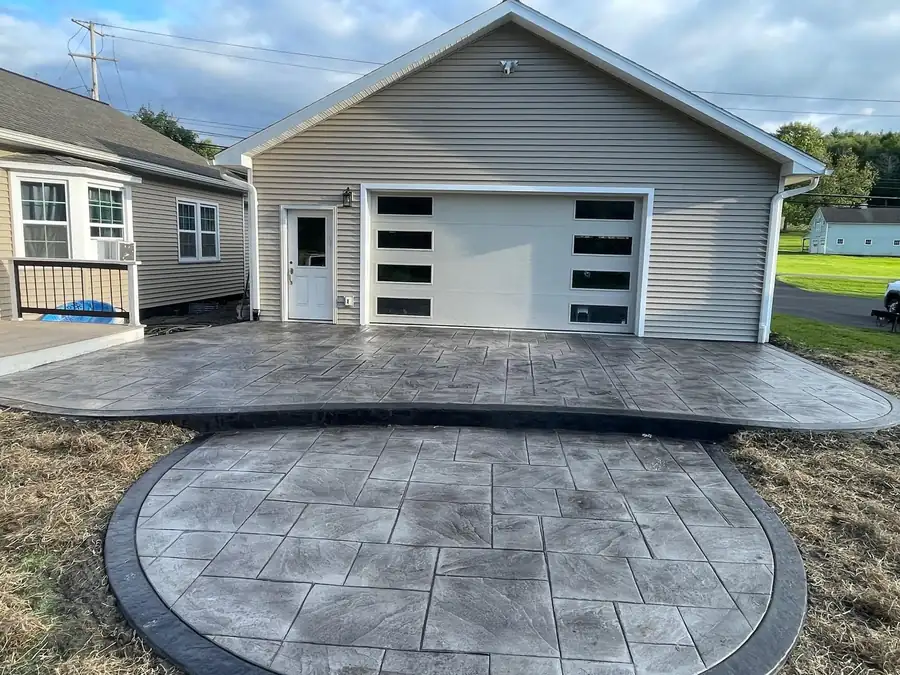
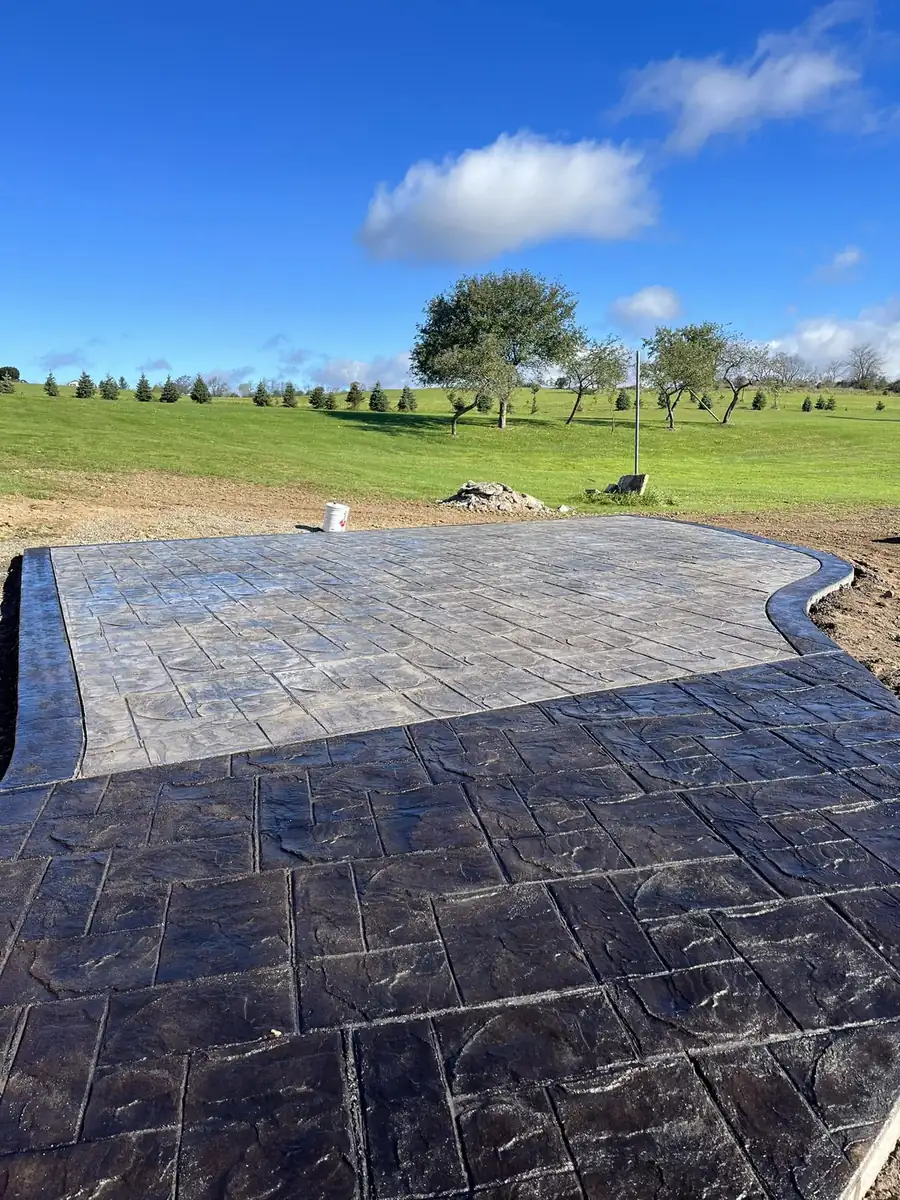
Stamped concrete is one continuous slab with a pattern pressed into the surface while it's still plastic. Pavers are individual concrete units set on a bedding layer over a compacted stone base, with sand in the joints between them.
Stamped concrete has far fewer joints, so there are fewer places for weeds and ants and no units to shift. Pavers can be lifted and reset when something settles. The better choice depends on which trade-off bothers you more: the chance of a crack in a slab, or joints that need sand and weeding.
Side by side
| Stamped concrete | Pavers | |
|---|---|---|
| Surface | One slab, with control joints | Hundreds of joints between units |
| Weeds | Only at joints and edges | Seeds blow into the joints and sprout |
| Movement | Can crack; joints decide where | Units can settle or lift one by one |
| Repairs | Whole panels replaced at joints; new color rarely matches exactly | Units lifted and reset, no jackhammer |
| Upkeep | Clean and reseal every few years | Top up joint sand; optional sealing |
What pavers do well
The Concrete Masonry and Hardscapes Association (CMHA) points out that interlocking pavements can be opened and closed without jackhammers, and the same pavers can go back down after a repair. That's handy where a utility line runs under the walk or where you may add on later.
Pavers made to ASTM C936 are dense, factory-made units. One manufacturer lists a minimum average compressive strength of 8,000 psi for its pavers. CMHA suggests about 2 3/8 inch thick units for walks and residential driveways.
The downside is the joints. Joint sand washes or blows out and needs replacing, and paver maker Mutual Materials notes that weeds sprout from windblown seeds that lodge in the joints, not from the soil below.
What stamped concrete does well
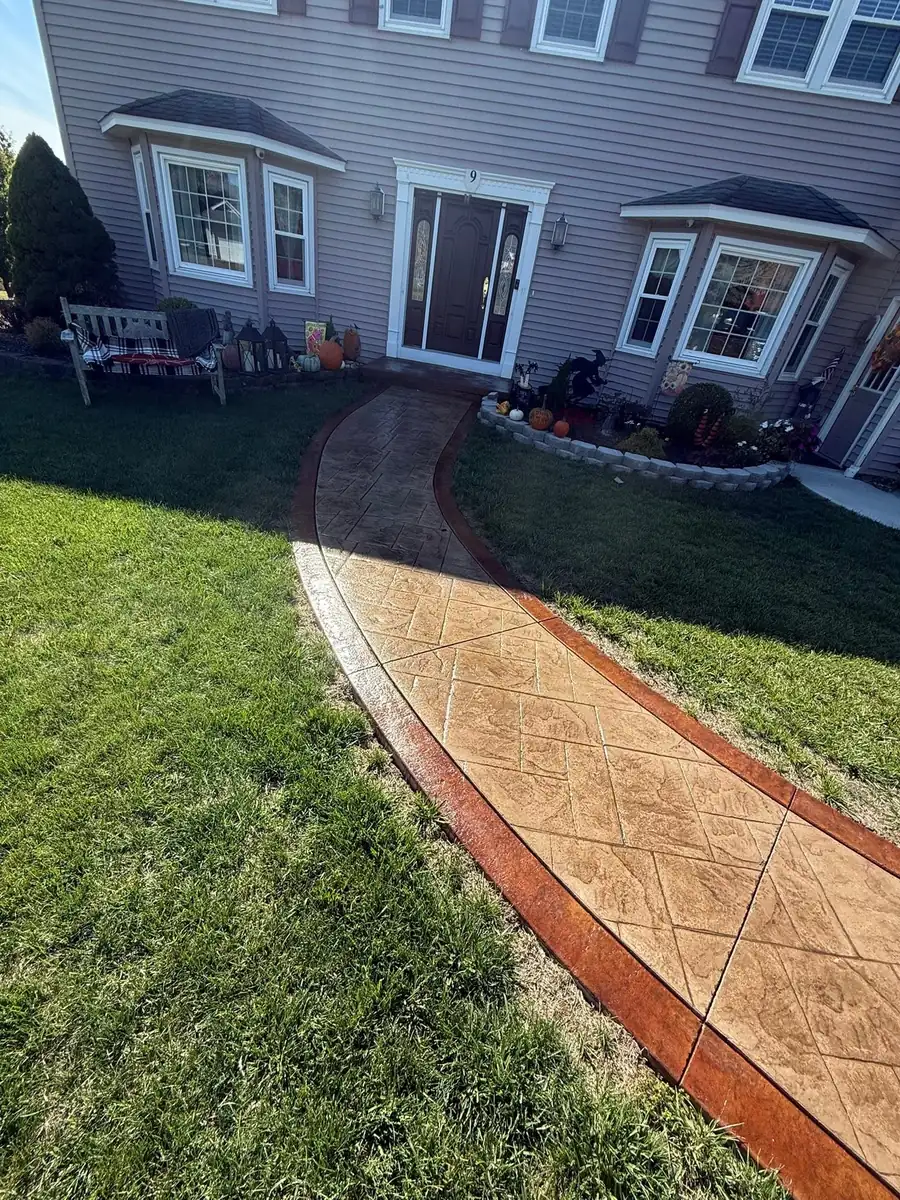
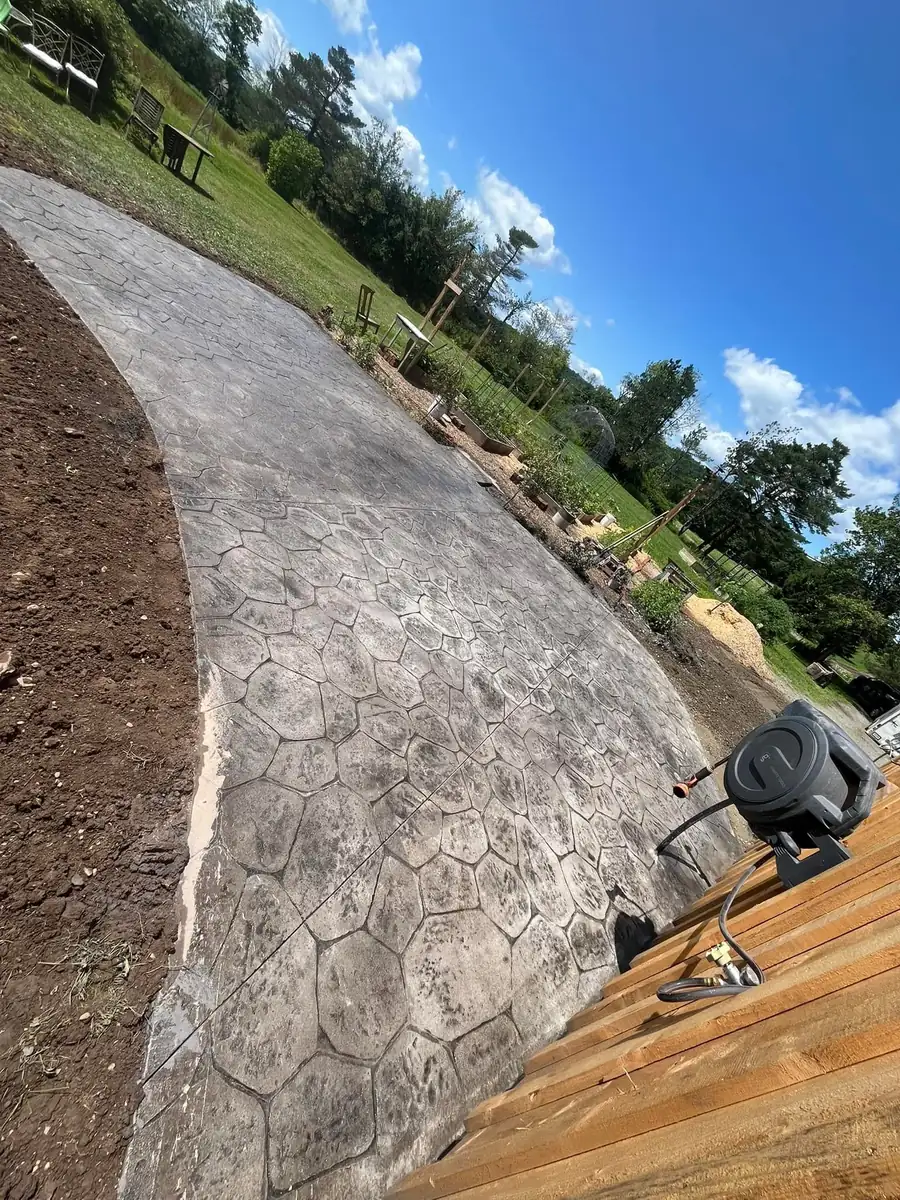
A stamped slab gives the look of stone, slate or wood with none of the loose joints. Patterns like seamless slate, ashlar slate and wood plank are pressed in with stamp mats, and color is added to the mix and the surface. In Preston we poured a wood plank stamped patio that looks like a hardwood floor. See stamped concrete patterns and colors for more.
The trade-off is that concrete can crack. Control joints placed in the pattern give it a planned place to crack, which is why joint layout matters as much as the stamp. Our control joints guide explains how they're spaced.
Frost, salt and our soils
Both systems ride on what's underneath. Central New York's clay and glacial till hold water, and wet soil that freezes lifts whatever sits on it. A slab tends to move as a panel. Pavers can heave unit by unit and leave trip edges. Either way, the stone base and drainage do most of the work.
Salt is the other test. The National Ready Mixed Concrete Association (NRMCA) advises no deicers on new concrete the first winter, and never ammonium sulfate, ammonium nitrate or magnesium-based deicers. Sealing a stamped surface protects it and brings back the color.
A real swap: pavers to concrete in Norwich
One Norwich homeowner had us take out a paver sidewalk and replace it with concrete. The reason was simple: no more weeds coming up between the pavers. Weeds in the joints are a common complaint with older paver walks, and a slab takes the joints away.
Questions to ask either installer
- How deep will you dig, and what stone goes in the base?
- Where will water go when it runs off the surface?
- For pavers: what holds the edges in place?
- For stamped concrete: where will the control joints fall in the pattern?
- What sealer will you use, and when should it be redone?
Good answers to the first two matter more than the surface you pick.
How to decide
- Hate weeding and joint sand? Lean stamped concrete.
- Utility lines under the area, or plans to dig later? Pavers are easier to open up.
- Want a big, open patio with a single pattern? Stamped concrete covers it in one pour.
- Want to do small repairs yourself? Pavers are friendlier to DIY fixes.
If stamped concrete is the fit, see our stamped concrete work or ask for a quote on your patio or walk.