By Bennett's Concrete and Excavation, Norwich, NY. Updated October 2026.
What a pool deck has to do
- Give bare feet grip when it's wet.
- Shed water away from the pool and the house.
- Stay comfortable underfoot in July sun.
- Get through freeze-thaw winters without scaling.
- Meet the electrical bonding rules around the pool.
Slip resistance comes first
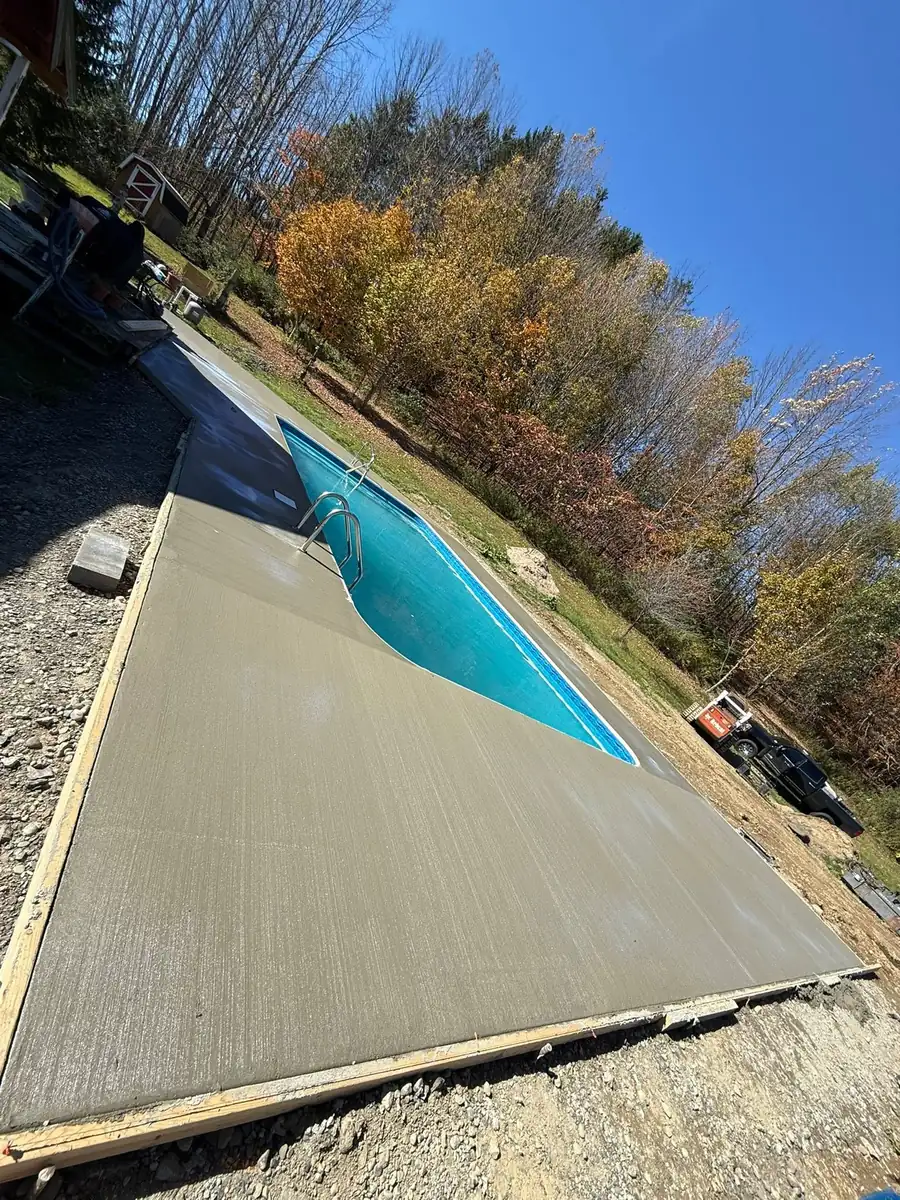
NRMCA's finishing guide recommends texturing exterior concrete with a push broom to give a non-slip surface. A smooth troweled finish is the wrong choice beside a pool. Stamped textures also give grip, but sealer can make any surface slicker when wet.
The ASCC Decorative Concrete Council says exterior walkways should include enough anti-skid additive in the sealer that you can feel it with your bare hand, and that sand or silica should not be added to sealer. See broom vs. smooth finish for more.
Bonding the deck: talk to your electrician first
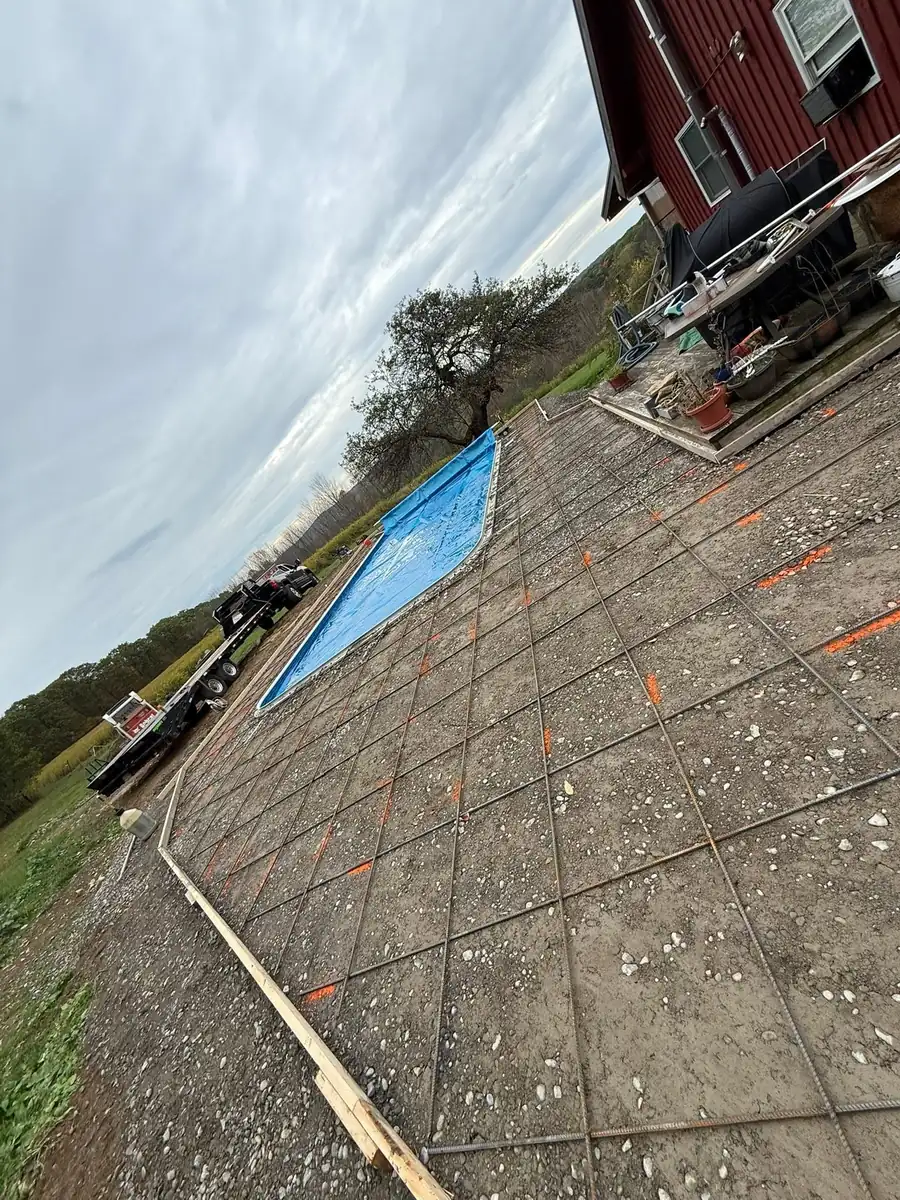
The National Electrical Code (Section 680.26(B)(2)) requires bonding of the paved walking surface around a pool. As the North Carolina Office of State Fire Marshal explains it, the bonding grid extends under the deck at least 3 feet out from the pool. Acceptable methods include rebar or steel wire mesh in the concrete, a copper grid, or a single #8 bare copper conductor installed 18 to 24 inches from the pool edge.
All of that is buried once concrete goes down, so your electrician needs to install it, and any inspection has to happen, before pour day. Put it on the schedule early.
Slope and drainage
Water should run off the deck away from the pool so dirty runoff doesn't wash in, and away from the house. A common patio guideline from Quikrete is about 1/8 inch of slope per foot. Around a pool, that may mean slopes going different directions on different sides, so the layout gets drawn out before forms go in.
Plan where that water lands. A deck that drains into a low spot in the lawn will make mud. Grading is part of the job.
Getting the order of work right
A pool deck involves more trades than most concrete jobs, so the sequence matters:
- The pool is set, plumbed and backfilled, and the backfill is compacted so the deck doesn't settle into it.
- Plumbing, lights and any deck drains are roughed in and tested.
- The electrician installs the bonding and it's inspected if your town requires it.
- The stone base is graded and compacted to the planned slopes.
- Forms, reinforcement and joint layout are set, then the deck is poured and finished.
Think beyond the deck too. Plan the walkway to the house, the path to the gate and a level spot for chairs, so foot traffic stays on concrete instead of wearing a muddy track across the lawn. Our patio planning guide covers layout and sizing in more detail.
Joints near the pool
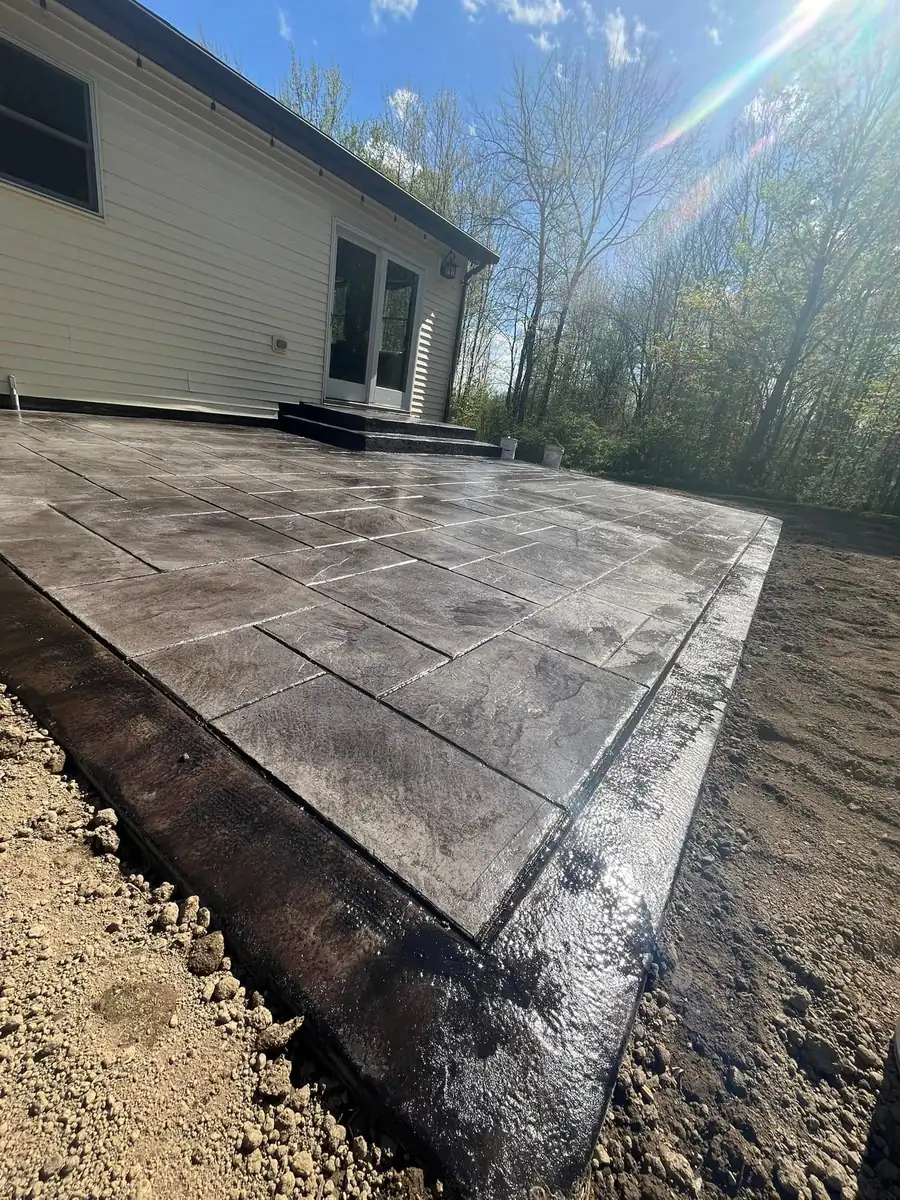
NRMCA recommends isolation joints where a slab meets walls, footings and other structures, which includes the pool's edge or coping. Control joints across the deck follow the usual rules: maximum spacing 24 to 36 times the slab thickness and panels close to square. On a stamped deck, joints are set in the pattern so they disappear.
Finish choices
| Finish | Grip | Look | Notes |
|---|---|---|---|
| Broom | Good | Plain, clean | Simplest; light broom is easier on feet |
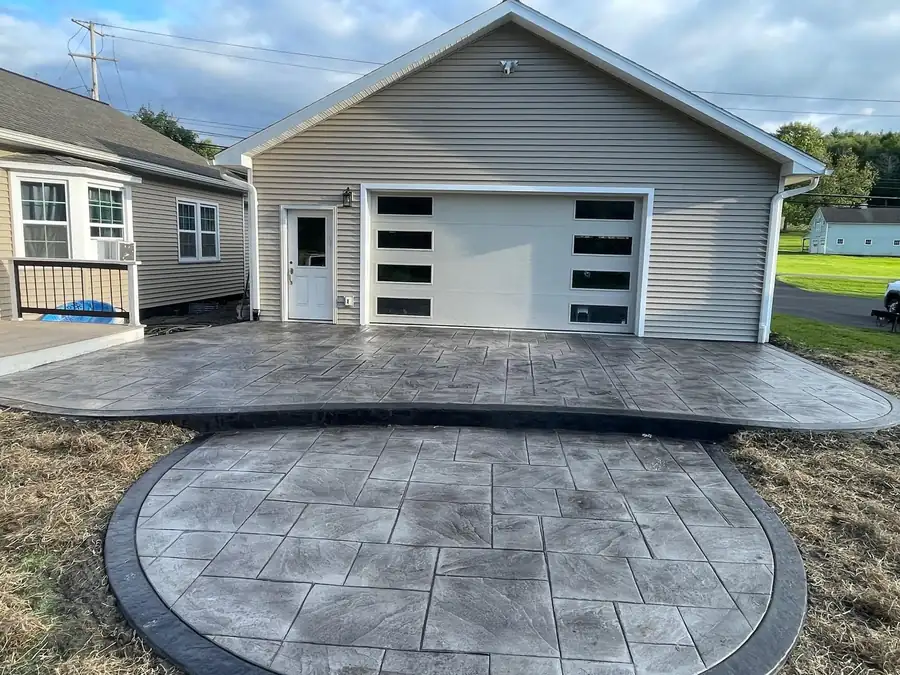
| Stamped | Good with anti-skid sealer | Stone, slate or wood | Lighter colors stay cooler |
| Stamped with border | Good with anti-skid sealer | Framed edge | Border can outline the pool |
We poured a concrete pool patio in North Norwich. Look at photos of real decks in daylight before choosing a color.
Care after the pour
NRMCA advises no deicers on new concrete the first winter, and the same goes for any salt tracked onto the deck. ASCC says sun-exposed, high-traffic decorative concrete usually needs new sealer every two to three years. See stamped concrete maintenance for the routine. Bennett's builds pool decks and stamped concrete and offers resealing.
Sources
- NC Office of State Fire Marshal: NEC 680.26(B)(2) pool deck bonding
- NRMCA, CIP 14: Finishing Concrete Flatwork
- ASCC Decorative Concrete Council: Sealer Guide for decorative concrete
- NRMCA, CIP 6: Joints in Concrete Slabs on Grade
- NRMCA, CIP 2: Scaling Concrete Surfaces
- Quikrete: Concrete Patios project guide