By Bennett's Concrete and Excavation, Norwich, NY. Updated October 2026.
The short answer
Engineer Kim Basham, writing on slab reinforcement, puts it directly: steel bars and welded wire reinforcement 'will not prevent cracking'. In a slab on the ground, steel does little until the concrete cracks. Then it keeps the crack from opening wide.
Synthetic fibers do a different job. NRMCA says standard micro fibers mainly reduce plastic shrinkage cracks in the first hours, and they are not a replacement for structural steel.
Side by side
| Welded wire mesh | Rebar | Synthetic fiber | |
|---|---|---|---|
| What it is | Steel wires welded in a grid, in sheets or rolls | Steel bars tied in a grid | Plastic fibers mixed into the concrete at the plant |
| Main job | Holds shrinkage cracks tight | Holds cracks tight, carries load where designed to | Reduces early surface cracking, adds toughness |
| Structural? | Only if designed that way | Yes, when engineered | No, per NRMCA |
| Weak spot | Gets stepped down to the bottom | Needs proper supports and cover | Doesn't replace steel or allow wider joints |
Placement is where most jobs go wrong
Cracks start at the surface and are widest there, so the steel needs to be up in the slab, not lying on the stone. Basham's article says crack-control steel belongs in the upper third of the slab and never below mid-depth. For welded wire, the Wire Reinforcement Institute recommends 2 inches below the surface or within the upper third, whichever is closer to the surface. A single layer at mid-depth is acceptable only in 4-inch slabs.
The worst habit is laying mesh on the ground and pulling it up into the wet concrete with a hook as the pour goes. Basham says never to do that. Mesh needs to sit on chairs or supports spaced close enough that workers walking on it don't push it down.
Steel near the surface still needs cover. NRMCA's cracking guide calls for at least 2 inches of concrete over reinforcement to protect it from salt and moisture, which matters on Central NY driveways and aprons.
When steel may not be needed
According to Basham, a slab on a high-quality, uniform base, with joints 15 feet apart or less and a low-shrinkage mix, generally doesn't need reinforcement for crack control. Steel earns its keep when:
- the base is poor or uneven
- joints are more than 15 feet apart
- the mix shrinks more than usual
- the slab is structural, such as a monolithic slab, footing or foundation, where the plans call for it
Structural steel is never a judgment call on site. If the drawings or your engineer call for rebar, that's what goes in.
Fiber: what to expect
NRMCA lists typical micro fiber doses of 1 to 2 pounds per cubic yard, usually with no other mix changes, and about 5 pounds per cubic yard for macro fibers used for crack control. Fibers can make a broom finish a little fuzzy at first. They do not let you cut joints farther apart, make a slab thinner or replace steel that's carrying load.
Steel and joints
If steel runs continuously through every control joint, it can hold the joint closed and push the crack somewhere else. Basham notes the common fix is to cut all of the steel, or every other bar or wire, at the joints. See our control joints guide.
What we use
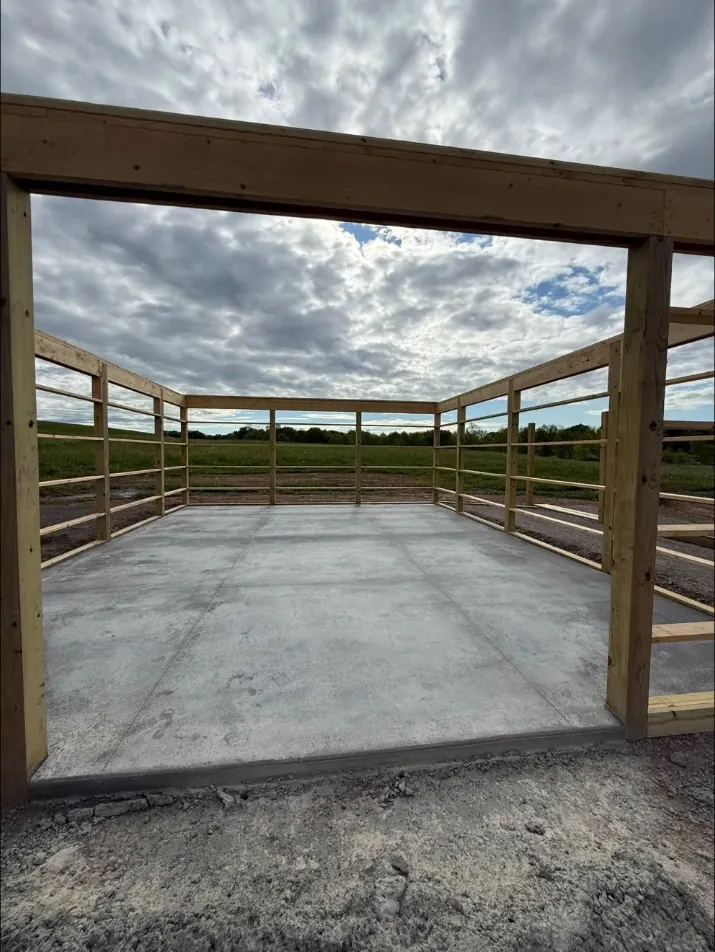
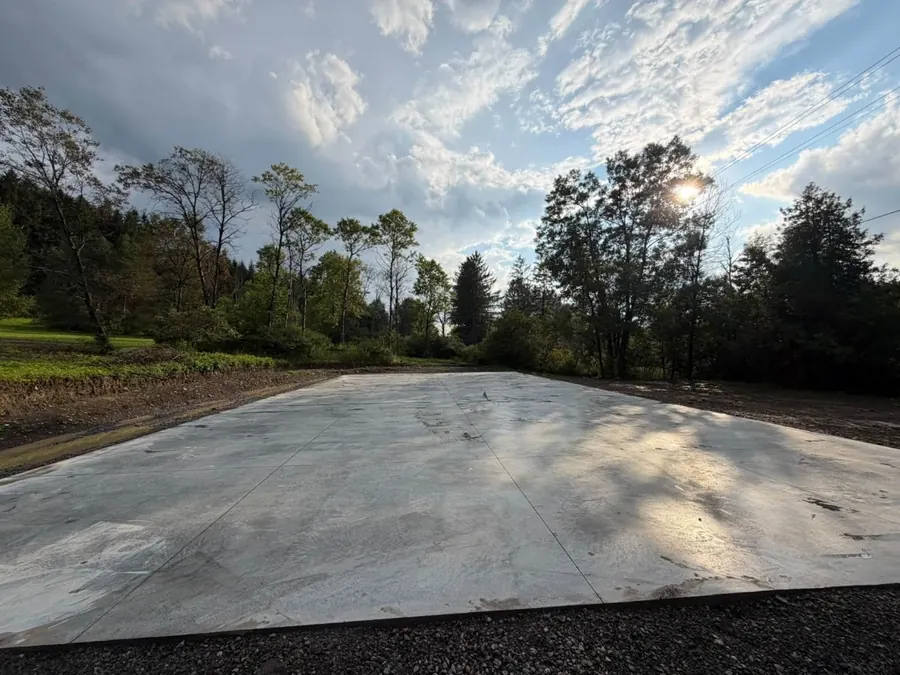
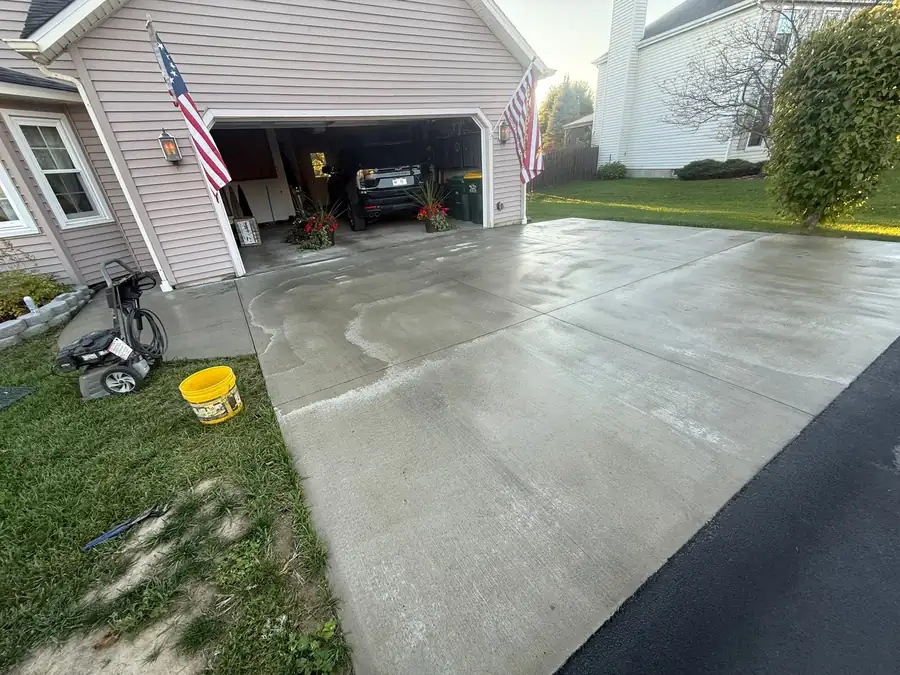
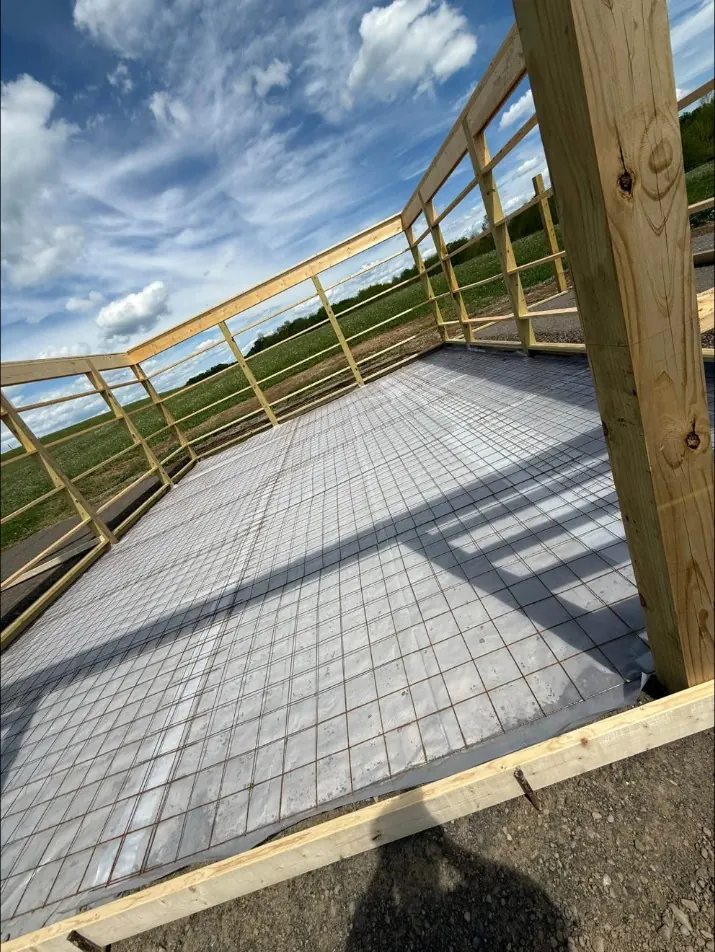
We use wire mesh on large slabs such as pole barn floors, laid over the vapor barrier before the pour. On replacement jobs, like the broken concrete we removed in Hamilton, we put back reinforced concrete on a proper base. Structural slabs like monolithic slabs get the steel the plans call for. If you're comparing quotes, ask each contractor what reinforcement they plan, where it will sit in the slab and how it's supported. For more on cracking, read why concrete cracks.