By Bennett's Concrete and Excavation, Norwich, NY. Updated October 2026.
What counts as hot weather
NRMCA doesn't define hot weather by a single temperature. Its hot-weather guide describes it as any combination of these that hurts fresh or hardened concrete:
- high air temperature
- high concrete temperature
- low relative humidity
- wind
- direct sun
High humidity softens the effect of heat. A muggy 85-degree day can be easier on a slab than a dry, windy 78-degree one.
What heat does to concrete
NRMCA lists the effects:
- Faster setting. The window to screed, float, stamp and joint gets shorter.
- More water demand. Warm concrete stiffens faster, which tempts people to add water. That raises the water-cement ratio and lowers strength and durability.
- Faster slump loss and less entrained air, which matters for freeze-thaw resistance.
- Lower later strength. Concrete cured hot early on ends up weaker than concrete cured near 70 degrees F.
- Surface cracks. Fast evaporation can cause plastic shrinkage cracking.
Early cracks: wind is the warning sign
Plastic shrinkage cracks form while the concrete is still soft, when the surface dries faster than bleed water rises. NRMCA's guide on these cracks says they are more likely when wind is above about 5 mph, along with low humidity and heat. They tend to run parallel, roughly 1 to 3 feet apart, and are shallow. Read more in hairline cracks in new concrete.
What crews do about it
Before the pour
- Schedule around the heat. NRMCA suggests avoiding the hottest part of the day, and in very hot weather an early morning start gives better control.
- Dampen the stone base and forms on hot, dry days, without leaving puddles.
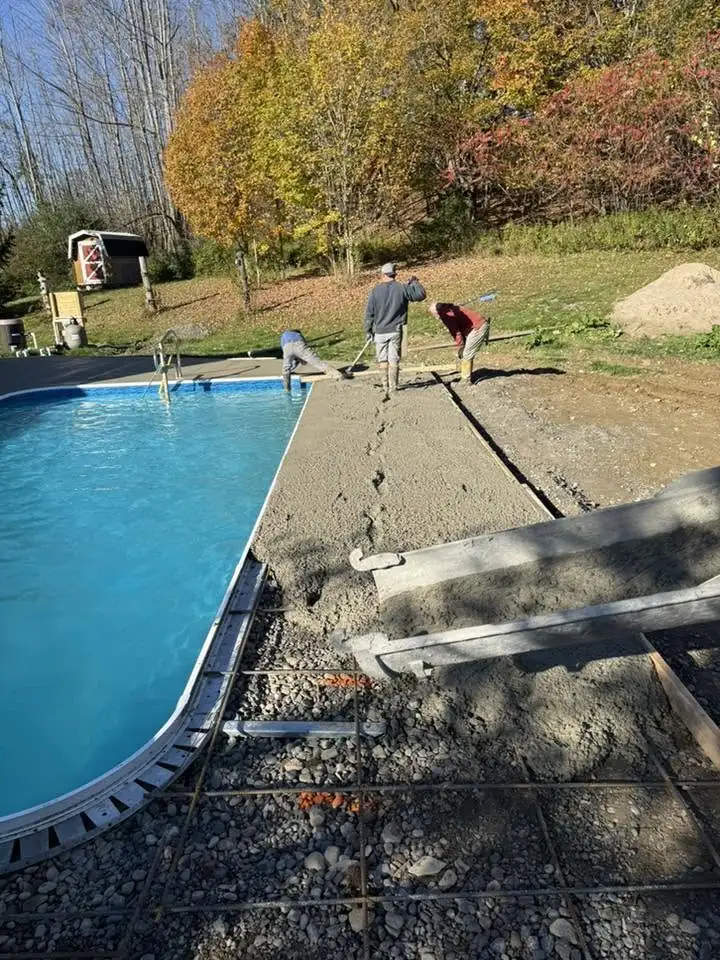
- Have enough crew and tools to place and finish without delay, and line up trucks so each one can discharge right away.
At the plant
- Retarders or set-control admixtures slow setting.
- NRMCA notes chilled mixing water can lower concrete temperature by up to 10 degrees F, and ice by up to 20 degrees F.
During and after
- Windbreaks, sunshades, fog sprays or evaporation retarder when it's dry and windy.
- Start curing as soon as finishing is done and keep it up for at least 3 days. White-pigmented curing compound reflects heat.
Never water the surface to finish
When concrete starts setting fast, it's tempting to splash water on it to keep troweling. NRMCA's hot-weather and finishing guides both say not to. Water sprinkled on the surface weakens the top layer and leads to dusting, crazing and scaling later. NRMCA also says not to add water to concrete that is more than 1-1/2 hours old, and any water added at the truck must stay within the mix design.
Stamped and decorative work in heat
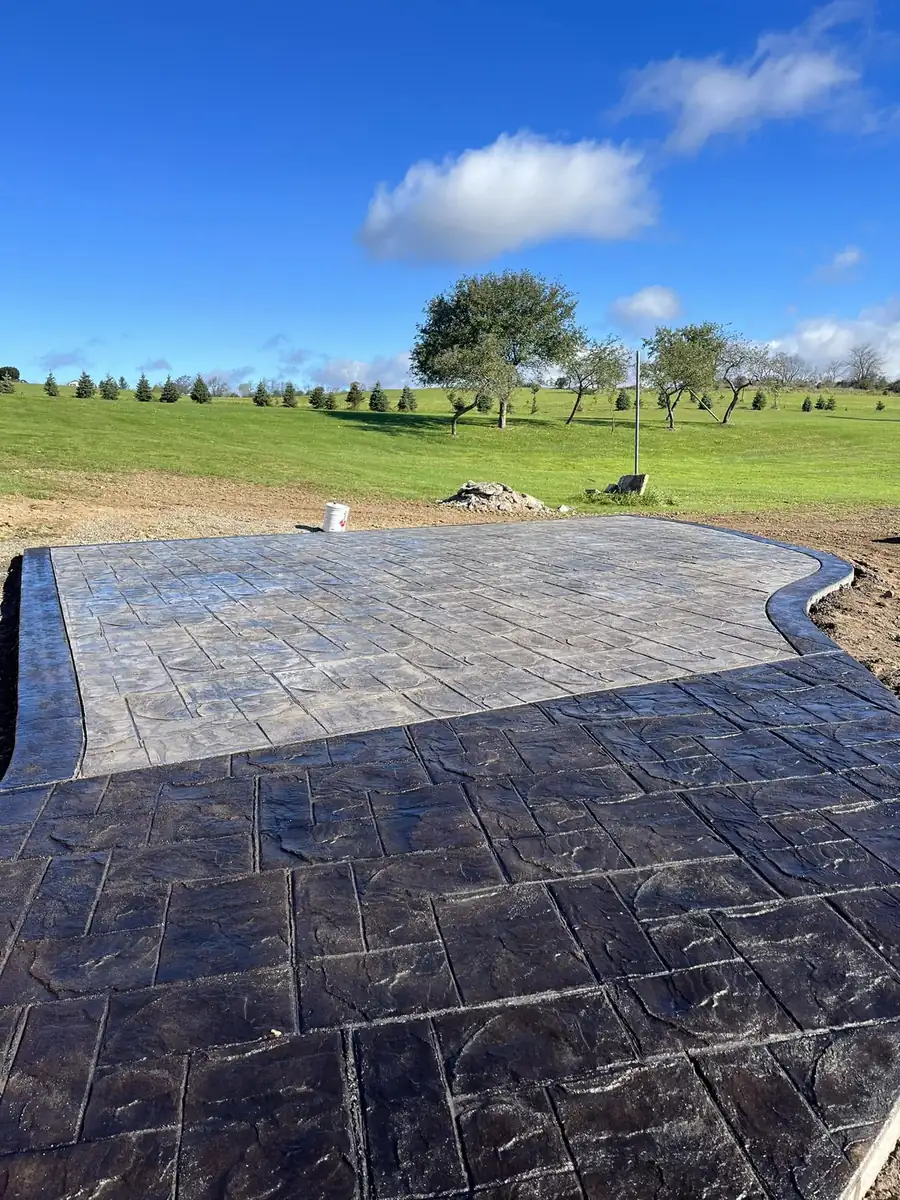
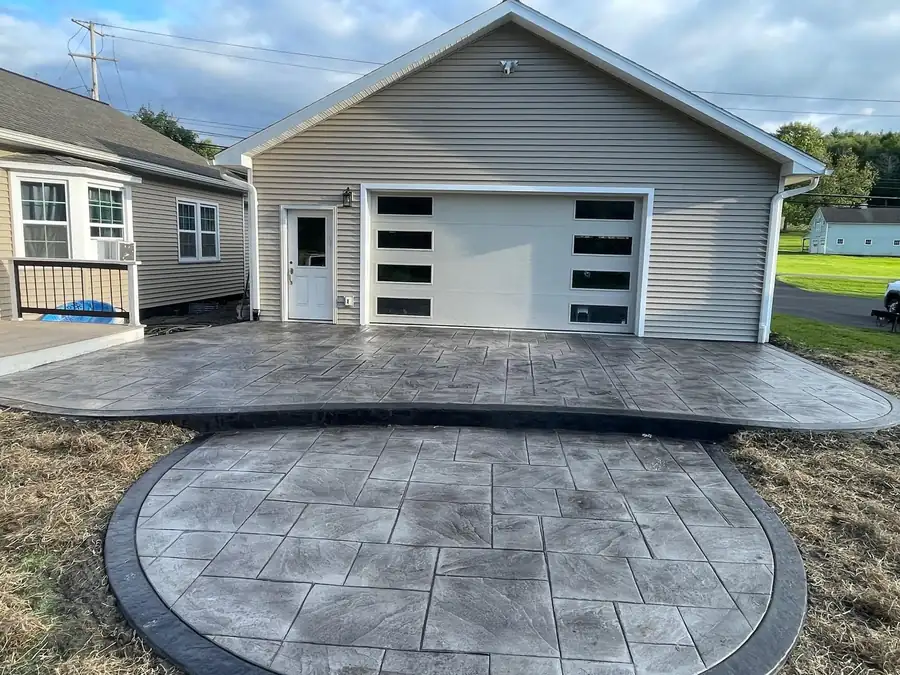
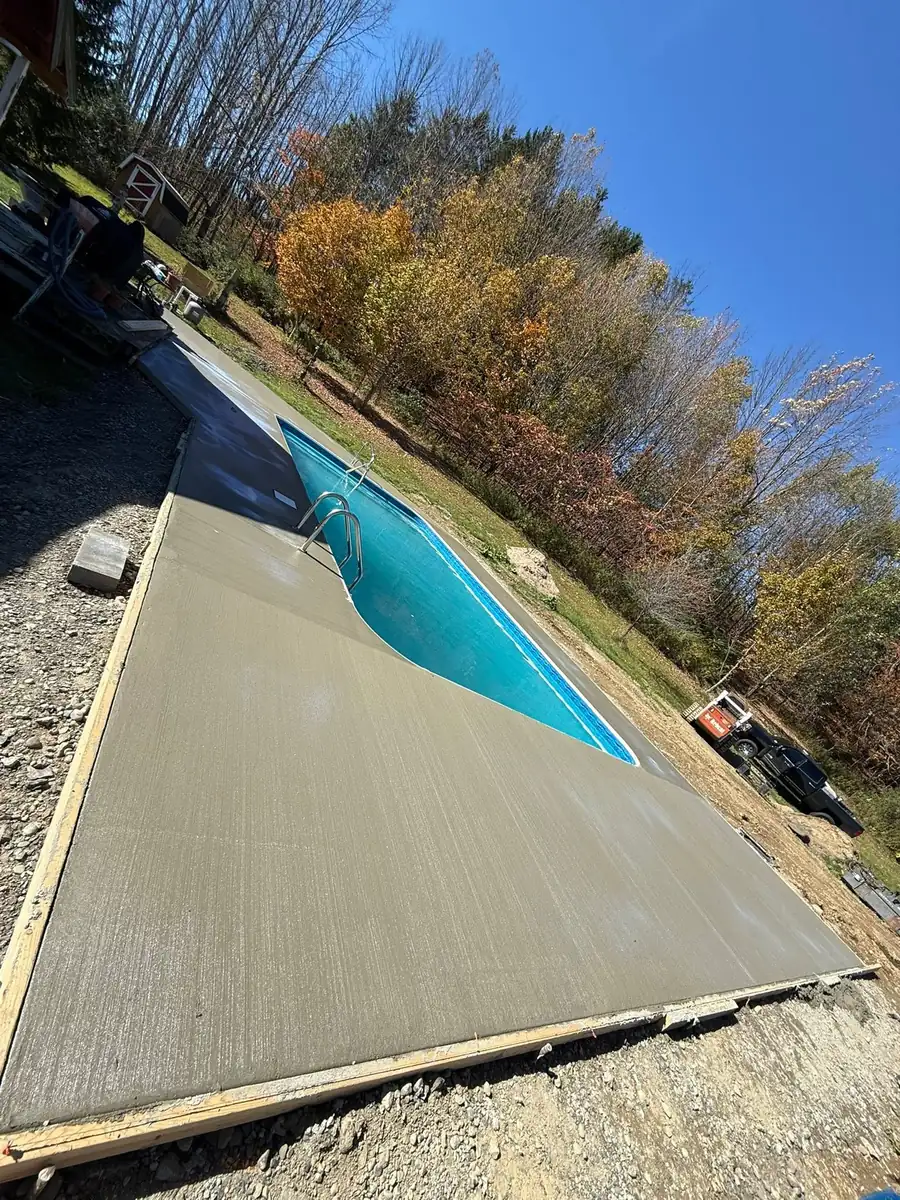
Stamped concrete has the tightest timing of any finish, because the stamps go on at a specific stage of set. On a hot day, that stage arrives sooner and passes faster, so stamped jobs get extra hands, smaller sections or an early start. Pool decks and patios in full sun need the same planning. See pool deck concrete and our stamped concrete work.
The first three days
On a hot pour, curing matters more, not less. NRMCA's hot-weather guide says to begin curing as soon as finishing is complete and keep it up for at least 3 days, using wet burlap with plastic, a liquid membrane compound or water. If test cylinders are made on a bigger job, NRMCA says they need to be kept at 60 to 80 degrees F, not left baking in the sun, or the test results won't reflect the concrete.
Signs a hot-day pour struggled include parallel surface cracks in the first hours, a fine web of crazing in the first week and a dusty surface later. Our curing guide explains why.
What you can do as the homeowner
- Make sure trucks can get in without waiting. Move cars and open gates the night before.
- Have a working outside water spigot and hose available if the crew asks.
- Keep kids, pets and sprinklers off the slab. A lawn sprinkler hitting a fresh slab can mark it.
- If the crew sprays a curing compound, don't hose it off.
Heat is one side of the calendar. For the other, see cold weather concrete, and for the full year, the best time to pour in Central NY. For patios poured in July and August, an early start is usually part of the plan.