By Bennett's Concrete and Excavation, Norwich, NY. Updated October 2026.
What psi means
Compressive strength is how much squeezing force concrete can take before it breaks, in pounds per square inch (psi). NRMCA describes the test: cylinders, either 4 by 8 inches or 6 by 12 inches, are cast from the delivered concrete, cured in a controlled way and crushed in a lab. Strength requirements are usually set at 28 days. The Portland Cement Association defines '3,000-pound concrete' as concrete with a compressive strength of 3,000 psi at 28 days.
Typical strengths
| Use | Typical strength | Source |
|---|---|---|
| Residential concrete, general | About 2,500 psi | NRMCA CIP 35 |
| Most concrete applications | 3,500 to 5,000 psi | NRMCA CIP 31 |
| Exterior slab not kept continuously moist, no deicers | 3,500 psi | NRMCA CIP 2 |
| Exterior slab kept moist and exposed to deicers | 4,000 psi | NRMCA CIP 2 |
| Commercial structures | About 4,000 psi and up | NRMCA CIP 35 |
For a driveway, apron or sidewalk that sees salt from cars in Central NY, the exterior-with-deicers line is the one that applies. Structural concrete strength comes from your plans.
Strength grows over time
Concrete doesn't reach its rated strength right away. Quikrete's data sheet for its standard bagged mix lists about 2,500 psi at 7 days and about 4,000 psi at 28 days. Cold slows that curve. NRMCA's cold-weather guide says concrete must be protected from freezing until about 500 psi, and exterior concrete that will see freeze-thaw should reach about 3,500 psi before it does. See how long concrete takes to cure.
Higher psi isn't the whole story
For outdoor concrete in New York, strength is one of three things that keep it intact. The other two are:
- Entrained air, which gives freezing water room. See air-entrained concrete.
- A low water-cement ratio, which makes the paste dense so water and salt can't soak in. NRMCA's durability guide pairs maximum water-cement ratios with minimum strengths for each freeze-thaw class.
A high-strength mix with no air will still scale in a salted driveway.
Water is the strength killer
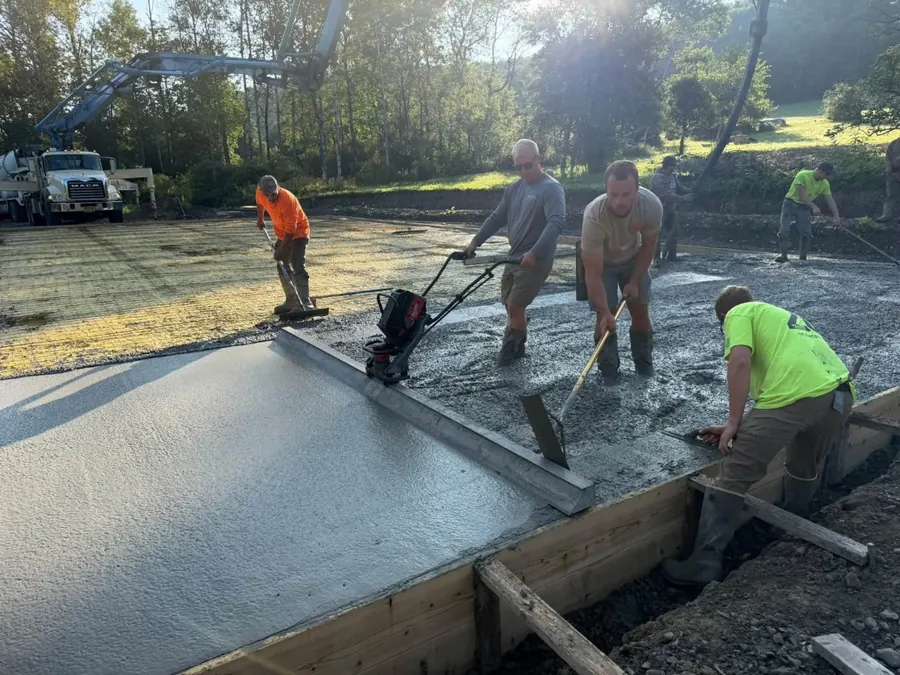
Adding water at the truck makes concrete easier to place and weaker once it hardens. NRMCA's rule of thumb is that about 1 gallon of water per cubic yard raises slump about 1 inch, and that extra water beyond the design reduces strength and durability and raises cracking risk. Any water added on site should be within what the mix allows and recorded on the ticket.
Slump is not strength
Slump measures how wet and flowing the concrete is, not how strong it will be. NRMCA's ordering guide says most work uses a slump of 3 to 5 inches. Walls, pumped concrete or tight steel may need more, which suppliers get with admixtures rather than extra water. Asking for 'wetter' concrete at the truck usually means asking for weaker concrete, unless the mix was designed for it.
The slab vs the cylinder
The number on the ticket describes test cylinders cured under ideal conditions. NRMCA notes that strength in the actual slab is generally lower, and that the top layer of a slab can be 10 to 20 percent weaker than the middle. Finishing and curing decide how close the surface gets to the rated number.
How strength is accepted on bigger jobs
On jobs with testing, NRMCA lists two checks: the average of three consecutive tests must meet the specified strength, and no single test can fall more than 500 psi below it. One low cylinder alone doesn't mean the concrete failed.
Ordering the right mix
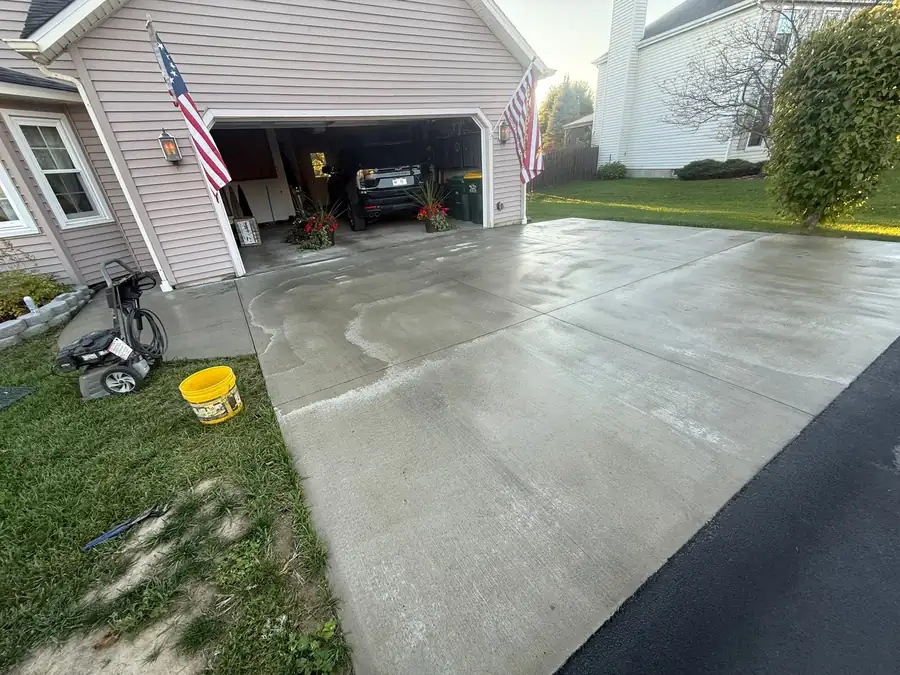
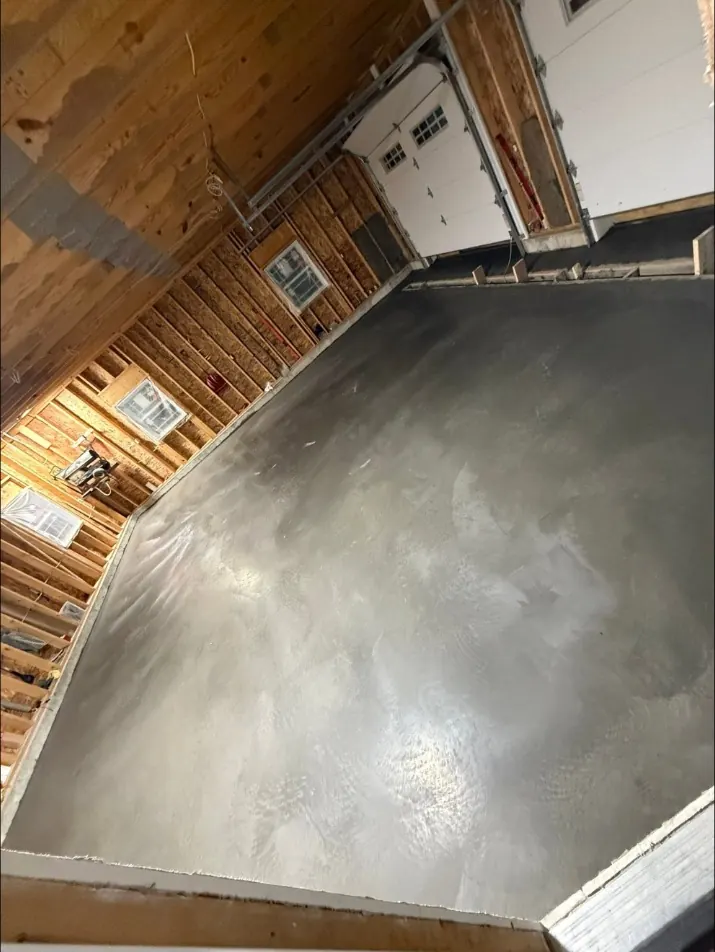
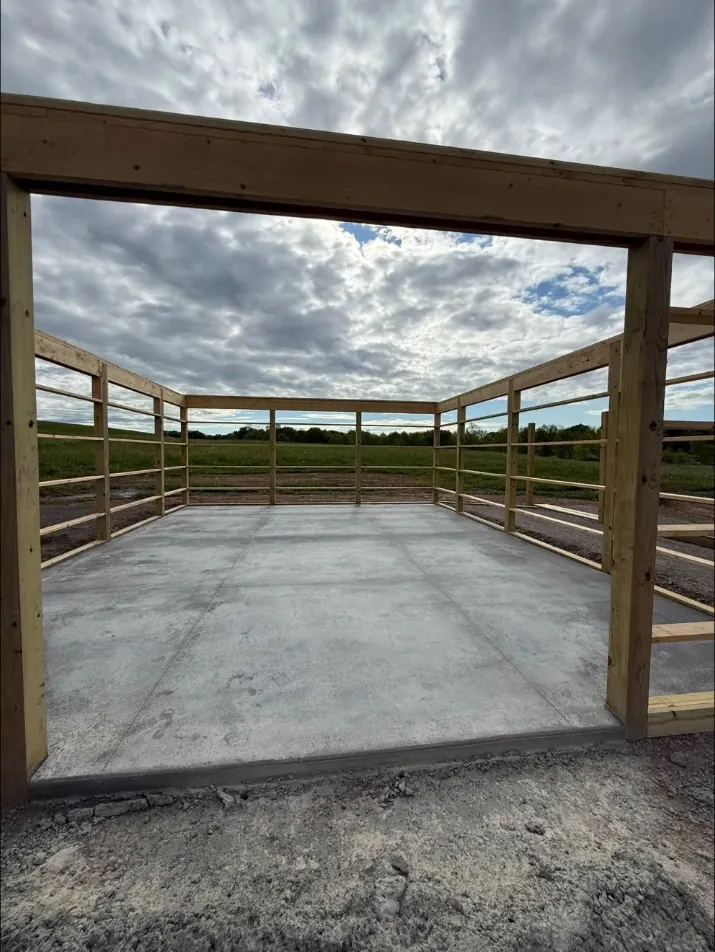
When we order concrete for a garage floor, driveway or pole barn floor, we tell the plant where it's going, how it will be finished and whether it will see salt. That sets strength, air and slump together. If your quote doesn't name the mix, ask. Our guide to what a concrete estimate should include covers the other questions.
Sources
- NRMCA, CIP 35: Testing Compressive Strength of Concrete
- Portland Cement Association: Cement & Concrete FAQ
- NRMCA, CIP 31: Ordering Ready Mixed Concrete
- NRMCA, CIP 2: Scaling Concrete Surfaces
- NRMCA, CIP 44: Durability Requirements for Concrete
- NRMCA, CIP 26: Jobsite Addition of Water
- NRMCA, CIP 10: Strength of In-Place Concrete
- Quikrete: Concrete Mix No. 1101 data sheet
- NRMCA, CIP 27: Cold Weather Concreting