By Bennett's Concrete and Excavation, Norwich, NY. Updated October 2026.
The short answer
NRMCA's guide on cracking puts it simply: concrete expands and shrinks with changes in moisture and temperature, and it bends under load. Cracks form when the design and construction don't allow for that movement.
Most cracks trace back to a handful of job-site choices: no joints or joints too far apart, a poorly prepared base, too much water in the mix, sloppy finishing, and little or no curing. In Central NY, frost and clay soils add their own push.
Cause 1: Shrinkage
Concrete gets slightly smaller as the water in it leaves. A slab that's held in place by the ground, a foundation wall or a post can't shrink freely, so it pulls itself apart somewhere. Control joints give it a planned place to do that. Without them, it picks its own spot.
See our control joints guide for spacing and depth.
Cause 2: Too much water in the mix
Wet, soupy concrete is easier to place, which is why water gets added on site. It also shrinks more and ends up weaker. NRMCA recommends a slump of no more than 5 inches for general work, and notes that roughly 1 gallon of water per cubic yard raises slump about 1 inch. Any water added at the truck should stay within what the mix design allows and be written on the delivery ticket.
Cause 3: The ground underneath
NRMCA lists poor subgrade preparation among the main causes of cracking. A slab is only as steady as what it sits on. Soft spots, unevenly compacted fill and wet clay let one part of the slab drop while another holds.
Central NY adds frost. Wet, fine-grained soils like our clays and glacial till hold water, and when that water freezes it can lift a slab unevenly. Good drainage and a compacted stone base keep water out from under the concrete. Read more in frost heave explained and clay soil and concrete.
Cause 4: Finishing and curing
Finishing while bleed water is still on the surface, or sprinkling water to make troweling easier, weakens the top layer. Letting the surface dry out in sun and wind in the first days makes it shrink faster than the concrete below. NRMCA recommends keeping concrete moist for at least 3 days. Our curing guide covers the methods.
Causes 5 to 7: loads, weather and rusting steel
Loads it wasn't built for
A walkway-thickness slab under a loaded dump truck will crack no matter how well it was poured. Slabs need to be sized for the heaviest thing that will sit or drive on them, from car lifts to delivery trucks. See the slab thickness guide.
Weather on pour day
Some cracks appear within hours. NRMCA's guide on plastic shrinkage cracking says they form when surface water evaporates faster than bleed water can replace it, and they're more likely with wind above about 5 mph, low humidity and heat. Those cracks are often parallel and roughly 1 to 3 feet apart. Windbreaks, fog sprays and early curing help.
Rusting steel years later
Years later, salt can reach steel that sits too close to the surface. NRMCA's corrosion guide says rust takes up two to four times the volume of the original steel, which pushes off the concrete above it. NRMCA's cracking guide calls for at least 2 inches of concrete over reinforcement to protect it from salt and moisture.
What steel and fiber do (and don't do)
Reinforcement does not stop cracks. Structural engineer Kim Basham writes that steel bars and welded wire reinforcement 'will not prevent cracking'. They hold cracks tight once they form. Synthetic fibers mainly reduce early plastic shrinkage cracks, according to NRMCA. Our guide to rebar, wire mesh or fiber compares them.
What reduces cracking
- A compacted, well-drained stone base on firm ground
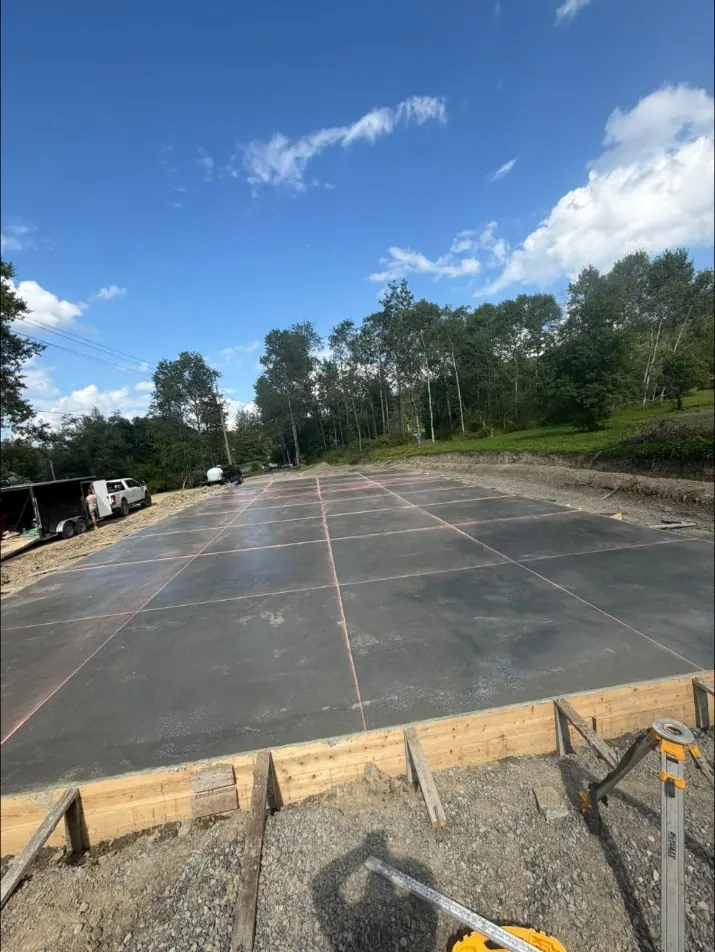
- Joints at the right spacing and depth, cut on time
- A mix with the right slump, not watered down on site
- Finishing after bleed water is gone, never sprinkling water on the surface
- Curing started right after finishing
- A slab thick enough for its loads
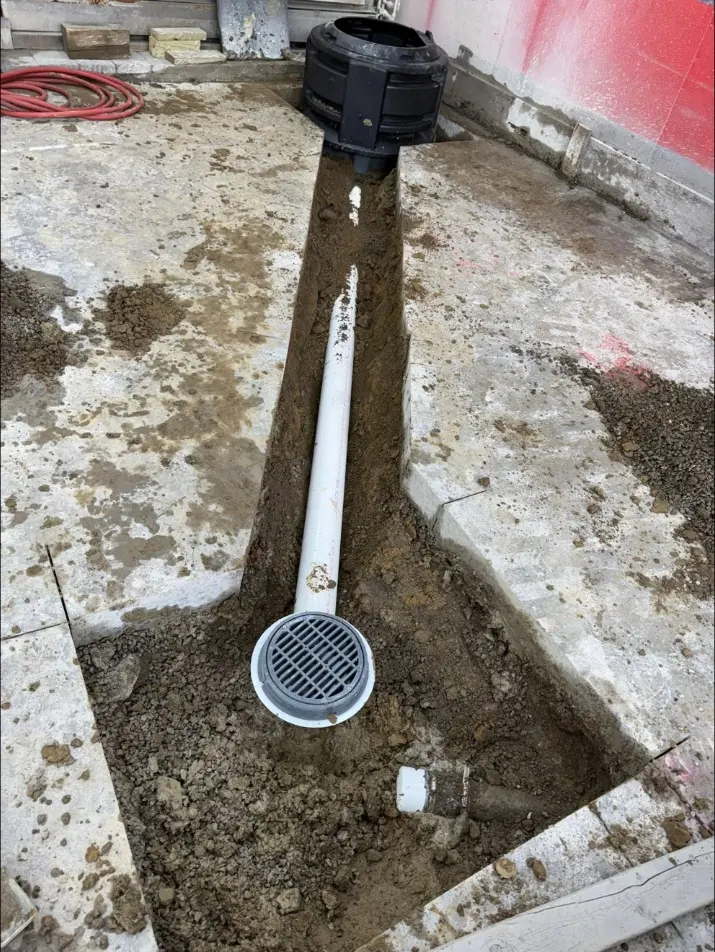
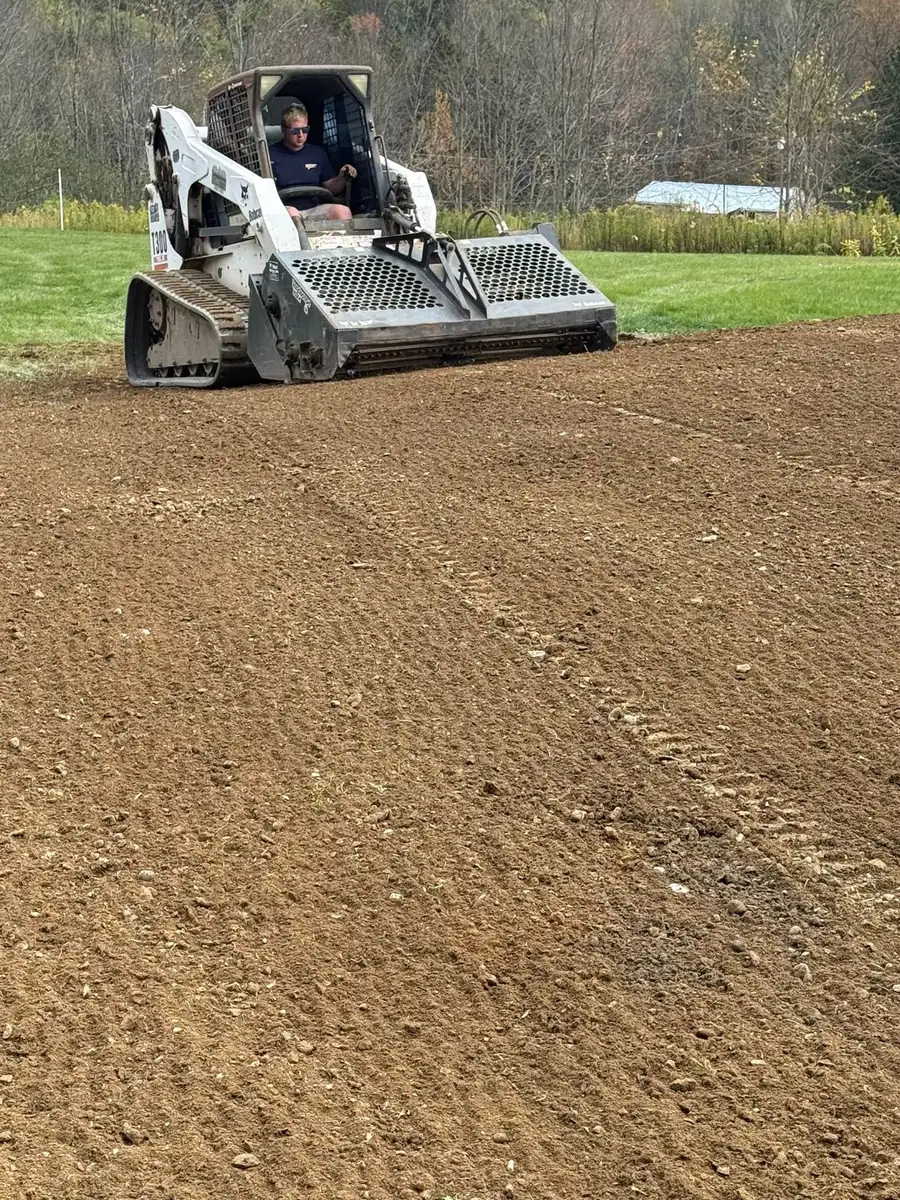
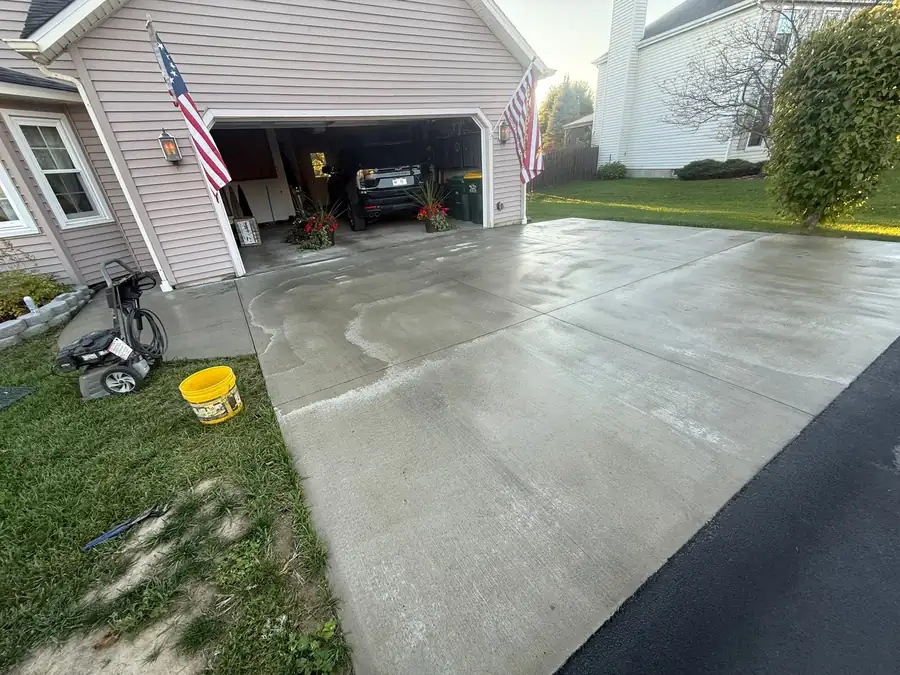
That base work is the part our crew does with our own excavation and grading equipment before any concrete shows up. If you're looking at a cracked slab now, our guide on whether to repair or replace a concrete driveway can help.
Sources
- NRMCA, CIP 4: Cracking Concrete Surfaces
- NRMCA, CIP 26: Jobsite Addition of Water
- NRMCA, CIP 11: Curing In-Place Concrete
- Kim Basham, PE (For Construction Pros): How to reinforce slabs on ground to control cracking
- NRMCA, CIP 24: Synthetic Fibers for Concrete
- NRMCA, CIP 5: Plastic Shrinkage Cracking
- NRMCA, CIP 25: Corrosion of Steel in Concrete
- KHH: Frost heave and frost depth (Central NY)