By Bennett's Concrete and Excavation, Norwich, NY. Updated October 2026.
The short answer
Outdoor slabs like patios, walks, driveways and pool decks usually get a broom finish: a light texture dragged across the surface for grip. Indoor floors like garages, shops, basements and barndominiums usually get a smooth troweled finish from a power trowel, which is easy to sweep and roll things across.
How each finish is made
NRMCA's guide to finishing flatwork lays out the order: strike off and bull float, then wait until the bleed water is gone and the sheen leaves the surface before finishing. Its footprint test says final finishing can start when your foot sinks about 1/8 to 1/4 inch.
- Broom: after floating, a coarse or fine push broom is pulled across the surface to give a non-slip texture.
- Trowel: after floating, successive passes with a steel trowel, each with more pressure, close the surface into a hard, smooth finish. On big floors that's a power trowel.
NRMCA also warns never to sprinkle water or cement on the surface to make finishing easier. It causes dusting and scaling.
Why outdoor concrete gets a broom
First, grip. A wet troweled surface is slick, and outdoor slabs get wet, icy and snowy. Second, air. Exterior concrete in freeze-thaw country is air-entrained: tiny bubbles that give freezing water room to expand. The American Cement Association says entrained air is usually 4 to 7 percent of the concrete's volume.
Air-entrained concrete and hard troweling don't mix well. NRMCA advises avoiding steel troweling air-entrained concrete, and its delamination guide notes that hard troweling air-entrained concrete raises the risk of a thin surface layer separating, recommending a maximum air content of 3 percent for troweled floor slabs. See air-entrained concrete for more.
Why garage and shop floors get troweled
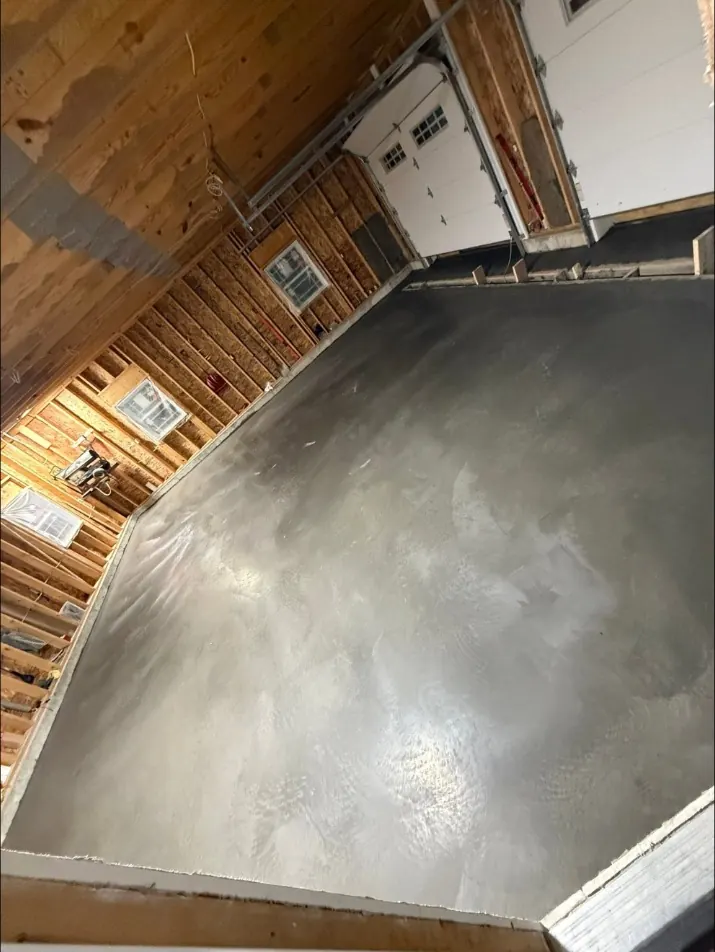
A troweled floor is dense, smooth and easy to sweep, squeegee and clean oil off. That's what you want for a garage, shop or barndo. The residential code allows for it: in the strength table New York's code is built on (Table R402.2), garage floors with a steel-troweled finish may have total air reduced to not less than 3 percent if the specified strength is raised to at least 4,000 psi. The trade-off is that a troweled floor can be slippery when wet, which NRMCA notes as well.
At a glance
| Finish | Feel | Best for | Watch out for |
|---|---|---|---|
| Broom | Textured, grippy | Patios, walks, driveways, pool decks, steps | Too heavy a broom is hard on bare feet |
| Smooth trowel | Hard and slick | Garages, shops, basements, barndos | Slippery when wet; not for air-entrained exterior slabs |
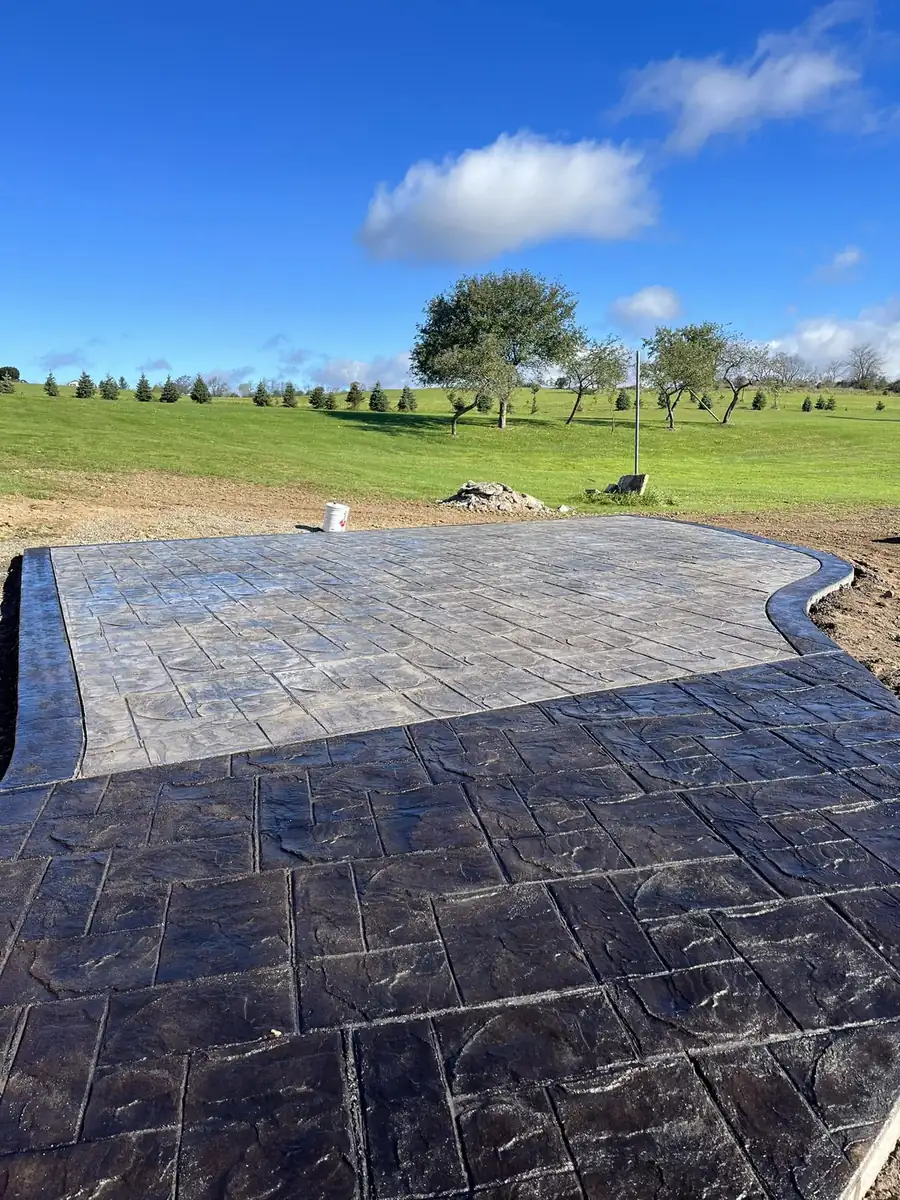
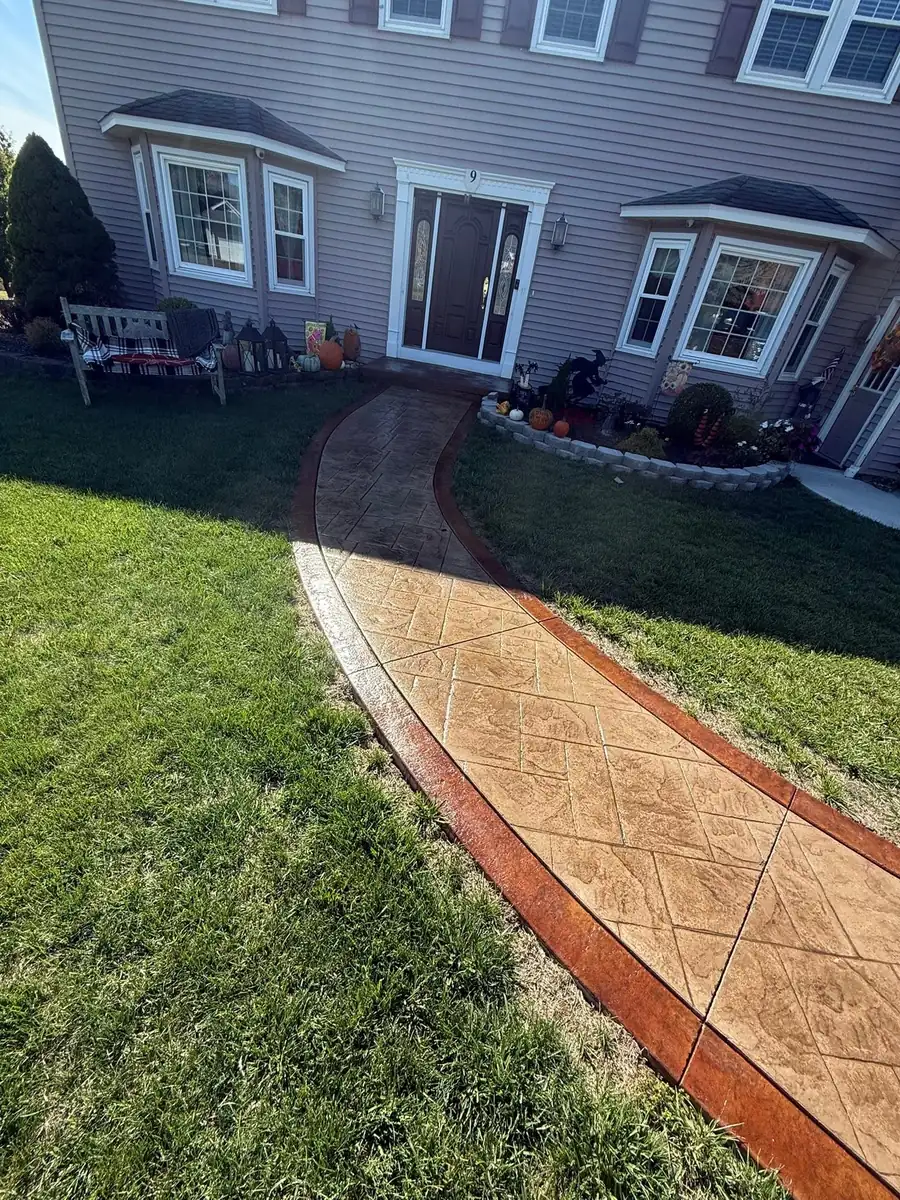
| Stamped | Patterned texture | Patios, entries, walks | Sealer can make it slick without an anti-skid additive |
Timing makes or breaks either finish
Most finish problems come from working the surface at the wrong time, not from the finish itself. NRMCA notes that air-entrained concrete bleeds more slowly, so finishing too early can trap water and air under the surface and lead to blisters or delamination.
Its delamination guide adds that wind, sun, low humidity or a cold subgrade can make the top dry out and look ready while the concrete below is still bleeding. The fixes it lists are practical ones: don't seal the surface early, delay final finishing as long as you reasonably can, and don't place concrete on a subgrade below 40°F. Once finishing is done, the slab gets edged, jointed and cured right away.
That's why a crew watches the slab instead of the clock. On a hot, windy day a patio may be ready to broom fast. On a cool, damp morning a garage floor may sit a long time before the power trowel goes on.
Where we've used each
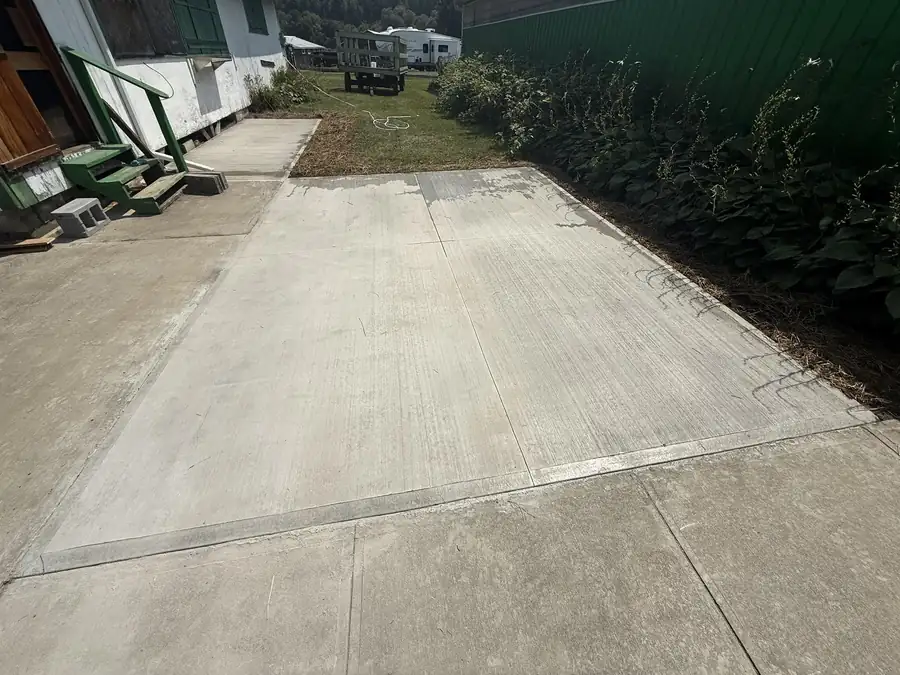
Our broom finish patios in Sidney and Norwich are typical outdoor work. Inside, the garage floor in Verona and the 60-yard barndo floor in Holland Patent were finished with power trowels. If you're torn, the use usually decides it: if it gets rained on, broom it; if you'll sweep it, trowel it.
See our concrete patios and garage floors pages, or the stamped pattern guide if you want texture with a pattern.