By Bennett's Concrete and Excavation, Norwich, NY. Updated October 2026.
What "clay" usually means here
Glaciers left most of this region covered in till: a dense mix of silt, sand, clay and rock. Cornell's Local Roads Program notes that most materials called clay in New York State are really silts and silty materials, and it rates them as very highly frost susceptible.
The USDA's soil descriptions show what that looks like. The Norwich soil series, found on the glaciated plateau of New York and Pennsylvania, formed in till and is poorly or very poorly drained, with the top of a dense, brittle fragipan 10 to 24 inches down. The Bath series, also formed in till, is well drained, but its fragipan starts 26 to 38 inches down and water moves through it slowly compared with the soil above.
Why it matters for concrete
- It holds water. A dense layer below means water can sit in the soil above it after rain and snowmelt.
- It heaves. Wet, silty soil that freezes expands and lifts what's on it. See frost heave explained.
- It goes soft. In spring, saturated soil loses its strength and ruts under trucks.
- It's hard to compact when wet. Clayey soil smears instead of packing down.
None of that means you can't pour concrete. It means the slab shouldn't sit directly on that soil, and water needs a way out.
Check your soil first
The USDA's free Web Soil Survey lets you outline your property, see the soil map units and open the Soil Data Explorer for ratings and limitations. It's a good first look.
Then dig. A test hole tells you more than any map. Gray soil, or gray mixed with rusty orange spots, near the surface is a sign the soil stays saturated part of the year. A layer that's hard to dig and breaks into brittle chunks may be the fragipan.
Building the base on clay
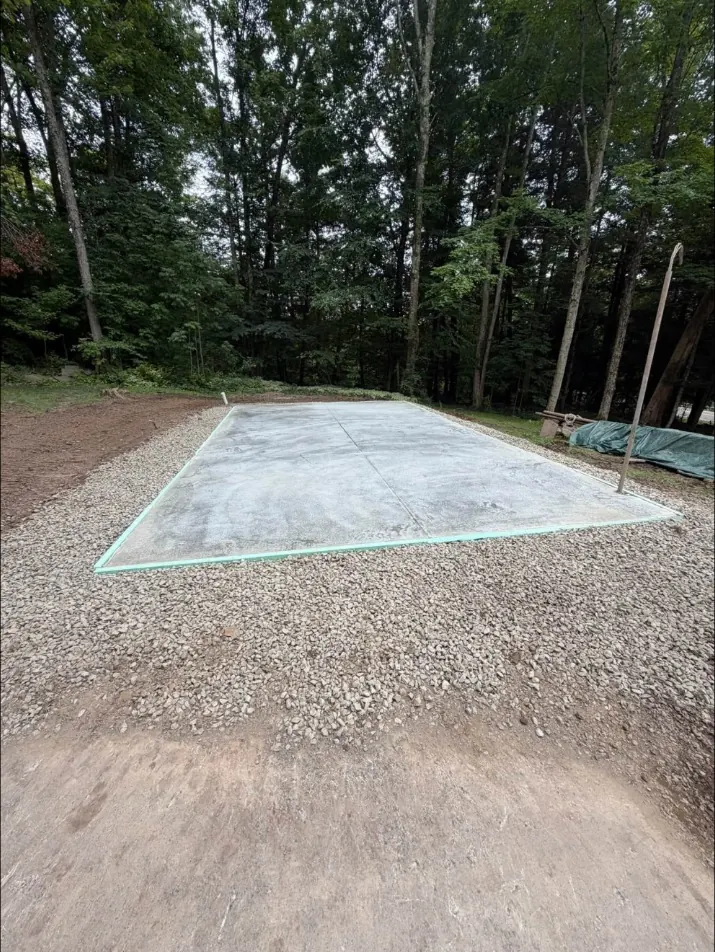
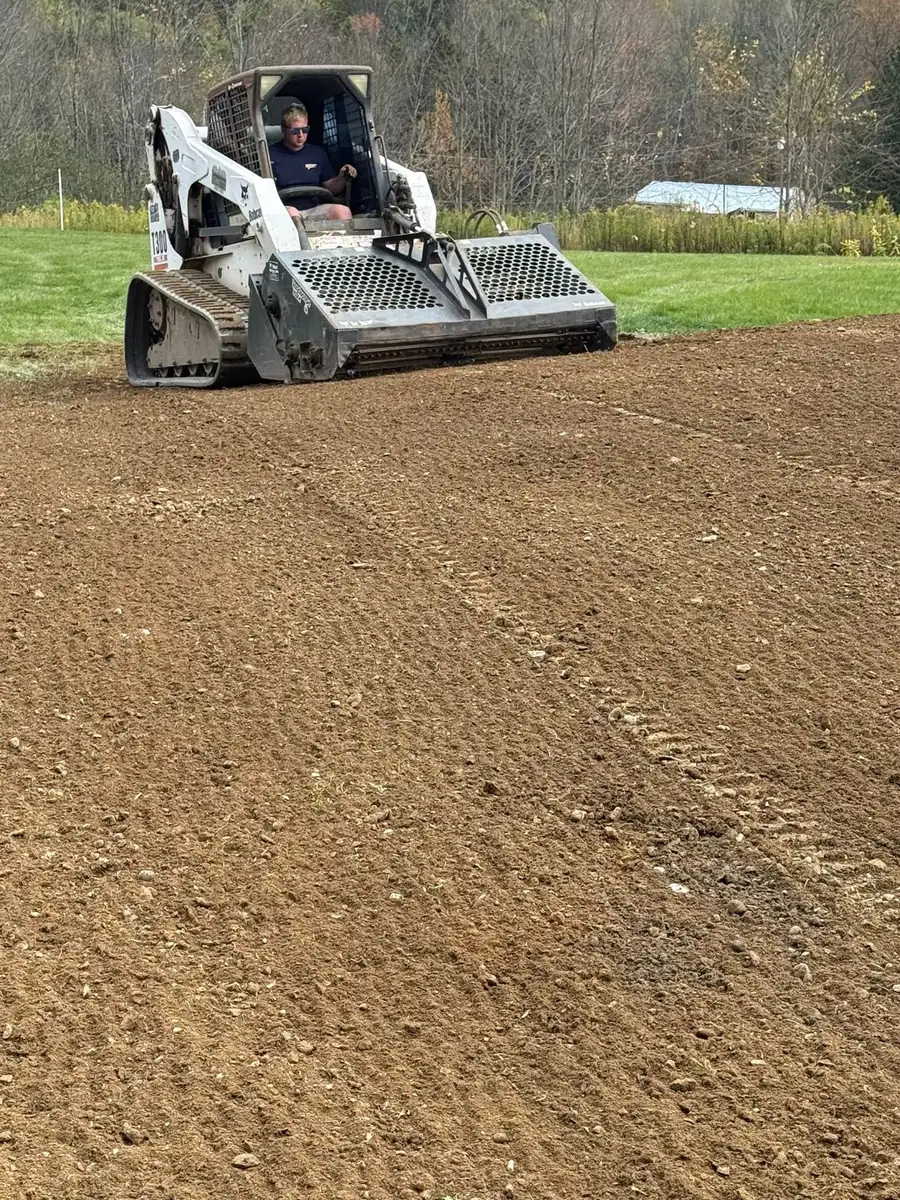
- Strip topsoil and any soft, wet soil until you reach firm ground.
- Slope the subgrade so water drains out from under the slab, not into a bowl.
- On soft or wet ground, lay geotextile fabric to keep stone from pushing into the mud.
- Place crushed stone in layers and compact each one, to the depth your project or plans call for.
- Never pour on frozen or muddy ground. NRMCA's cold weather guidance also calls for protecting new concrete from freezing until it reaches about 500 psi.
Drainage is the real fix
The base gives the slab a firm, even support. Drainage keeps that base dry. Grade the ground away from the slab and the house, carry downspouts out, and on wet sites add a stone trench with perforated pipe to collect water and send it to an outlet. Cornell's drainage manual describes these filled ditches with a perforated pipe at the bottom and fabric on at least one side. See our guides to grading away from a foundation and fixing yard drainage.
Timing the work
Clay sites are the most sensitive to weather. In spring, thawing ground can stay soft for weeks, and working it then pumps mud into the stone base. After a long wet spell, it's often better to wait a few dry days than to push ahead. Late summer and early fall, when the ground is driest, are usually the easiest time to build a base on heavy soil. Building the base then, and pouring soon after, gives the best start.
Foundations are a code question
For buildings, footing depth and frost protection come from your plans and your local code officer, not from a rule of thumb. On problem soils, an engineer may need to design the foundation. Our guide to frost-protected shallow foundations covers one option.
How we handle it
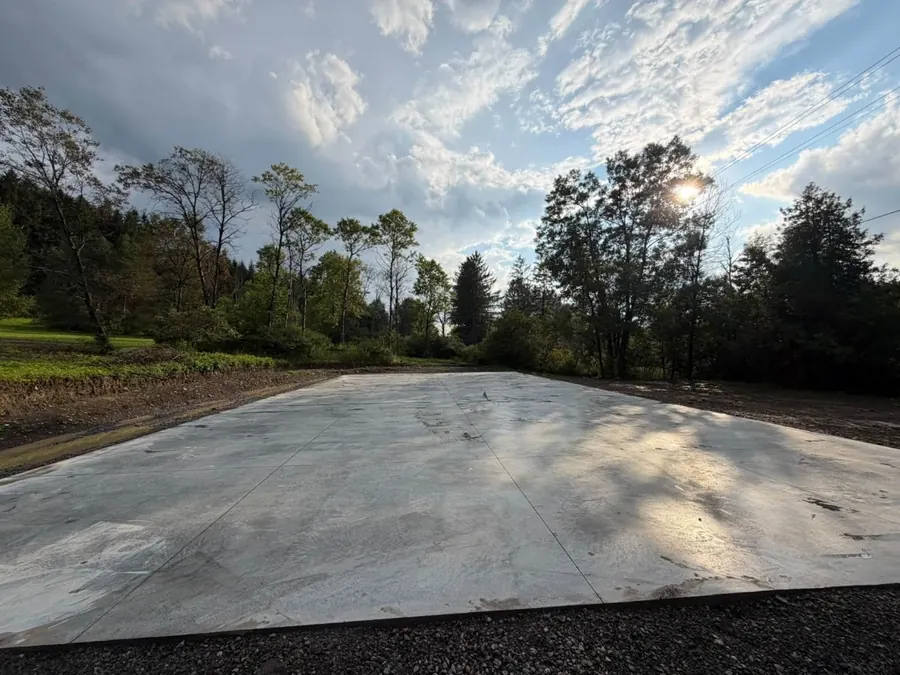
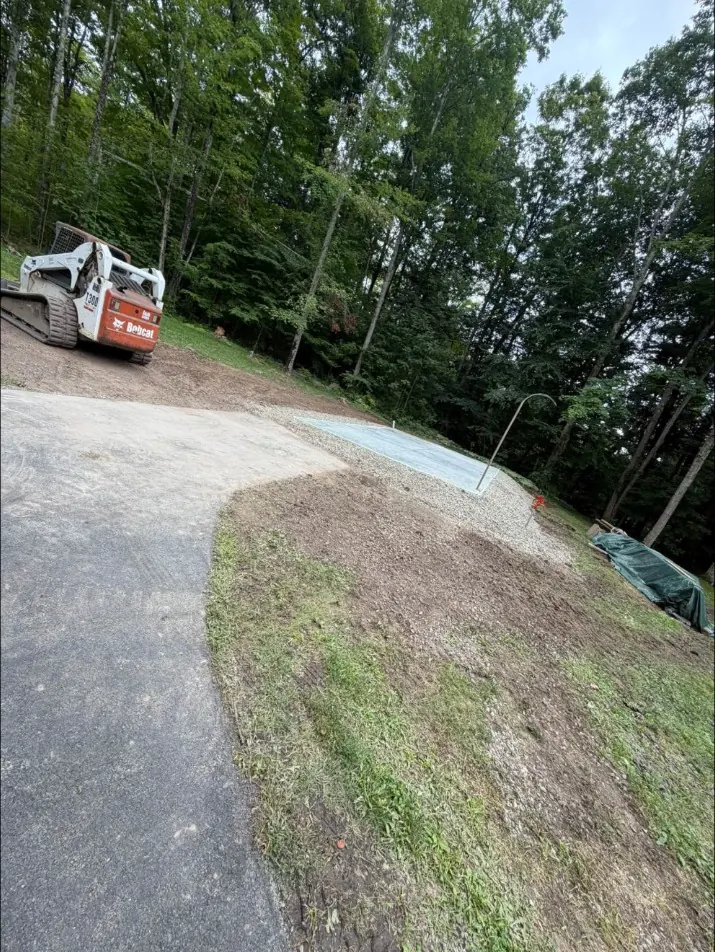
Every slab we pour starts with the ground under it. We dig out soft soil, build compacted stone bases with our own equipment, and plan for water before the concrete arrives. See concrete slabs and pads and site prep and grading.