By Bennett's Concrete and Excavation, Norwich, NY. Updated October 2026.
What the code says
New York's residential code is derived from the International Residential Code. Section R309.1 of the IRC says garage floor surfaces must be of approved noncombustible material, and that the area used for parking must be sloped to make liquids move to a drain or toward the main vehicle entry doorway.
Notice what it doesn't say: the code doesn't give a specific number for the slope. That's set by the plans and the builder, and your local code officer may have expectations. The point is that water has to leave, not sit.
Option 1: slope to the door
This is the most common setup in homes. The floor pitches gently toward the overhead door and water runs out onto the apron and driveway.
- Simple, with no pipe to clog.
- No question about where the drain discharges.
- The apron must keep sloping away, or water stops at the door and freezes there.
- Melting slush from a parked car runs across the floor to get out.
Option 2: floor drains and trench drains
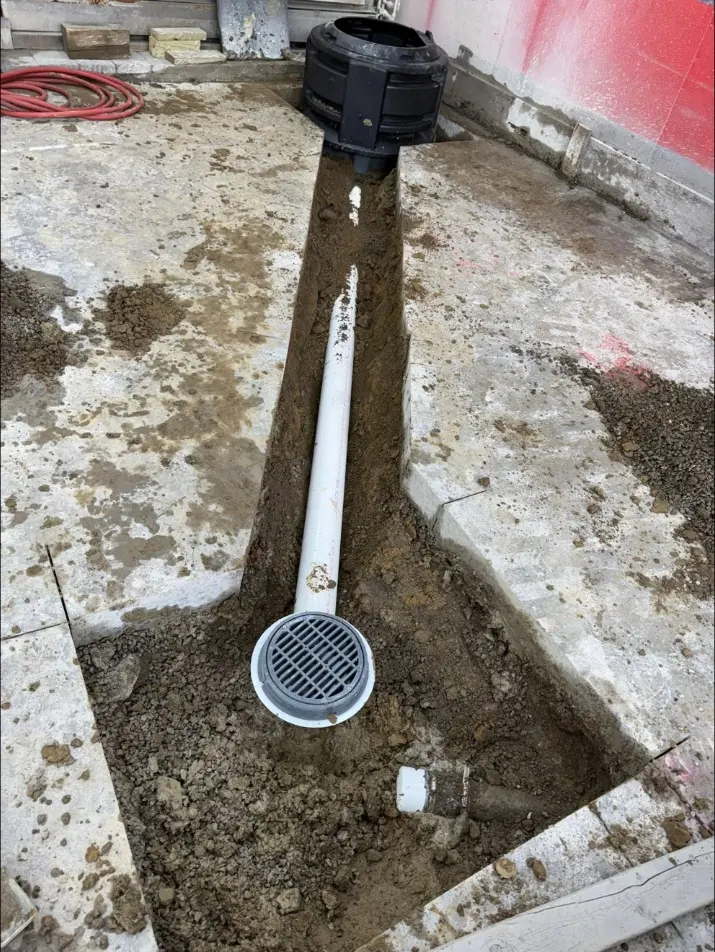
A floor drain sits in the floor, often between the parking bays, and the slab pitches toward it. A trench drain is a long, narrow grated channel, often run across the garage just inside the door, that catches water from the whole width.
Drains keep water off most of the floor and are handy for washing down a shop or melting off a plow truck. They also need an approved outlet, a pipe route under the slab and occasional cleaning of the grate and basket.
Where can a garage drain go?
This is the question to answer first. The US Environmental Protection Agency regulates floor drains in vehicle service areas that empty to a septic system or dry well as motor vehicle waste disposal wells, because oil, antifreeze and solvents end up in groundwater. EPA says such wells are banned nationwide if they were built after April 5, 2000, and it lists vehicle repair home businesses among those affected.
For a private garage, EPA's page doesn't give a simple answer, so ask your code enforcement officer and plumbing inspector before you plan a drain. Don't assume a drain can tie into a septic system or run to a hole in the yard.
Set it before the pour
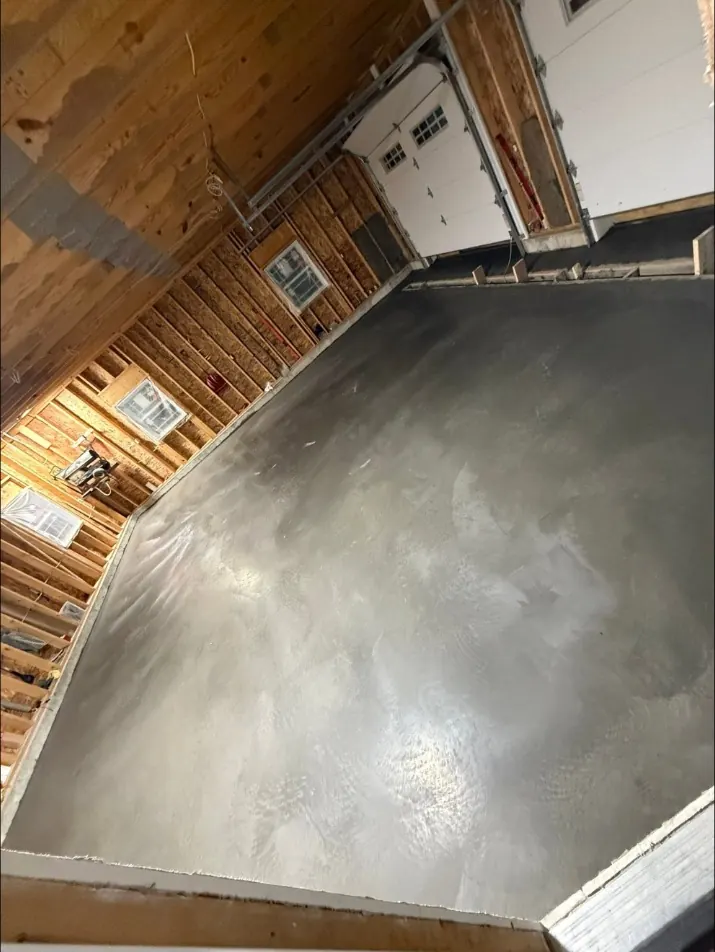
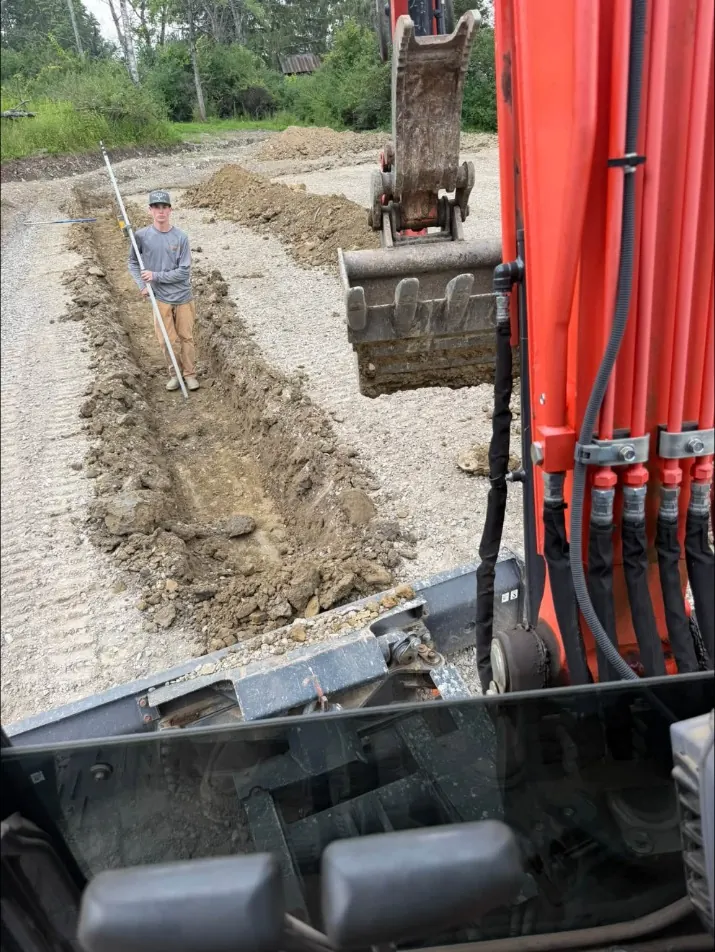
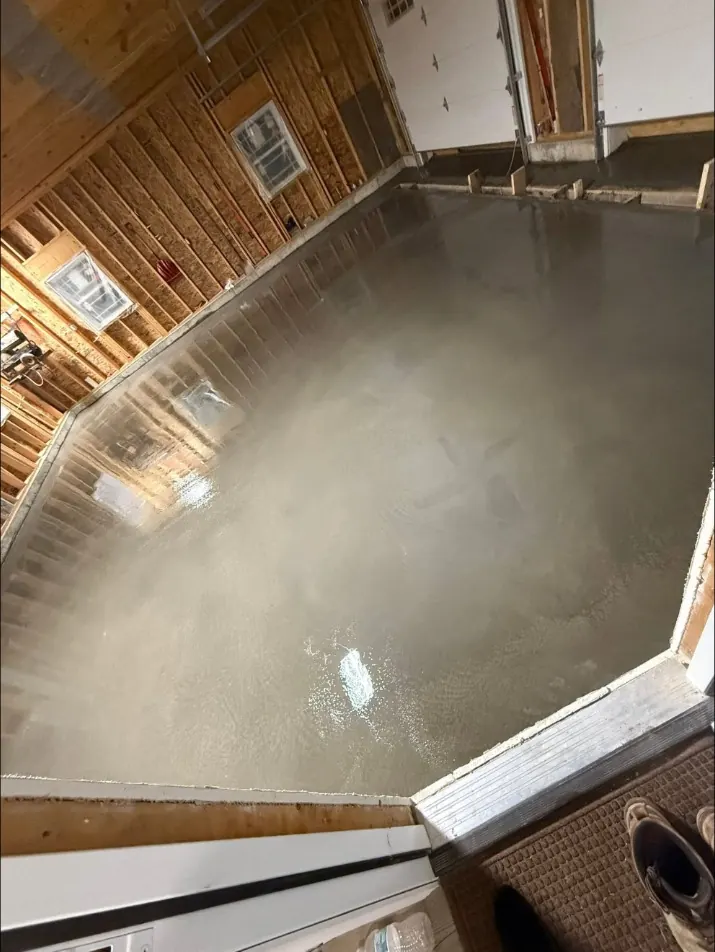
Slope is formed into the slab with the forms, grade stakes and screed, and drains have to be set at the right height first. On our jobs that means laying out grades with a laser level and screeding the concrete to them. Changing slope after the pour means grinding or replacing concrete, so settle the plan early: which way it drains, where any drain sits, and how the apron continues the slope outside.
Shops, lifts and flat spots
If you plan a car lift, tell your contractor before the floor is designed. Lift makers have their own slab rules; BendPak, for one, requires two-post lifts to sit on a continuous slab and its anchors to stay at least 6 inches from joints. See slab requirements for a car lift.
Winter in a Central NY garage
Our winters put more water on garage floors than most people expect. A car can carry a surprising load of snow and slush in its wheel wells, and in a heated garage it all melts within hours. That water carries road salt with it.
- If the floor slopes to the door, a shallow channel of meltwater runs across it every storm. That's normal, but it shouldn't pool.
- If the floor has a drain, keep the grate clear of sand and leaves so it can take the flow.
- Squeegee standing salty water out the door on mild days, and rinse the floor now and then over the winter.
- A sealer on the floor and a salt-repellent sealer on the apron help keep salt out of the surface.
Fixing a floor that holds water
A floor that ponds water or slopes toward the house usually got that way by settling. A low spot near the door might be solved by replacing the apron. A floor that's out of shape across the whole garage often needs replacing; see the garage floor replacement guide. Bennett's pours new garage floors and does removal and replacement.