By Bennett's Concrete and Excavation, Norwich, NY. Updated October 2026.
The short answer
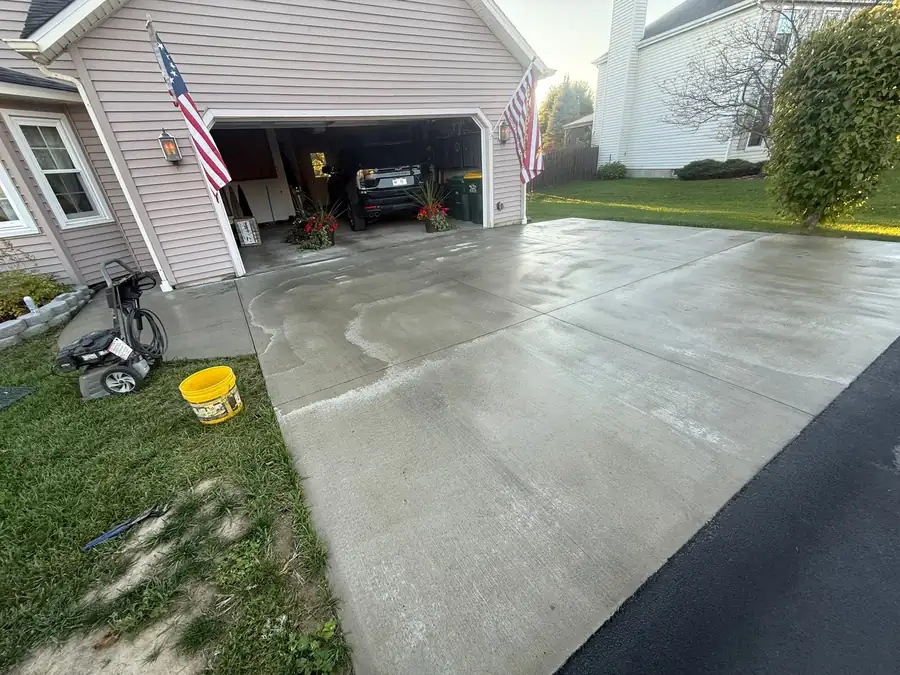
- Surface wear only (dull, stained, light hairline cracks): clean and seal.
- A few bad panels (one sunken or heaved section, a broken corner): replace those panels to the nearest joints.
- Problems everywhere (many wide cracks, panels at different heights, water pooling, a base that's pumping mud): replace the driveway and rebuild the base.
Read the damage
| What you see | Likely cause | Usual fix |
|---|---|---|
| Hairline cracks at joints or mid-panel | Normal shrinkage | Leave or seal; watch them |
| Flaking, peeling surface | Scaling from freeze-thaw and deicers | Seal to slow it; replace if deep and widespread |
| One panel sunk or lifted | Soft spot, washout or frost under that panel | Replace the panel and fix the base |
| Many panels cracked and uneven | Weak or wet base, poor drainage | Full replacement |
| Water runs toward the garage | Settled apron or slab | Replace the apron or affected panels |
Scaling and surface damage
Scaling is flaking or peeling of the finished surface. NRMCA's guide on scaling lists the usual causes: concrete without enough entrained air, low-strength concrete, too much deicer, poor finishing and too little curing. Scaled concrete doesn't heal, but you can slow it down. NRMCA recommends a breathable silane or siloxane sealer applied when the concrete is reasonably dry.
If the scaling is shallow and patchy, sealing and better winter habits may buy years. If it's deep and covers most of the driveway, replacement is usually the better spend. See scaling and spalling for more on causes.
Replacing by panel
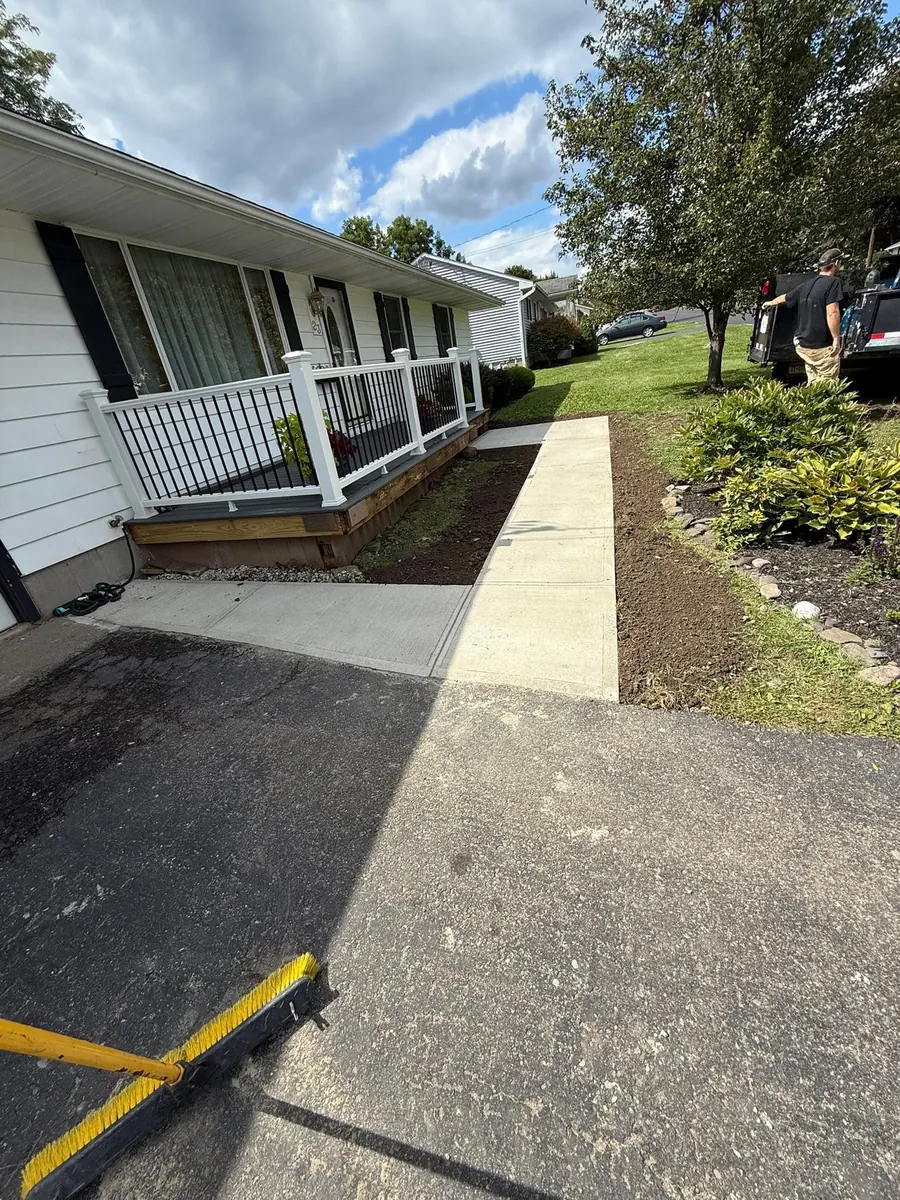
A concrete driveway is cut into panels by its control joints. NRMCA's joint guide puts maximum spacing at 24 to 36 times the slab thickness, so a driveway is a grid of panels that can each be cut out and repoured on their own. That makes partial replacement practical: saw cut at the joints, break out the bad panels, fix the base under them and pour new ones.
Two things to expect. New concrete won't match the old color exactly, at least for a while. And if the base failed under one panel, check whether the same water or soft soil is under its neighbors.
When the base is the problem
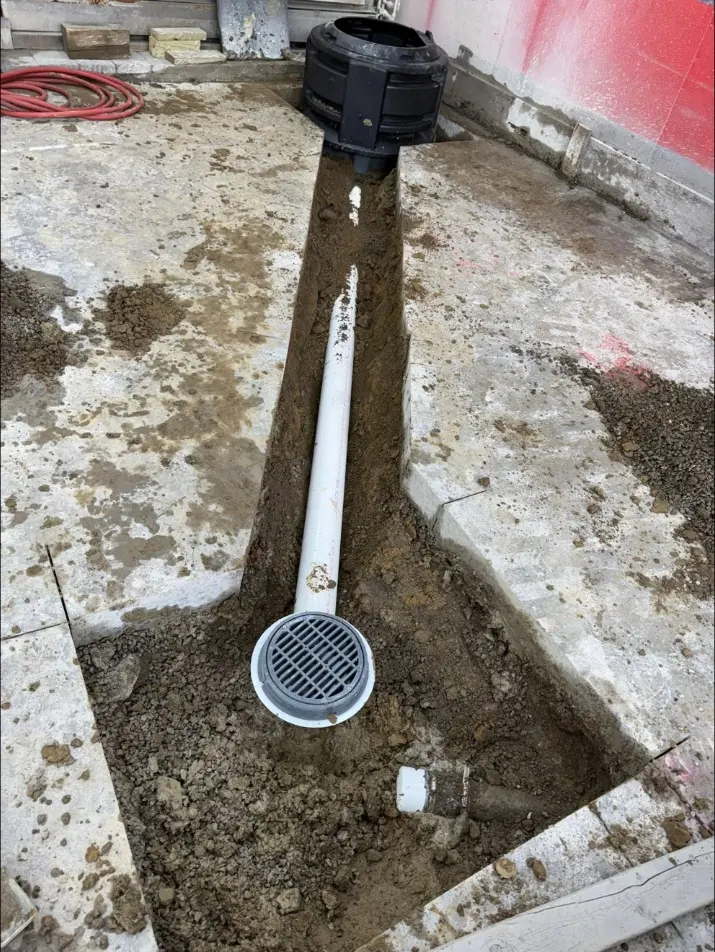
Most driveway failures start underneath: topsoil left in place, too little stone, or water that sits under the slab and freezes. Patching the surface won't fix any of that. In Hamilton we removed broken concrete and replaced it with reinforced concrete on a proper base, and on the same job jacked up a deck, replaced the deteriorating concrete under it and set the deck back down. That's the kind of repair that lasts, because it fixes the cause.
If storm runoff washed out the edge or undercut the slab, the drainage has to be fixed along with the concrete. Our regrading guide covers that side.
What a full replacement includes
- Saw cut at the street, walk and garage edges, then break out and haul away the old concrete.
- Dig out soft material and regrade so water drains away.
- Place and compact a crushed stone base.
- Form, set reinforcement and plan joints.
- Pour with exterior-grade concrete. For slabs that stay moist, freeze and get deicers, NRMCA recommends a specified strength of 4,000 psi and about 6 percent air.
- Broom finish, cut joints and cure.
Then stay off it until it's ready. See when you can drive on new concrete.
Habits that help any driveway last
- Move the water. Point downspouts away from the slab and keep the edges from becoming a channel for runoff.
- Go easy on deicers. None on new concrete the first winter, and never ammonium-based products after that.
- Seal on a schedule that fits your use. When water stops beading, it's time.
- Keep heavy loads off the edges. Edges and corners have the least support. Delivery trucks, dumpsters and equipment do the most damage there.
- Plow carefully. A rubber edge or properly set shoes keep the blade from gouging joints and corners.
Fixing a small problem early, like a downspout dumping beside the slab, can keep a sound driveway from turning into a replacement job a few winters later.
Getting it looked at
Take photos after a rain, when low spots and drainage problems show, and note which panels moved over the winter. Bennett's does concrete removal and replacement and new concrete driveways, including repairs to storm-damaged driveways.