By Bennett's Concrete and Excavation, Norwich, NY. Updated October 2026.
At a glance
| Gravel | Concrete | |
|---|---|---|
| Up-front cost | Lower | Higher |
| Regular upkeep | Regrade, re-crown and add stone | Seal and keep harsh deicers off |
| Plowing | Blade rides on shoes, some stone lost | Clean scrape, but steel edges can gouge |
| Salt | Not affected | Can scale, especially the first winter |
| Mud season | Can soften and rut | Not affected on top |
| Repairs | Easy and cheap, often do-it-yourself | Sections replaced at joints |
| Best fit | Long, rural, budget-minded | Shorter, near the house, low upkeep |
What drives the cost difference
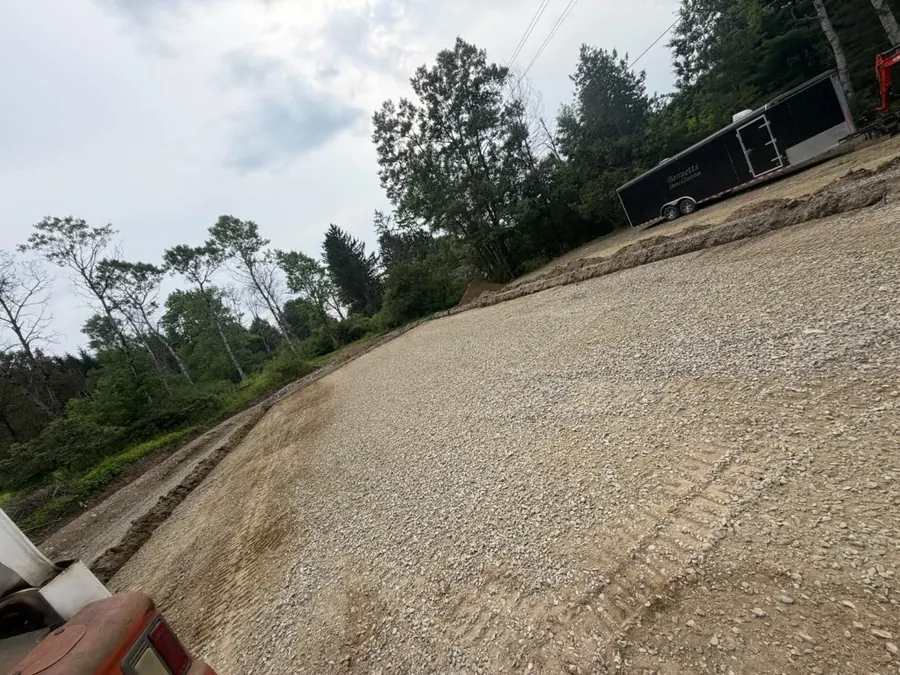
Both start with the same excavation and stone base. Gravel stops there, with a top layer of stone. Concrete adds forms, reinforcement, the concrete itself, finishing labor and saw cut joints. So the gap grows with length. On a 300 foot country driveway it's large. On a short drive from the road to a garage, it's smaller.
For gravel, the main drivers are how much base the soil needs and how far the stone travels. For concrete, it's area, thickness, access for trucks and whether the old surface has to come out. Every site is different, which is why both get priced after a look at the ground.
Upkeep over the years
A gravel driveway needs a little work every year or two: pull back what the plow moved, fill low spots, restore the crown. Our gravel maintenance guide walks through it.
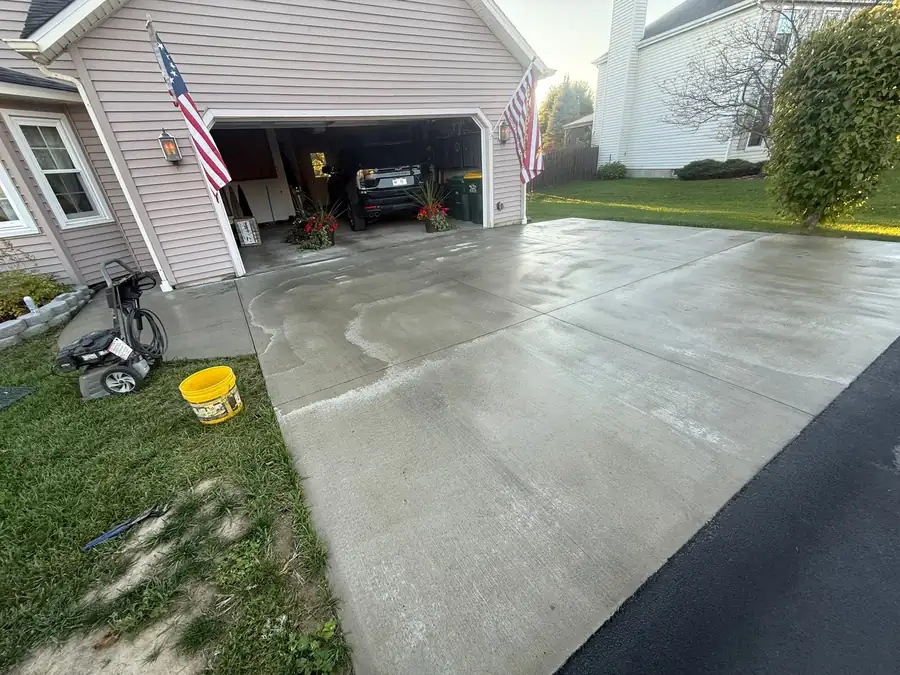
A concrete driveway needs less, but what it needs matters. NRMCA's guidance on scaling says to avoid deicing chemicals the first winter, use clean sand for traction, and never use ammonium sulfate, ammonium nitrate or magnesium-based salts as a deicer. A breathable sealer helps. After that, it's mostly keeping water from standing on it.
Winter in Central NY
Gravel doesn't care about salt, but it loses stone to every plow pass and can heave and soften during thaws. Concrete plows clean and sheds meltwater, but steel blades and deicers are its two enemies. Our guide to protecting concrete from snowplows covers blade edges and markers.
Slope, length and drainage
Steep gravel driveways wash out in heavy rain, because water picks up speed and carries the fines away. Concrete holds on steeper grades, and a broom finish adds traction. Very long driveways, on the other hand, usually make the most sense in gravel.
Either way, the ground underneath decides how long it lasts. Cornell's Local Roads Program rates silty soils, including most of what New Yorkers call clay, as very highly frost susceptible. A good base and drainage matter as much as the surface.
Fixing problems later
This is where gravel shines. A rut, a washout or a soft spot in gravel gets fixed with a loader and a few tons of stone, often the same day. You can widen a gravel driveway, add a turnaround or move the entrance without much fuss.
Concrete is harder to change. Cracks can be sealed, but a broken or sunken section is cut out at the joints and replaced, and the new piece rarely matches the old color exactly. On the other hand, a concrete driveway built on a good base can go a long time without needing anything but sealing. Our guide on whether to replace or repair a concrete driveway covers those choices.
The hybrid most people like
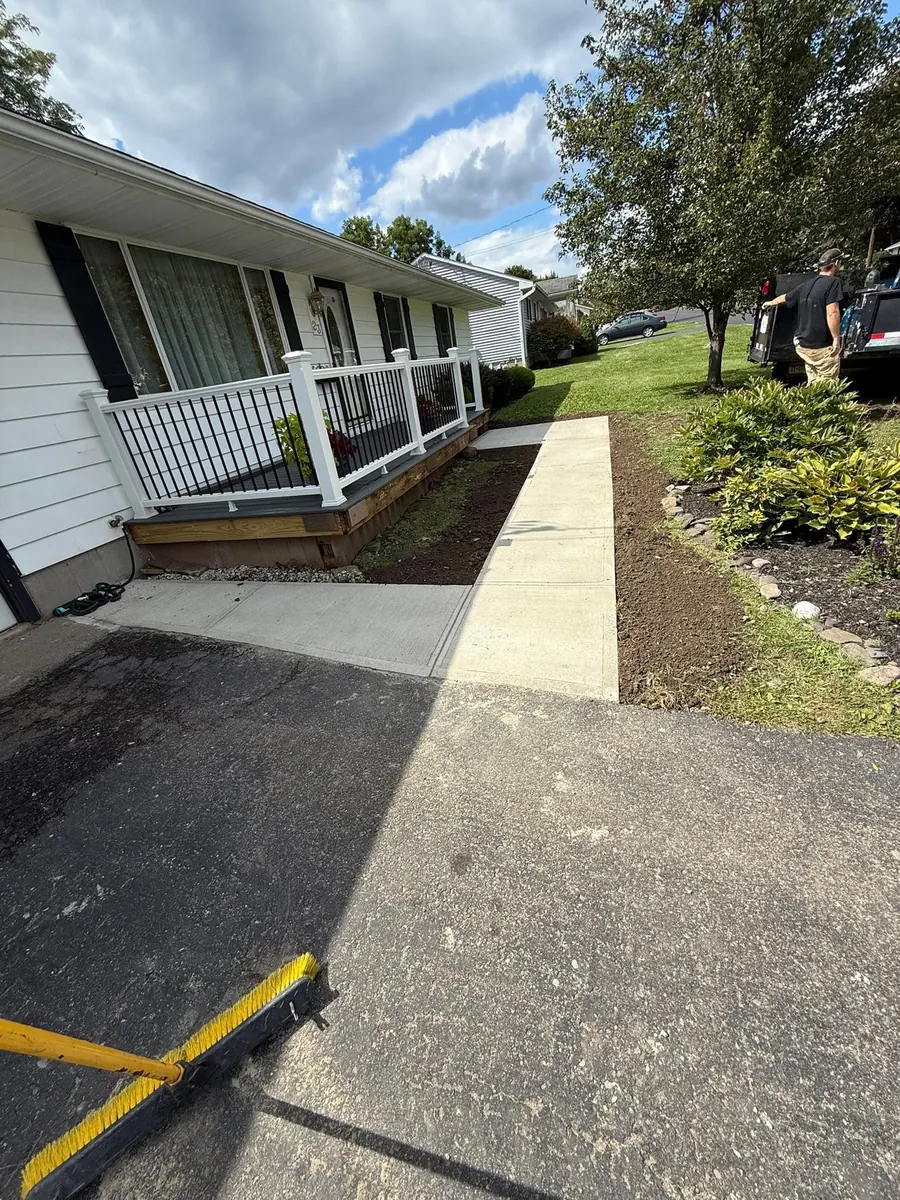
A common answer here is both: gravel for the long run from the road, and concrete where it counts, like a garage apron, a parking pad, or the stretch by the house where people walk. The apron takes the turning, the salt from cars and the most foot traffic, and the gravel handles the distance.
How to decide
- Choose gravel if the driveway is long, the budget is tight, or you don't mind seasonal upkeep.
- Choose concrete if the driveway is short, near the house, steep, or you want the least upkeep.
- Choose both if you want concrete's clean surface at the garage without paving the whole length.
We build both. See gravel driveways and concrete driveways.