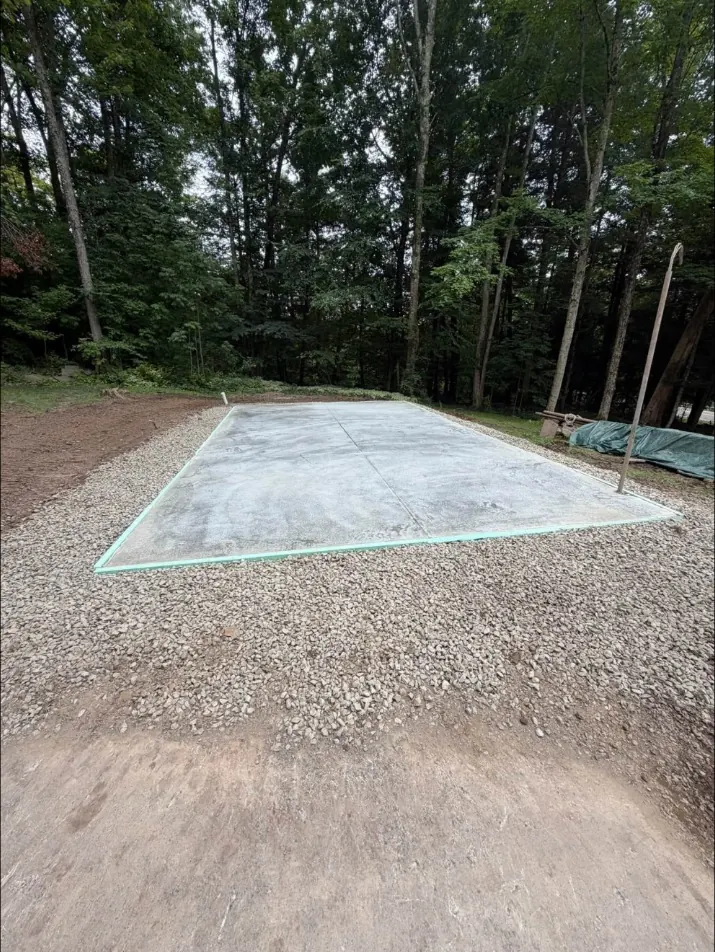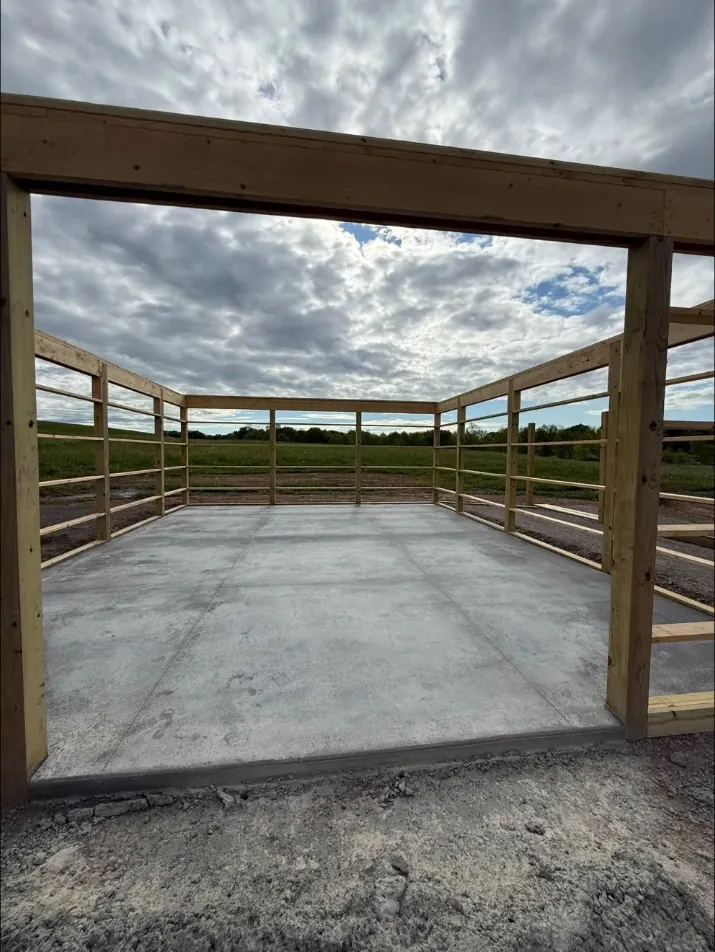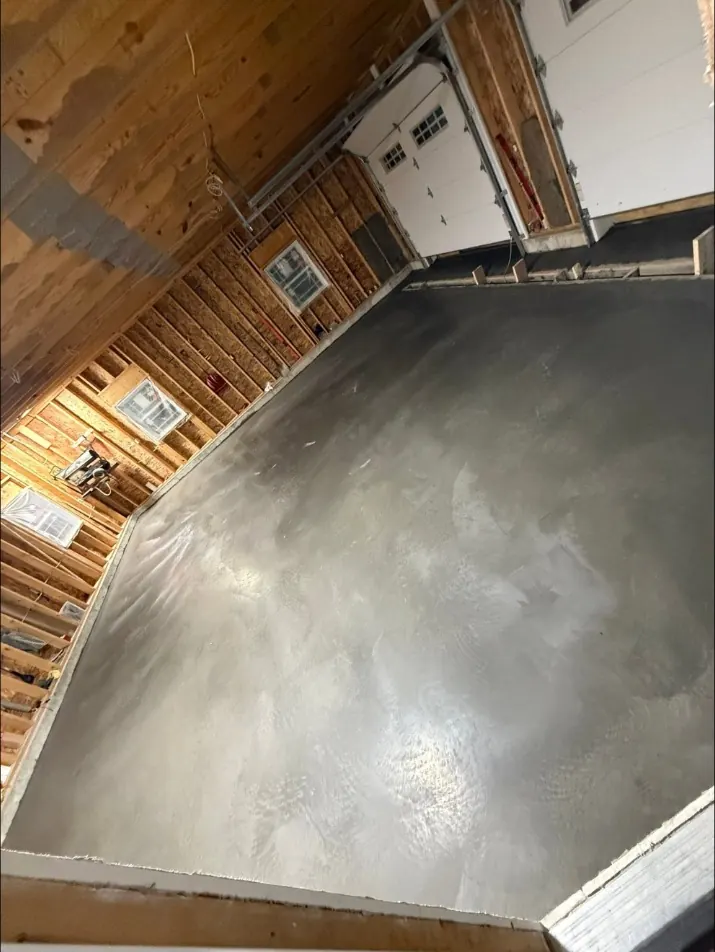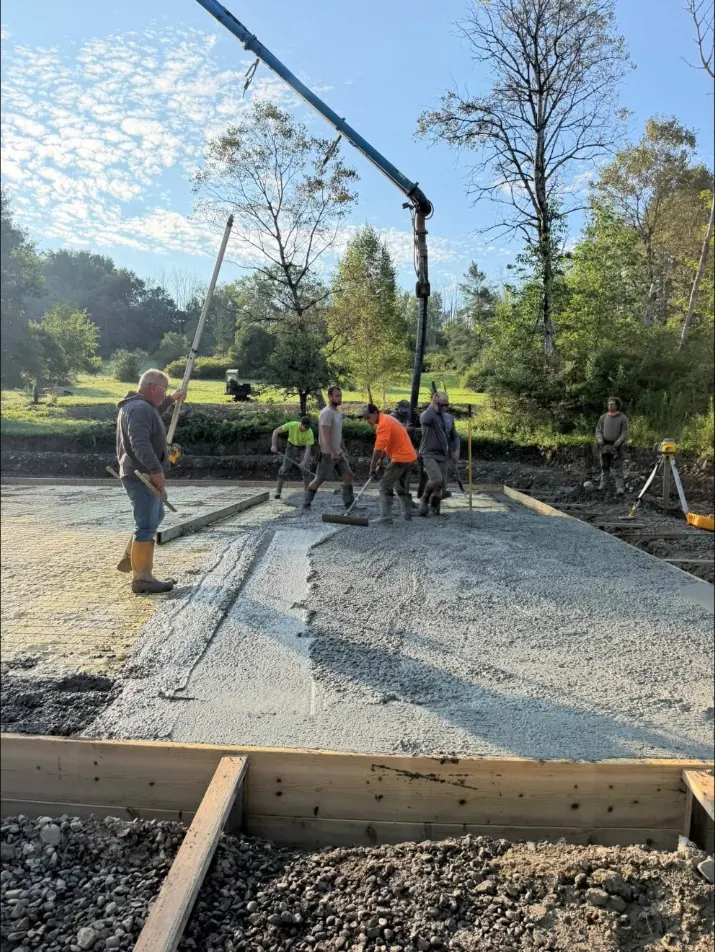
By Bennett's Concrete and Excavation, Norwich, NY. Updated October 2026.
The short answer
A cubic yard of concrete is 27 cubic feet, the conversion NRMCA uses for yield. Divide 27 by the slab thickness in feet and you get the square feet one yard covers. At 4 inches thick, one yard covers about 81 square feet. At 6 inches it covers 54.
Coverage by thickness
| Slab thickness | Square feet per cubic yard | Yards per 1,000 sq ft |
|---|---|---|
| 3-1/2 in | about 93 | about 10.8 |
| 4 in | 81 | about 12.3 |
| 5 in | about 65 | about 15.4 |
| 6 in | 54 | about 18.5 |
| 8 in | about 40 | about 24.7 |
These are flat-slab numbers before any extra for waste. Thickened edges, footings and low spots add to them.
How to figure your order
- Measure length and width in feet.
- Convert thickness to feet: 4 inches is 0.333 feet, 6 inches is 0.5 feet.
- Multiply length x width x thickness to get cubic feet.
- Divide by 27 to get cubic yards.
- Add a margin for waste and uneven grade.
Example: a 12 x 20 foot patio at 4 inches is 12 x 20 x 0.333 = about 80 cubic feet. Divided by 27, that's just under 3 yards before the margin. Our concrete calculator does this for you.
Why you order a little extra
NRMCA recommends ordering 4 to 10 percent more than the plan volume to cover waste, over-excavation and other surprises. Jobs with footings, pipes or lots of separate small placements need the higher end.
Grade is the biggest swing. NRMCA's yield guide points out that a 1/8-inch difference in a 4-inch slab is a 3 percent difference in volume, about 1 cubic yard on a 32-yard order. A base that's an inch low across a whole floor eats a lot of concrete. Forms that bulge under the weight of wet concrete and stone that settles under the pour do the same. NRMCA also notes hardened concrete can measure about 2 percent less than its fresh volume.
Coming up short is worse than a little left over
If the last truck runs short, the crew has to wait for another load or stop the pour. The concrete already placed keeps setting, and the joint where the new load meets it may never match. NRMCA advises against both excessive orders and small clean-up loads, which is why the margin is planned up front. Leftover concrete can often go to a small pad, a step footing or a dumpster pad if one is formed and ready.
Truckloads and big pours
NRMCA says a truck mixer holds 8 to 12 cubic yards. A 24 x 24 garage floor at 4 inches is about 7 yards plus margin, so one truck. A big shop or barndo floor takes a string of trucks timed back to back. The barndo floor we poured in Holland Patent took about 60 yards, which means planning truck spacing, crew size and often a pump truck so every load goes in while the last one is still workable.
What about bags?
Quikrete's data sheet lists an 80-pound bag of its concrete mix at about 0.6 cubic feet. That's 45 bags for one cubic yard, and a 4-inch slab covering 81 square feet. Our bagged vs ready-mix guide covers when bags make sense.
Shapes that aren't rectangles
- Circles: area is 3.14 x radius x radius. A round patio 12 feet across has a 6-foot radius, so about 113 square feet.
- Triangles: half of base x height.
- L-shapes: split into two rectangles and add them.
- Curved walks: measure the length along the middle of the curve and multiply by the width.
Then multiply the area by the thickness in feet and divide by 27, the same as a rectangle.
Get it measured
If your project has steps, thickened edges, piers or a slope, the simple formula won't capture it. When we quote slabs and pads or pole barn floors, we figure yardage from the actual layout and the grade.